Hang-On (Lock-On) Stand
A platform and seat strapped to any tree, reached by climbing sticks - hang-ons trade the climber's tree-shape limits for pre-set precision in exactly the right spot.
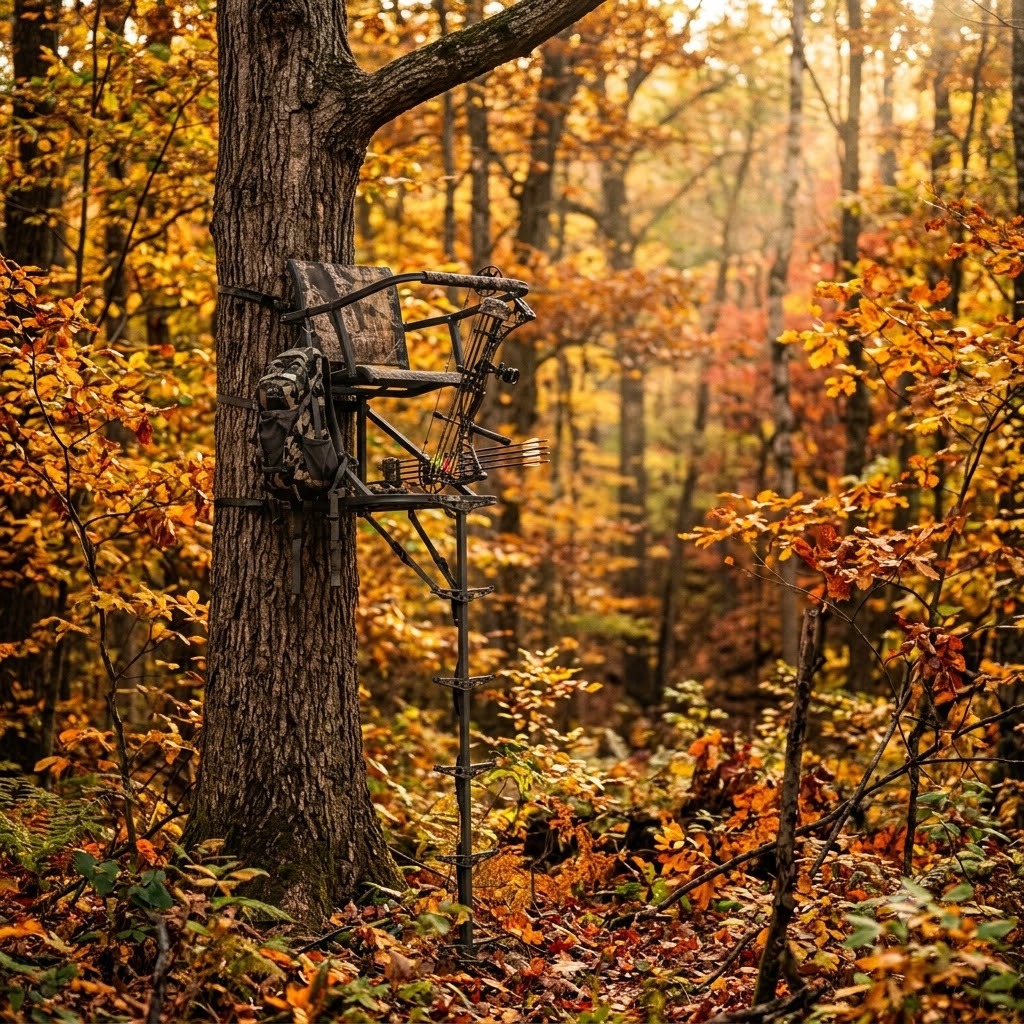
The hang-on (lock-on) is the surgical option: a compact platform-and-seat unit strapped to whatever tree the sign demands - crooked, limby, leaning, doesn't matter - reached by climbing sticks. Pre-hung in summer on a funnel you've mapped, it waits silently until conditions align. Most serious whitetail specialists run several, because the stand that's already there is the stand that doesn't spook deer on the way in.
⚠️ Safety first, every climb. Falls from elevated stands are the #1 cause of serious hunting injuries. Wear a full-body harness from the moment you leave the ground, stay connected with a lineman's belt or lifeline while climbing, use a haul line for your unloaded firearm or bow, and check straps, cables and welds before every season AND every sit. Tell someone where your stand is. No deer is worth a fall.
What it is
A one-piece steel or aluminum platform with seat, ratchet-strapped or chained to the trunk at height, accessed via strap-on climbing sticks or screw-in steps (where legal). Set it and leave it, or run it 'mobile' with lightweight sticks.
Where it shines
Exact-tree precision: the gnarled oak IN the funnel, the multi-trunk giant over the scrape, the leaning cedar a climber can't touch. Pre-season sets let you slip in scent-clean months later.
Setting it up
Hang with a partner and a lineman's belt: sticks up first, stand hauled on a rope, platform seated firm and LEVEL, strap doubled, then a lifeline rope installed so you're connected from ground to seat every future sit. Trim lanes minimally on the first set.
Hunting from it
Arrive early, climb the pre-set sticks clipped to the lifeline, clip in at the top, haul up the bow. Your entry route matters more than the stand: plan wind-safe, quiet approaches for morning vs evening sits.
Comfort & concealment
Pick trees with back-cover (a limby trunk beats a telephone pole), sit against the trunk, add a padded seat for all-day rut sits. Two stands per spot (opposite winds) beats one compromise tree.
Common mistakes
Leaving straps out year-round without inspection (UV rot - the classic stand failure), hanging over sign instead of DOWNWIND of it, over-trimming lanes into a lighthouse, and skipping the lifeline because the sticks feel easy.
🧭 Brand-free guidance, not product recommendations. Elevated hunting carries real fall risk - use a full-body harness and follow the manufacturer's instructions and official safety courses; this page is general education, not a safety certification.