Climbing Sticks
Packable, sectioned steps that strap to a trunk and let you set a hang-on stand or saddle almost anywhere - mobile access in exchange for careful, tethered climbing.
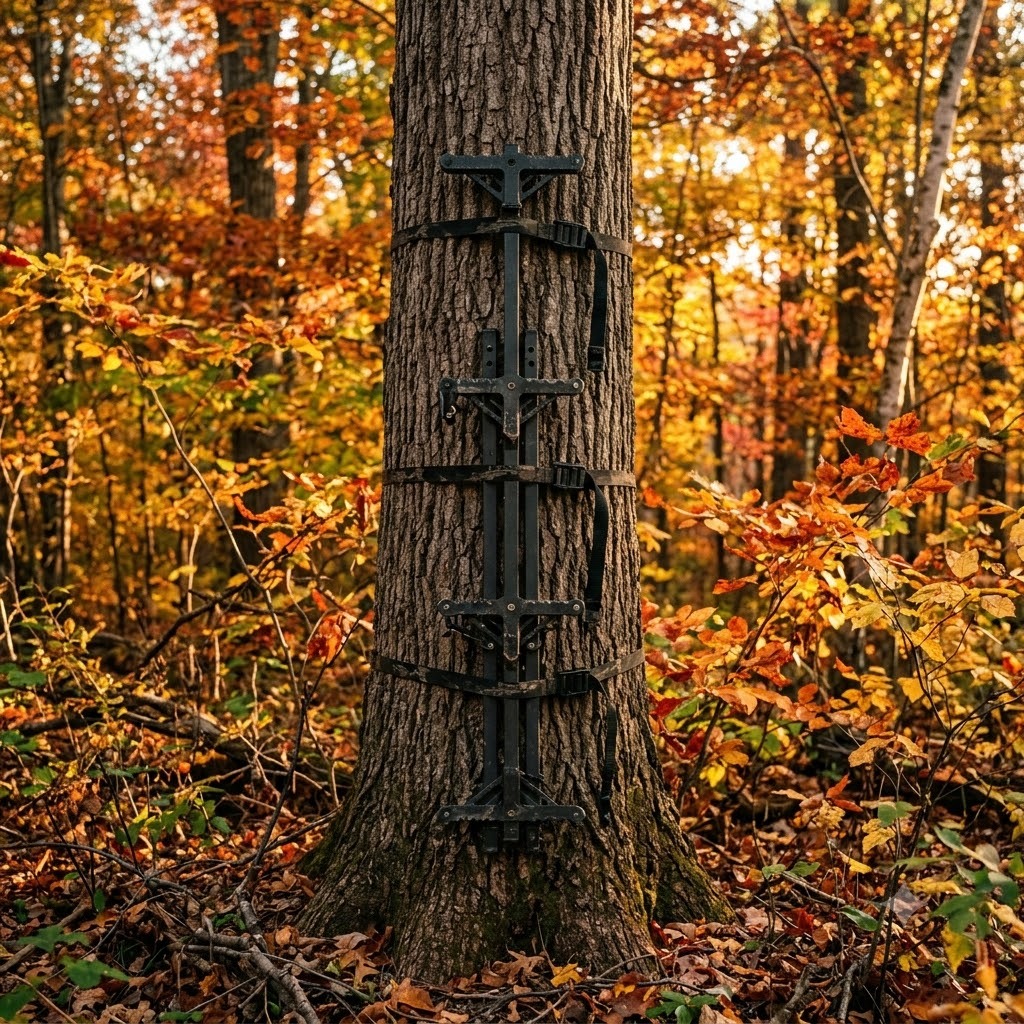
⚠️ Falls from height are the leading cause of serious hunting injuries. Climbing sticks put you off the ground, so a full-body harness and a fall-arrest connection (a lineman's belt while hanging sticks, a lifeline or tether once you climb) belong on you from the moment your feet leave the dirt. Inspect straps, buckles and steps before every use, follow the manufacturer's instructions and weight limits, and never rely on this page in place of them or of hands-on instruction.
Climbing sticks are lightweight, sectioned ladders you strap up a tree one piece at a time to reach a hang-on stand or a saddle platform. They are the backbone of mobile, run-and-gun hunting: light enough to pack in, quiet enough to set on a fresh trail, and adaptable to trees a climber or ladder stand could never use. The freedom comes with a hard rule - every foot of height demands a deliberate, connected climbing system.
What it is
Individual aluminum or carbon stick sections, each with one or more steps, that strap or cam to the trunk and stack to a chosen height. They pair with hang-on stands, saddle setups and observation platforms. Standoffs hold the steps off the trunk for boot room, and light weight and quiet attachment are the qualities mobile hunters prize most.
Where it shines
Public-land and mobile hunting where you set up on the day's fresh sign, trees too crooked or limby for a climbing stand, and hunters who hike deep and want a light, packable access system. Sticks let you hunt the exact tree the deer are using rather than the nearest tree that fits a bulkier stand.
Setting it up
Strap each stick tight to a solid, straight section of trunk, working up while connected with a lineman's belt so you are never unsecured. Set the top step at a height that lets you step onto the platform comfortably, mind spacing between steps, and keep everything snug and rattle-free. Transition to a lifeline or tether before you leave the sticks for the stand, following the maker's directions for your specific system.
Hunting from it
Once established and tethered, sticks are just your quiet ladder up and down. Keep them clear of your shooting lanes, and plan a smooth, connected descent - most falls happen during transitions on and off the platform, not while sitting. Pack-in hunters often pull sticks each trip, so a fast, quiet, repeatable routine matters as much as the gear.
Comfort & concealment
Standoffs and properly spaced steps make the climb far less tiring and safer, and a quiet strap or cam system keeps you from announcing yourself to a whole ridge. Match your stick count to how high you actually need to be - carrying four when three reach your platform is just weight and noise.
Common mistakes
Climbing unconnected between the ground and the stand, strapping to a weak or leaning trunk, spacing sticks too far apart for a safe reach, and rushing the on-and-off transition where the real fall risk lives. Skipping the harness "just this once" is the decision that ends hunts and worse.
🧭 Brand-free guidance, not product recommendations. Elevated hunting carries real fall risk - use a full-body harness and follow the manufacturer's instructions and official safety courses; this page is general education, not a safety certification.