Optics Tripod
A tripod isn't just for spotting scopes - mounting your binoculars on one reveals detail handheld glassing hides, and is the secret weapon of open-country hunters.
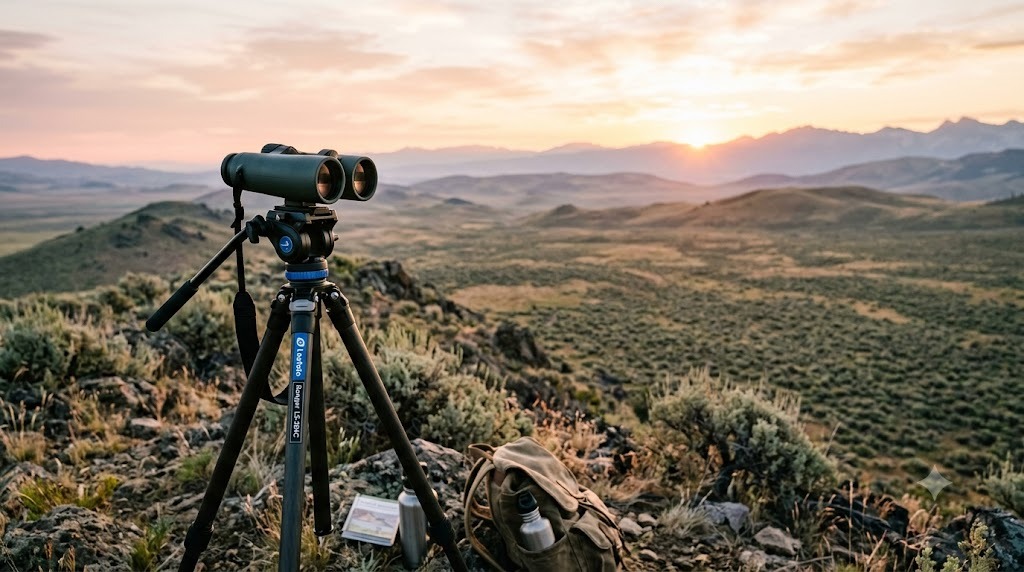
Experienced western hunters know a trick beginners miss: putting BINOCULARS on a tripod. The tiny tremor of even steady hands blurs fine detail; lock the glass to a tripod and animals bedded in shadow, antler tips, ear flicks a mile off suddenly appear. A tripod is mandatory for a spotting scope and transformative for binoculars - the multiplier that makes open-country glassing systematic instead of hopeful.
What it is & when you need it
A three-legged stand with a head that holds binoculars (via an adapter) or a spotting scope steady. Essential for spotting scopes; a major advantage for anyone glassing open country for long sessions, where handheld shake hides the very details you're hunting for.
How to read the numbers
Weigh the trade-off: full-size aluminium tripods are stable and cheap but heavy; carbon-fibre backpacking tripods cost more and save crucial ounces on the mountain. Check the load rating exceeds your heaviest optic, the folded length fits your pack, and the head type (pan/tilt vs ball) suits smooth glassing sweeps.
What actually matters
Stability at full height in wind (the whole point), packable weight and folded size you'll actually carry, a smooth head for panning across a hillside without jerks, and quick, glove-friendly leg locks. A bino adapter (stud or clamp) is what unlocks the binocular-on-tripod advantage.
Where it fits in your kit
Pairs with binoculars for systematic grid-glassing and is mandatory for a spotting scope. For open-country hunts it belongs in the pack; for timber and treestands it stays home. A single good tripod serves both your binoculars and spotter with the right adapters.
Care & field tips
Grid-glass from the tripod: divide the hillside into sections and scan each slowly - tripod-steady glass finds bedded animals handheld sweeps skip. Spread the legs low and wide in wind, keep leg locks grit-free, and rinse sand from the joints after desert or beach hunts.
Common mistakes
Carrying a spotting scope but no tripod (unusable), buying a wobbly camera tripod that shakes in wind, leaving it home 'to save weight' on a glassing hunt then straining to find animals, and skipping the binocular adapter that delivers most of the benefit. Tripod your binoculars - it works.
🧭 This is brand-free buying guidance, not product recommendations - we describe what matters so you can choose for yourself. Optics regulations (thermal, night vision, cellular cameras) vary by area and change often; confirm current rules with your official wildlife agency before buying or hunting. We don't give legal advice.