Trail Camera
A trail camera watches a spot 24/7, building a picture of what animals use it and when - the scouting tool that turns guesswork into a pattern before you ever hunt the stand.
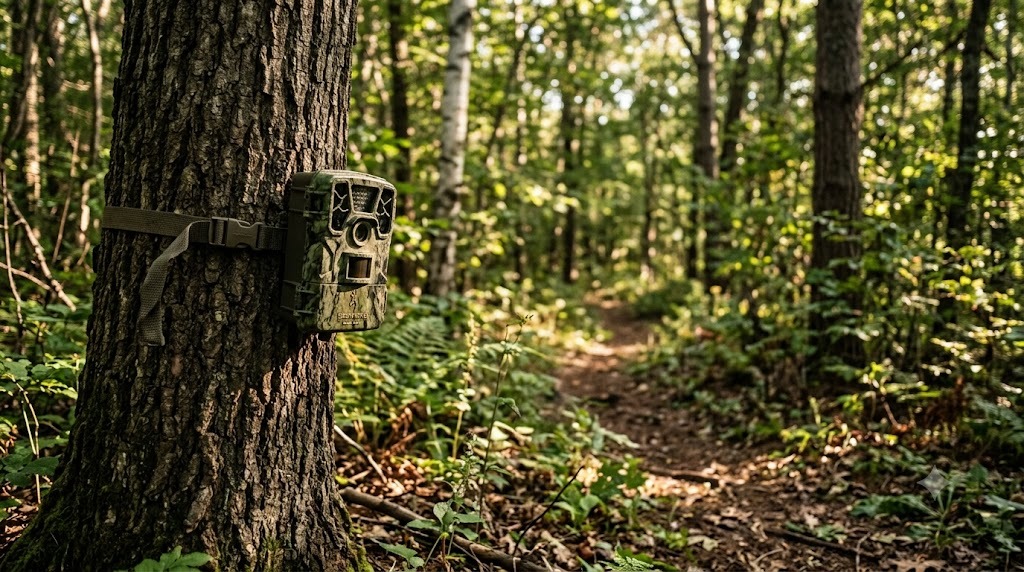
You can't be in the woods all the time, but a trail camera can. Strapped to a tree over a trail, scrape or feeding area, it photographs everything that passes - day and night - so you learn which animals use a spot and, crucially, WHEN. Weeks of camera data before the season turns a random stand choice into a informed bet on a specific buck's pattern. It's scouting that works while you're at your day job.
What it is & when you need it
A weatherproof, motion-triggered camera with infrared night flash, left in the field for weeks. You need it for pre-season and in-season scouting: inventorying animals, learning movement timing, and confirming a spot is worth a sit before you burn a morning on it.
How to read the numbers
'Trigger speed' (how fast it fires when triggered - faster catches animals on the move) and 'recovery time' (delay before the next photo) matter more than megapixels. 'Detection range' sets how far it senses movement. The big divide is SD-card (you retrieve the card - cheap, but you disturb the site) vs CELLULAR (photos texted to your phone - pricier, subscription, zero intrusion).
What actually matters
For patterning game, low intrusion is key - which is why cellular cameras are popular despite the cost: you never disturb the area. Otherwise: fast trigger speed, reliable night images (invisible 'no-glow' IR won't spook wary bucks), long battery life, and a date/time/moon stamp so you can actually analyse patterns.
Where it fits in your kit
A scouting tool, not a hunting-day optic - but arguably the highest-impact 'optic' for consistent success, because it tells you WHERE and WHEN before you commit. Run several across different spots to compare, and check local regulations, as some areas restrict cellular cameras during seasons.
Care & field tips
⚠️ Check regulations first - some states and public lands restrict or ban cellular cameras in-season. Mount at the right height and angle, clear brush from the trigger zone, use 'no-glow' IR near pressured animals, and minimise visits (your scent and presence teach animals to avoid the spot). Note times and moon phase to read patterns.
Common mistakes
Checking SD-card cameras too often and polluting the area with scent (the classic mistake - it drives mature bucks nocturnal), obsessing over megapixels instead of trigger speed, using a 'white flash' or glowing IR that spooks wary game, and ignoring local cellular-camera rules. Set it, leave it, let it work.
🧭 This is brand-free buying guidance, not product recommendations - we describe what matters so you can choose for yourself. Optics regulations (thermal, night vision, cellular cameras) vary by area and change often; confirm current rules with your official wildlife agency before buying or hunting. We don't give legal advice.