Thermal & Night Vision Optics
Thermal and night vision let you detect and identify animals in darkness - powerful tools for legal night hog and predator control, but heavily regulated, so the law comes first.
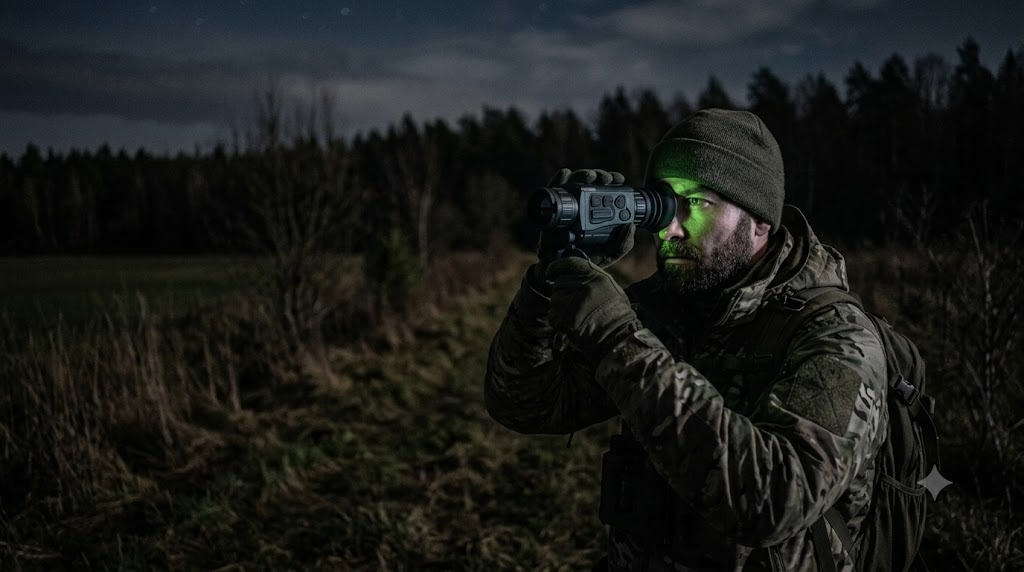
Thermal imagers detect body heat and night vision amplifies faint light, together opening after-dark hunting for hogs and predators where it's legal. They are genuinely transformative for nuisance-hog and coyote control. But this category comes with a warning ahead of any gear advice: night hunting and these optics are tightly and variably regulated - legal for some species and not others, in some states and seasons and not others. Confirm your local law before you even shop.
What it is & when you need it
Thermal optics build an image from heat differences (seeing animals as bright shapes day or night, through light brush); night vision amplifies ambient light into a visible image. Used for legal night hunting of hogs and predators, and thermal doubles as a superb daytime and blood-trailing detection tool - where the law allows.
How to read the numbers
⚠️ Before any spec: night hunting, thermal and night-vision use are regulated differently by country, state, species and season - and change often. Confirm what is legal for you with the official wildlife agency first; we don't give legal advice. On the gear side, thermal 'resolution' (sensor pixels, e.g. 384 vs 640) and 'base magnification' drive detection distance and image clarity; higher costs far more.
What actually matters
Legality first, always. Then, for thermal: sensor resolution (detail and range), refresh rate (smoothness on moving game), and detection vs identification range (you must IDENTIFY, not just detect, before any shot). Battery life and ruggedness matter for long night sits. Handheld 'scanners' find heat; a weapon-mounted unit is a separate, often separately-regulated item.
Where it fits in your kit
A specialist tool for those legally controlling hogs or predators after dark, or using thermal by day to locate game and recover downed animals. It sits entirely outside general big-game optics and only after you've confirmed it's lawful for your hunt. Many start with a handheld thermal monocular for detection before any weapon-mounted device.
Care & field tips
Keep a written note of the current regulations you're hunting under. Positively IDENTIFY the target and what's beyond it - heat signatures hide identity and background. Manage batteries (bring spares; cold drains them), let optics acclimate to avoid fogging, and learn the device thoroughly in daylight before trusting it at night.
Common mistakes
Skipping the legal check (the serious one - rules vary wildly and penalties are real), shooting at an unidentified heat blob, assuming what's legal one state over applies to you, and underestimating how much you must positively identify target and backstop in the dark. Law first, identify always.
🧭 This is brand-free buying guidance, not product recommendations - we describe what matters so you can choose for yourself. Optics regulations (thermal, night vision, cellular cameras) vary by area and change often; confirm current rules with your official wildlife agency before buying or hunting. We don't give legal advice.