Scope Mounts & Rings
Rings and bases are the unglamorous parts that clamp your scope to the rifle - and cheap or badly-fitted ones are the hidden reason a great scope won't hold zero.
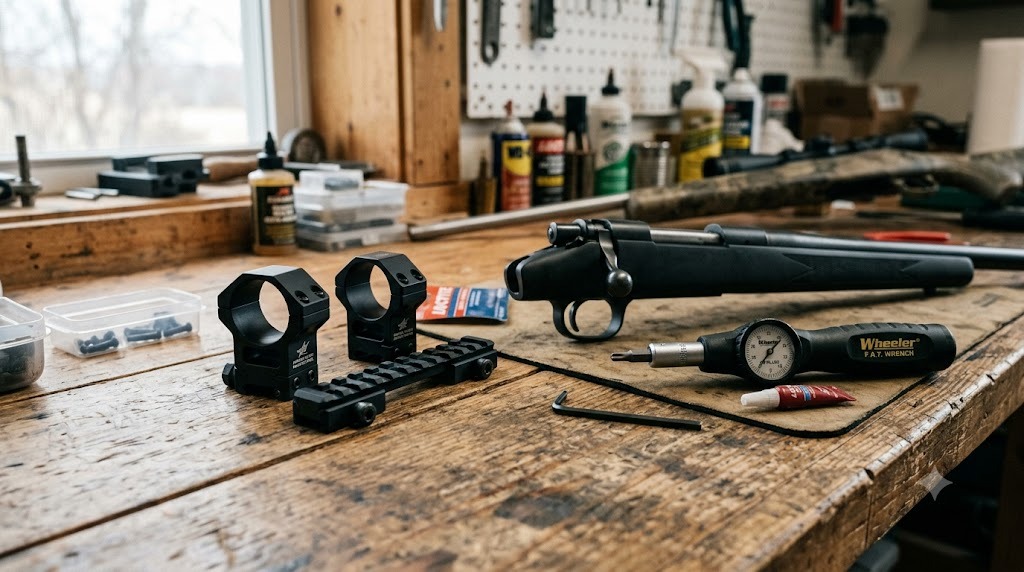
You can spend a fortune on glass and lose it all to twenty-dollar rings. Mounts and rings are the mechanical link between scope and rifle, and if they're low quality, wrong height, or improperly torqued, your zero wanders no matter how good the optic. This is the least exciting optics purchase and one of the most important - the difference between a rifle that shoots where it looks and one that mysteriously 'won't hold zero'.
What it is & when you need it
Bases mount to the rifle's receiver; rings clamp the scope to the bases. You need them for every scoped rifle, matched to the rifle's mounting pattern (Picatinny rail, Weaver, or maker-specific), the scope tube diameter (1 inch, 30mm, 34mm), and the objective size.
How to read the numbers
Ring HEIGHT must clear the objective bell above the barrel while sitting the scope as low as possible for a proper cheek weld - too high and your head floats off the stock. Ring INNER DIAMETER must match the scope tube exactly (30mm scope needs 30mm rings). For long-range dialing, angled ('20 MOA') bases add elevation travel.
What actually matters
Correct tube diameter and objective-clearance height, quality machining that grips without denting the tube, a solid interface to the rifle, and - the free part everyone skips - PROPER TORQUE to spec with a torque wrench. A one-piece rail is often more rigid than two separate bases; both work when correctly fitted.
Where it fits in your kit
Bought with the scope and matched to both scope and rifle. Budget realistically: pairing a premium scope with bargain rings is false economy. If unsure about height, tube size or torque, a gunsmith mounting is money well spent - a correctly-mounted mid-scope beats a mis-mounted premium one.
Care & field tips
Torque ring and base screws to the manufacturer's spec (over- and under-tightening both cause problems), use thread-locker where specified, level the reticle to the rifle when mounting, and re-check the screws after the first range session and periodically through the season. Confirm objective and bolt-handle clearance before finalising.
Common mistakes
Cheap rings under an expensive scope, wrong ring height (scope too high for a cheek weld, or objective hitting the barrel), guessing torque by feel and crushing or under-gripping the tube, and never re-checking screws. Buy quality, match the sizes, torque to spec, and re-check.
🧭 This is brand-free buying guidance, not product recommendations - we describe what matters so you can choose for yourself. Optics regulations (thermal, night vision, cellular cameras) vary by area and change often; confirm current rules with your official wildlife agency before buying or hunting. We don't give legal advice.