Riflescope
The riflescope is the aiming optic - it magnifies the target and gives a precise aiming point. The classic 3-9x40 has killed more game than any other, and for good reason.
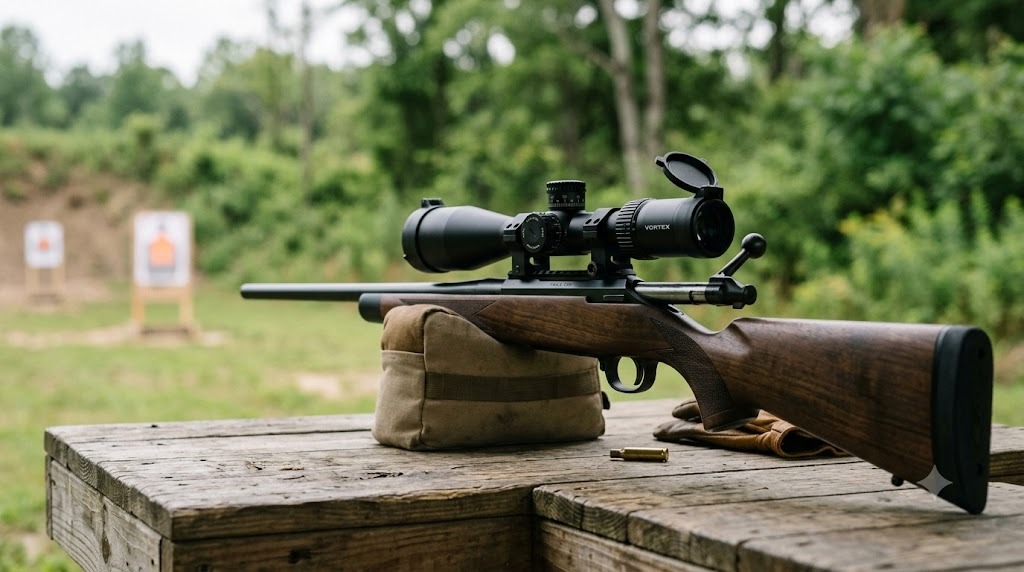
A riflescope does two jobs: magnify the target and put a crosshair exactly where the bullet will go. For decades the 3-9x40 has been the sensible-default hunting scope because it covers nearly every realistic shot - low power for close timber, higher for open fields - without the weight, cost and fragility of extreme magnification. Match the scope to how you actually hunt, not to the biggest number on the box.
What it is & when you need it
A magnifying sight mounted on the rifle, with an internal reticle (crosshair) you adjust to zero the point of impact. It's essential for any centrefire rifle hunting past close range - which is almost all of it.
How to read the numbers
'3-9x40' = variable 3× to 9× magnification, 40mm objective. Fixed scopes ('4x32') have one power - simpler and tougher. Higher top-end magnification (4-12, 5-25) helps only if you truly shoot far; it adds weight, cost and a narrower field of view up close. The objective (40-44mm) trades low-light brightness against weight and mounting height.
What actually matters
Reliable, repeatable adjustments (a scope that holds zero is non-negotiable), clear glass at YOUR usual range, a simple reticle you understand, and appropriate eye relief so recoil doesn't cut your brow. Second focal plane reticles suit most hunters; first focal plane matters mainly for long-range dialing.
Where it fits in your kit
One well-chosen scope per rifle, matched to that rifle's job: a 2-7x or 3-9x for woods and general big game, a 4-12x or higher only for genuine open-country distance. Quality rings and proper mounting matter as much as the scope - a great scope in cheap rings still wanders.
Care & field tips
Mount it with the correct eye relief and level reticle, torque the rings to spec, then confirm zero at the range before every season and after any knock. Keep the lenses capped in transport, dial magnification DOWN for close/quick shots, and note that most hunting happens at 4-6×, not maxed out.
Common mistakes
Buying far more magnification than the terrain needs (a 6-24x on a timber rifle is a liability), pairing an expensive scope with junk rings, cranking to max power and losing the animal in a tiny field of view, and never re-confirming zero. Match power to range and mount it right.
🧭 This is brand-free buying guidance, not product recommendations - we describe what matters so you can choose for yourself. Optics regulations (thermal, night vision, cellular cameras) vary by area and change often; confirm current rules with your official wildlife agency before buying or hunting. We don't give legal advice.