Laser Rangefinder
A rangefinder tells you the exact distance to the animal - the single biggest factor in whether a shot lands true. For bowhunters especially, it's not optional.
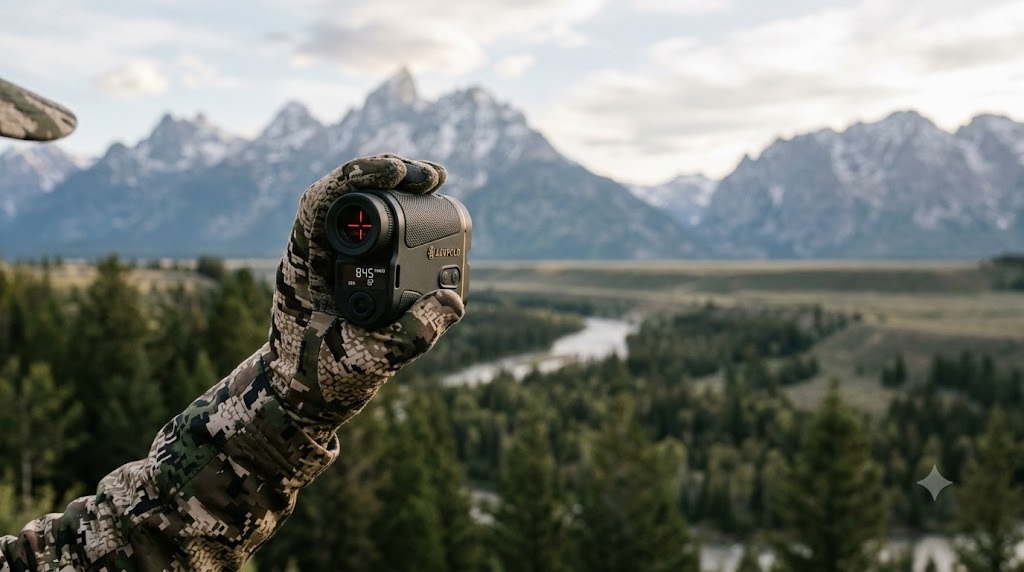
Misjudged distance is the most common reason good shots go bad - a bow arrow drops dramatically over a few yards, and rifle bullets need known range for anything past point-blank. A laser rangefinder removes the guess: point, press, read the number. For bowhunters it's nearly as essential as the bow; for rifle hunters it's the optic that turns 'about 250 yards, I think' into a confident, ethical shot.
What it is & when you need it
A handheld device that fires an invisible laser at the target and times the reflection to display exact distance. Essential for bowhunting (where yardage is everything) and increasingly standard for rifle hunting beyond close range.
How to read the numbers
'Max range' figures are measured off big reflective targets - real range on a deer is far less, so a '1000-yard' unit reliably ranges game to perhaps a third of that. The number that matters more is 'angle compensation' (see below) and beam divergence (tighter = easier to range a small animal past brush).
What actually matters
For hills and treestands, ANGLE COMPENSATION is the key feature: it gives the true horizontal 'shoot-to' distance, because a steep uphill or downhill shot needs less holdover than the straight-line range suggests. Also value fast, consistent readings on non-reflective animal hide, and a clear display in low light.
Where it fits in your kit
Buy it after binoculars. Bowhunters should range likely shooting lanes on arrival at a stand, before the animal shows. Rifle hunters range landmarks around them so a shot at an appearing animal is instant. Rangefinding binoculars combine both optics for those who want to carry one device.
Care & field tips
Pre-range reference points (that stump, that fence post) so you're not fumbling when game appears. In rain or brush, aim at a solid object beside the animal. Keep a spare battery - a dead rangefinder mid-hunt is useless. Practise ranging small, dark, non-reflective targets, not just bright walls.
Common mistakes
Trusting 'max range' marketing, skipping angle compensation for mountain or treestand hunting (the classic overshoot), ranging the animal for the first time as it stands broadside (too slow - pre-range the lanes), and letting the battery die. Range early, range often.
🧭 This is brand-free buying guidance, not product recommendations - we describe what matters so you can choose for yourself. Optics regulations (thermal, night vision, cellular cameras) vary by area and change often; confirm current rules with your official wildlife agency before buying or hunting. We don't give legal advice.