Crossbow Scope
A crossbow scope uses stacked horizontal aim-lines for the arrow's steep drop at 20, 30, 40 yards - matched to your bolt's speed, it makes a crossbow point-and-shoot within range.
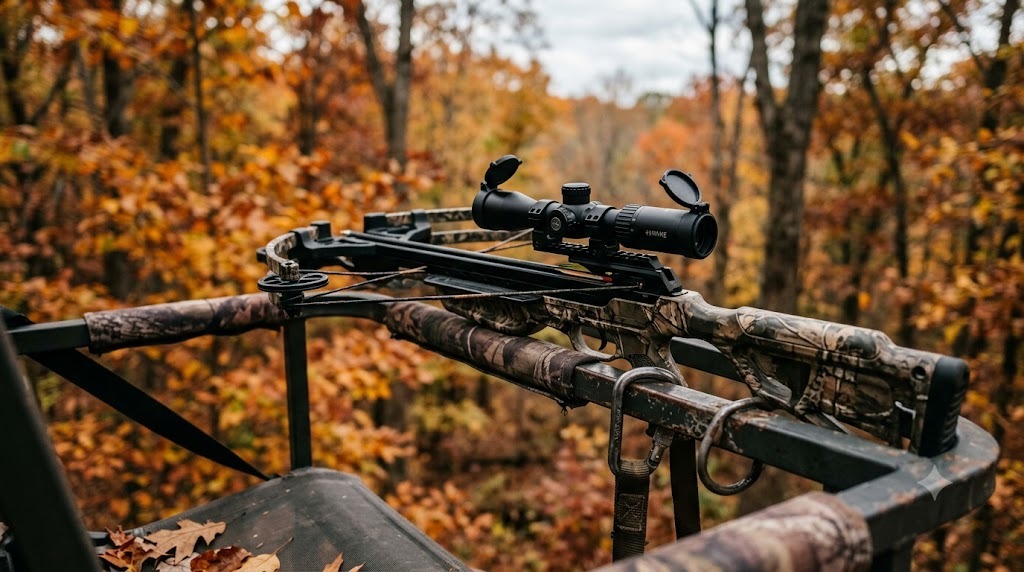
A crossbow bolt drops fast, so crossbow scopes replace a single crosshair with a ladder of stacked aiming lines - one each for 20, 30, 40, 50 yards. Sight the top line at 20, and if the reticle is matched to your bow's arrow speed, the lower lines fall almost exactly on the longer distances. Combined with a rangefinder, it turns the crossbow's arcing trajectory into a simple 'range it, pick the line, hold, shoot' system.
What it is & when you need it
A low-magnification (usually 4× or 1.5-5×) optic with a multi-line or multi-dot reticle designed for a crossbow bolt's rapid drop. You need it on any hunting crossbow - the stacked reticle is what makes ethical shots past 20 yards repeatable.
How to read the numbers
The reticle's lines correspond to yardages, but ONLY if the scope is 'speed-matched' to your bolt: many crossbow scopes have a speed-adjustment ring (e.g. 300-400 fps) you set to your bow's measured arrow speed, which then aligns the lines to true distances. Magnification is modest (4×) because shots are close.
What actually matters
Correct speed-matching to YOUR bolt and broadhead (the whole system fails if the lines don't match your trajectory), a reticle you can read in low light (illuminated reticles help at dusk), adequate eye relief for the crossbow's forward jump, and rugged construction to survive the sharp shock of the limbs firing.
Where it fits in your kit
The dedicated aiming optic for a crossbow, used hand-in-glove with a rangefinder. Range the animal, choose the matching line, and hold - no guesswork on the steep drop. Confirm your crossbow's arrow speed (chronograph or manufacturer spec) to set the scope correctly.
Care & field tips
Set the speed ring to your measured arrow velocity, then confirm each yardage line on paper at 20/30/40 - trust the target, not the label. Re-check zero after transport; crossbow recoil is sharp. Use the illuminated reticle at legal low light, and keep magnification low for a wide, quick field of view up close.
Common mistakes
Not speed-matching the reticle (lines that don't match your bolt = misses), trusting the yardage lines without confirming them on paper, ranging by eye instead of with a rangefinder (bolt drop is unforgiving), and shooting past the reticle's and your own proven range. Match it, confirm it, range every shot.
🧭 This is brand-free buying guidance, not product recommendations - we describe what matters so you can choose for yourself. Optics regulations (thermal, night vision, cellular cameras) vary by area and change often; confirm current rules with your official wildlife agency before buying or hunting. We don't give legal advice.