Hunting Binoculars
Binoculars are the optic you'll use more than any other - not for the shot, but for the hours of finding, judging and confirming game before it. If you buy one glass, buy these.
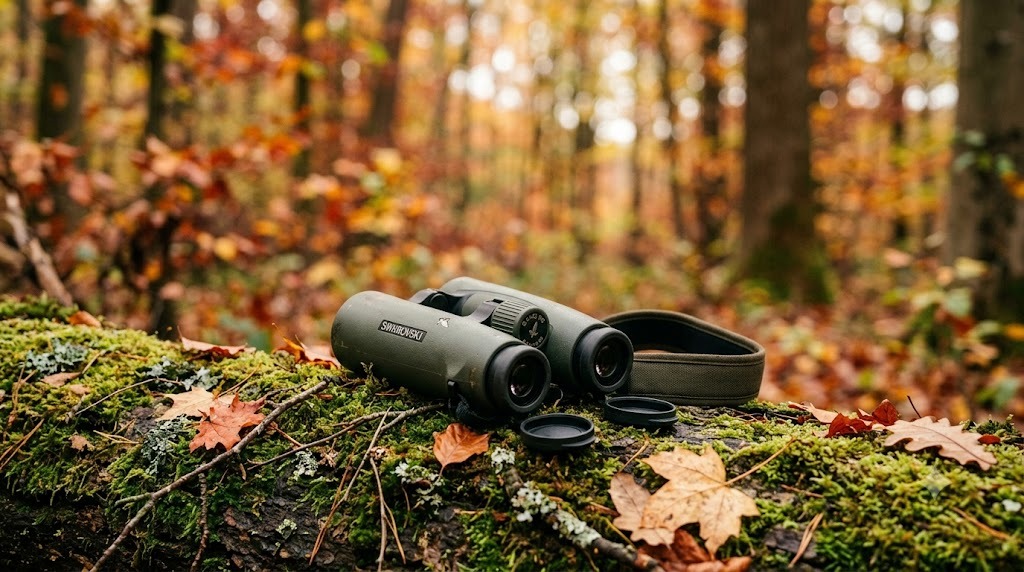
Ask experienced hunters what optic they'd keep if they could only have one, and almost all say binoculars. You spend far more of a hunt looking than shooting, and good binoculars turn a distant grey blob into a legal buck or a rock in seconds - saving miles of wasted stalking and preventing the worst mistakes. This is the single best place a new hunter's optics money goes.
What it is & when you need it
A handheld pair of matched telescopes for both eyes, used to find, count, judge and confirm animals at distance - and to read terrain and sign. From treestands to open-country glassing, they're in use every hour of daylight, which is exactly why they matter most.
How to read the numbers
The two numbers - '8x42', '10x42' - are magnification × objective-lens diameter in mm. 8x shows a wider, steadier, brighter image (best for timber and all-day handheld use); 10x reaches farther for open country but shakes more and dims slightly. The 42mm objective is the all-round standard; bigger gathers more low-light detail but adds weight.
What actually matters
Glass quality and coatings decide the last-and-first-light minutes when animals move - that's where price shows. Prioritise, in order: low-light brightness, edge sharpness, a comfortable wide field of view, and light weight you'll actually carry all day. A mid-priced modern bino outperforms a decades-old 'name' pair.
Where it fits in your kit
The foundation optic - buy these before a rangefinder or a fancy scope. Pair 8x or 10x binoculars with a chest harness (not a neck strap) so they ride secure and instantly ready; add a rangefinder later, and a spotting scope only if you hunt truly open country.
Care & field tips
Chest-harness carry keeps them steady and protected. Use the lens covers, never wipe grit-covered glass dry (blow or brush first, then a lens cloth), and set your dioptre and eye-cups once so the image is always crisp. Glass from a stable rest or trekking-pole 'V' to see far more detail.
Common mistakes
Over-magnifying (10x+ handheld shakes too much for most people - 8x sees more, not less), buying huge heavy objectives you leave in the truck, skimping here to splurge on the scope, and neck-strap carry that bounces and snags. Buy the best binoculars you can, first.
🧭 This is brand-free buying guidance, not product recommendations - we describe what matters so you can choose for yourself. Optics regulations (thermal, night vision, cellular cameras) vary by area and change often; confirm current rules with your official wildlife agency before buying or hunting. We don't give legal advice.