Honing Steel & Field Sharpeners
Not a knife but the reason every knife above works - a honing steel realigns an edge, a stone or guided sharpener restores it. A dull knife is a dangerous, useless knife.
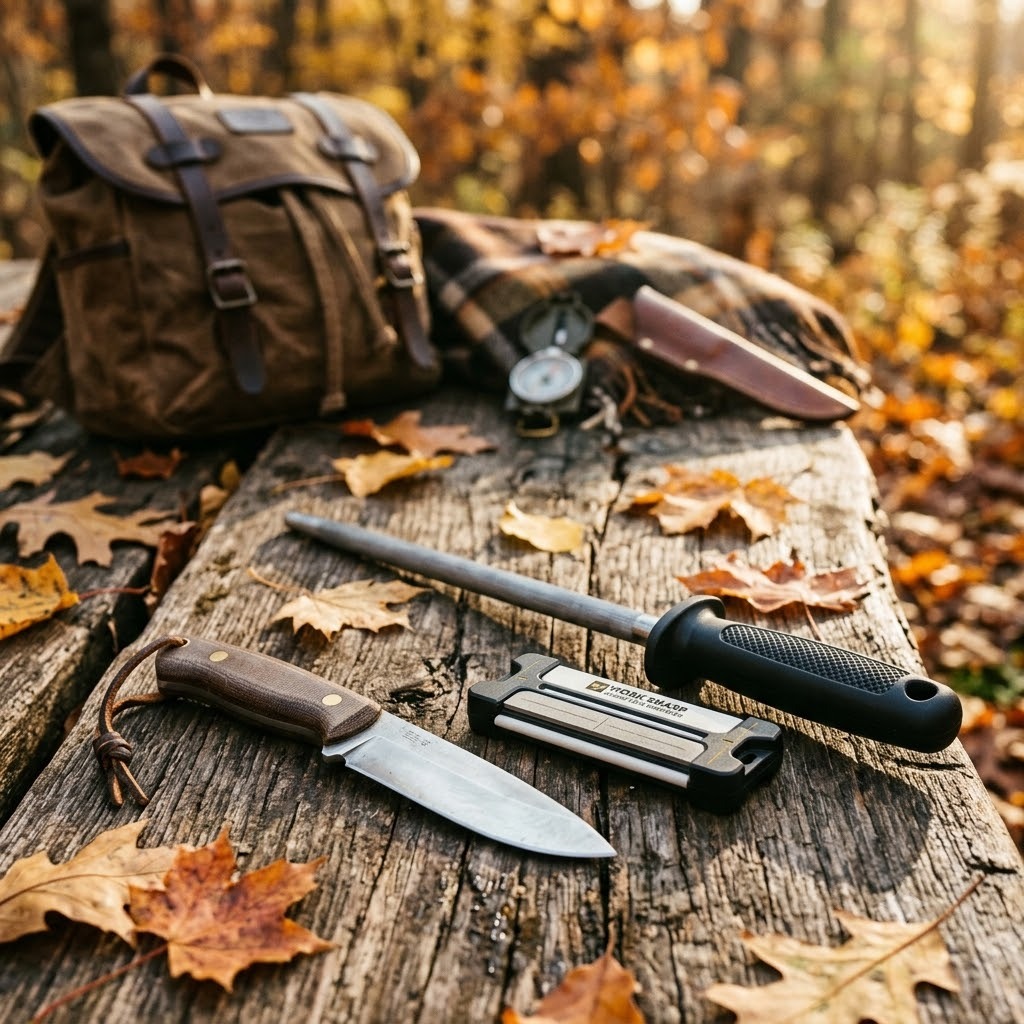
Every knife in this catalog is only as good as its edge, and edges dull - fast, on hide and bone. This is the maintenance kit: a honing steel or ceramic rod that realigns a rolled edge in seconds (honing, not sharpening), and a stone or guided/pull-through sharpener that grinds a fresh edge when honing no longer bites. Keeping them keen isn't fussiness - a sharp knife cuts where you aim; a dull one skids and injures.
⚠️ Sharp tools, real cuts. A sharp knife is safer than a dull one - it goes where you aim instead of skidding - but it also punishes a slip. Cut away from your body and your holding hand, keep a wet/greasy handle under control, wear a cut-resistant glove on the non-knife hand when boning or caping, and keep blades away from children. This is general guidance, not a substitute for hands-on instruction.
What it is
Edge-maintenance tools: a honing steel/ceramic rod (realigns an edge between sharpenings), and a sharpening stone, guided system or field pull-through (grinds a new edge).
What it does best
Keeping blades cutting safely: hone frequently during a long processing session to restore bite, sharpen when honing stops working, and touch up field blades so they never go truly dull.
How to use it
Honing: draw the blade down the steel at a consistent ~20° each side, a few light strokes. Sharpening: hold a steady angle on the stone (coarse then fine), maintain the bevel evenly, finish with a strop. Guided/pull-through tools set the angle for you.
Choosing one
A ceramic or fine steel rod for honing plus a two-grit stone or a decent guided sharpener covers everything; compact diamond/ceramic field sharpeners live in the pack. Match to your patience - guided systems are foolproof.
Care & sharpening
Keep stones clean and (if oil/water stones) conditioned; store rods where they won't chip. The tools that sharpen also need looking after.
Common mistakes
Confusing honing with sharpening (honing won't fix a truly dull edge), inconsistent angles (rounds the edge), over-grinding on a pull-through, and - the big one - letting a blade get dangerously dull before touching it up.
🔪 Brand-free guidance, not product recommendations. Sharp tools cause real cuts - cut away from your body and holding hand, use a cut-resistant glove for boning/caping, and keep blades from children. This is general education, not hands-on instruction.