Drop-Point Knife
A strong, controllable blade whose spine curves gently down to a centred tip - the safest, most versatile all-round hunting knife, and the one to own first.
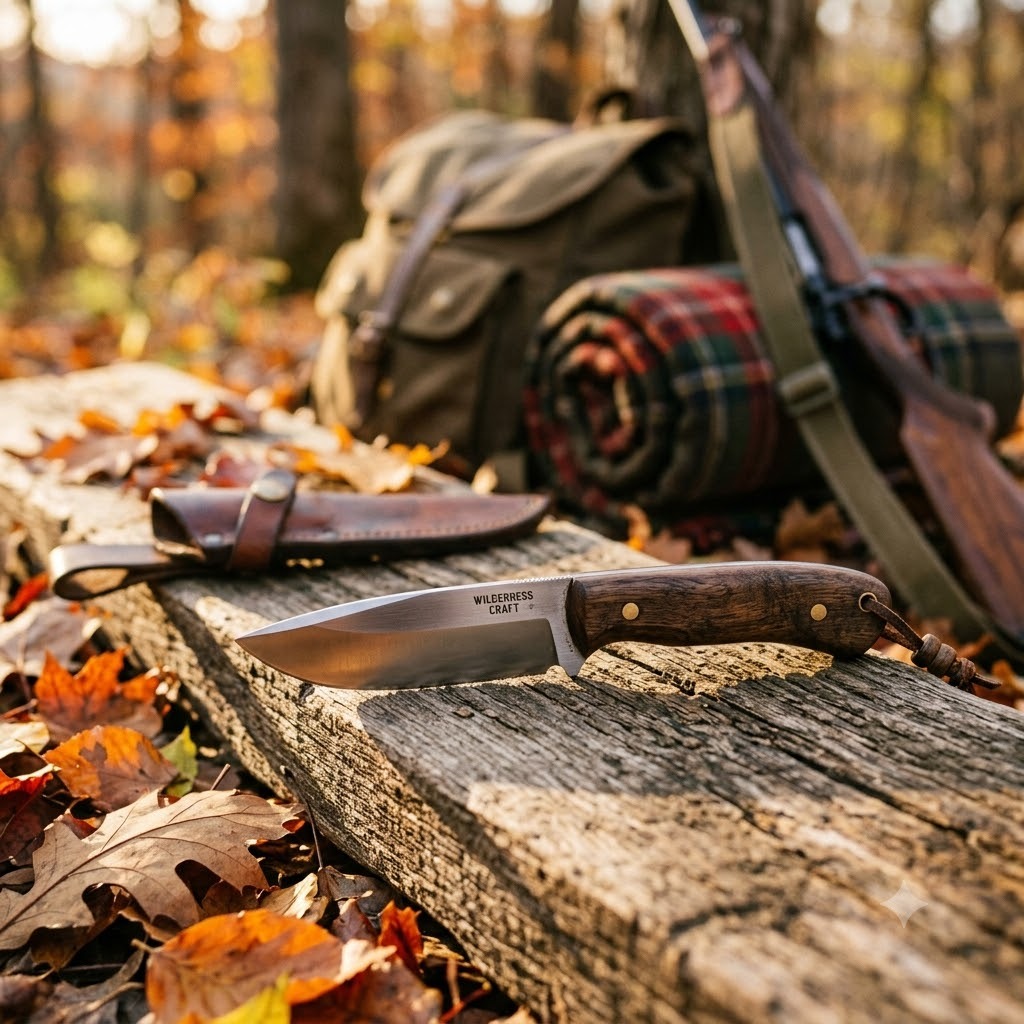
If you buy one hunting knife, buy a drop-point. The spine slopes gently down to a tip that sits near the centre of the blade, giving a strong point that resists breaking and a large curved belly for skinning - all without the fine upswept tip that punctures organs during field dressing. It field-dresses, skins and does camp chores with equal composure, which is why it's the default hunting blade.
⚠️ Sharp tools, real cuts. A sharp knife is safer than a dull one - it goes where you aim instead of skidding - but it also punishes a slip. Cut away from your body and your holding hand, keep a wet/greasy handle under control, wear a cut-resistant glove on the non-knife hand when boning or caping, and keep blades away from children. This is general guidance, not a substitute for hands-on instruction.
What it is
A fixed (or folding) blade with a convex spine dropping to a lowered, centred tip and a generous curved belly - strong point, controllable, all-purpose.
What it does best
Everything the average hunter needs: field dressing, skinning, general cutting and camp work. The lowered tip is forgiving during the gutting cut, where an upswept point risks nicking the stomach or intestine.
How to use it
Use the belly for long skinning strokes, the tip for careful entry cuts, and keep the edge working away from your body and holding hand. Its strength tolerates the occasional pry (though a knife is not a pry bar).
Choosing one
A 8-10 cm blade suits deer-sized game; look for good steel (stainless like 8Cr/440C/S30V for low-maintenance, tool steels for edge-holding if you'll strop), a secure full-tang on fixed blades, and a handle that grips when wet.
Care & sharpening
Wipe and dry after use, oil carbon steels, and keep a working edge with a fine stone or a guided sharpener at ~20°. Strop to touch-ups between sharpenings; a sharp drop-point is a safe drop-point.
Common mistakes
Buying a huge 'survival' blade (unwieldy for real cutting), letting it go dull (dull knives slip and injure), and prying with the tip until it snaps.
🔪 Brand-free guidance, not product recommendations. Sharp tools cause real cuts - cut away from your body and holding hand, use a cut-resistant glove for boning/caping, and keep blades from children. This is general education, not hands-on instruction.