Boning Knife
A narrow, thin, often flexible blade that slips along bone and follows muscle seams - the butchering knife that turns a quartered animal into clean, boneless cuts.
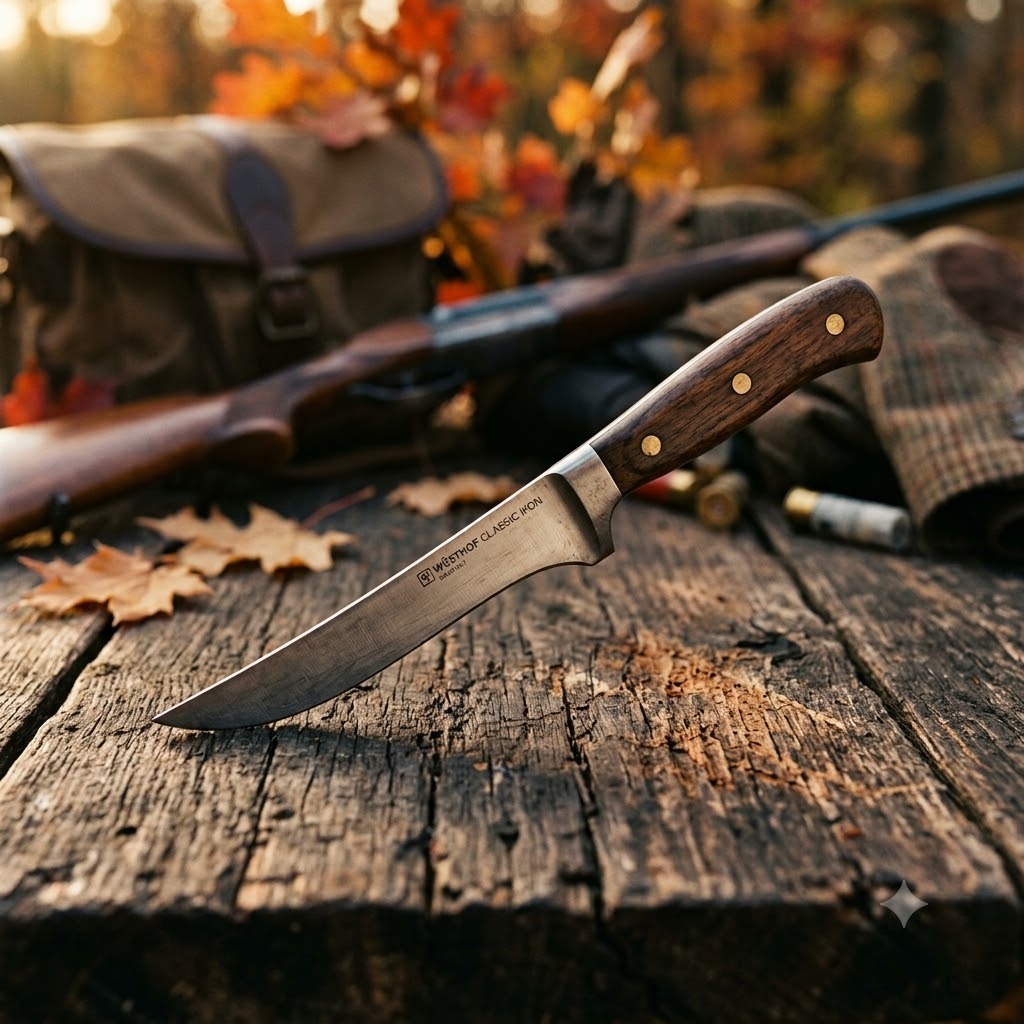
Once the hide's off and the animal's quartered, the boning knife does the butchery. Narrow and thin - stiff for heavy work, flexible for following curves - it slides along bone and traces the natural seams between muscles, freeing clean boneless cuts with minimal waste. It's the blade that turns a hindquarter into labelled roasts and a shoulder into stew and grind.
⚠️ Sharp tools, real cuts. A sharp knife is safer than a dull one - it goes where you aim instead of skidding - but it also punishes a slip. Cut away from your body and your holding hand, keep a wet/greasy handle under control, wear a cut-resistant glove on the non-knife hand when boning or caping, and keep blades away from children. This is general guidance, not a substitute for hands-on instruction.
What it is
A narrow, thin-bladed knife (stiff or flexible) built to separate meat from bone and follow muscle seams during butchering.
What it does best
Deboning and seam-butchering: hugging bone to lift meat clean, tracing intermuscular seams to separate roasts, and trimming silverskin and fat with control. Pairs directly with the venison-cuts breakdown.
How to use it
Let the tip and edge follow the bone and the seams rather than cutting through muscle; a cut-resistant glove on the guiding hand is wise. Long smooth strokes, blade angled toward the bone to leave meat behind.
Choosing one
A 13-15 cm blade: stiff for big-game bones, semi-flexible for following curves; a comfortable non-slip handle matters when hands are greasy. A honing steel keeps it true between sharpenings.
Care & sharpening
Hone often (a butcher's steel realigns the thin edge), sharpen at a low angle for slicing, and dry immediately - thin blades are keen but need upkeep.
Common mistakes
Using a thick field knife (can't follow seams), forcing through bone instead of around it, and skipping the guard glove during a slippery boning session.
🔪 Brand-free guidance, not product recommendations. Sharp tools cause real cuts - cut away from your body and holding hand, use a cut-resistant glove for boning/caping, and keep blades from children. This is general education, not hands-on instruction.