Texas Longhorn Cattle: A Homesteader's Beef Breed Guide
Texas Longhorns are a hardy, low-input beef breed known for lean meat, easy calving, and dramatic horns, but their size and horn spread demand serious space and fencing.
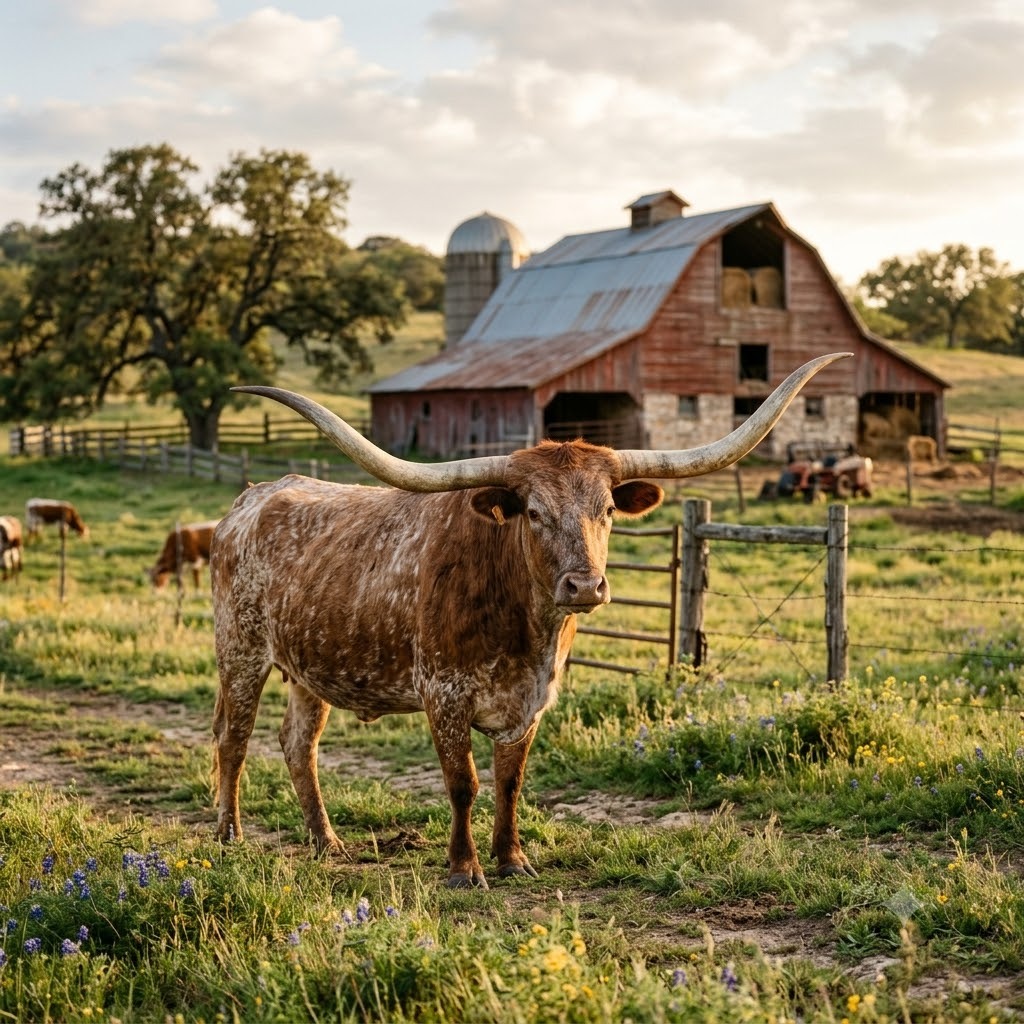
Texas Longhorns descend from Spanish cattle brought to the Americas in the 1500s, shaped by centuries of survival on open range. Homesteaders keep them for lean beef, remarkable hardiness, and famously easy calving, all on rougher forage than most modern breeds tolerate. The horns are the signature: they can span six feet or more tip to tip.
Is it right for you?
Best for homesteaders with real acreage, hot or dry climates, and a low-input mindset. They forage well and rarely need help calving, which suits beginners on that count, but the horns and size mean handling facilities and respect are non-negotiable.
What you get
Lean, low-fat beef. Cows mature around 800-1,100 lb and bulls 1,400-2,000 lb, which is lighter than a beef breed like Angus. Steers finish slower, often 24-30 months, on grass. Expect a lower yield per animal but excellent feed efficiency on modest pasture.
Space & Housing
Plan on at least 2-5 acres of pasture per head, more on poor ground. They tolerate weather well and need only windbreaks or simple shelter. Fencing must be strong, and gates, chutes, and alleys have to be wide enough for the horn spread.
Feeding & Daily Care
Primarily grass and hay, with winter hay when pasture is dormant. Provide clean water, a mineral supplement, and salt. Feed bills stay low because they thrive on forage others reject, though grain can speed finishing if you choose.
Temperament & Handling
Generally calm and intelligent, and many become quite tame with regular handling. That said, the horns make even a gentle animal dangerous in tight spaces. They are quiet compared to many breeds. Steady, respectful handling matters most.
Health & Hardiness
Exceptionally hardy, heat-tolerant, and disease-resistant, with strong feet and legs. They handle drought and rough range better than most. For any health question, sourcing, or breeding decision, work with reputable breeders and a livestock veterinarian.
Getting Started
Start with two or three weaned heifers or a few steers rather than a lone animal, since they are herd animals. Buy from established breeders with registration and health records. A bull is only worth keeping once your herd justifies it.
Common Mistakes
Underestimating horn clearance in chutes and gates. Expecting fast, heavy carcasses like a commercial beef breed. Keeping just one animal, which stresses a herd species.
FAQ
Are Texas Longhorns good for beginners?
Yes for hardiness and easy calving, but the horns demand caution and proper facilities from day one.
How much land do I need?
Budget 2-5 acres per animal, adjusting up for poor or dry pasture.
🎯 Kit for small livestock
Links go to Amazon or a partner store (such as OpticsPlanet) and may earn us a commission at no extra cost to you. As an Amazon Associate we earn from qualifying purchases. We link gear types, not sponsors' picks: you choose the exact product.