Silver Fox Rabbit: Heritage Meat and Fur Breed
A large, calm American heritage rabbit raised for solid meat yields and a unique silvered pelt. A good fit for homesteaders who want a hardy, dual-purpose breed and don't mind supporting a rare line.
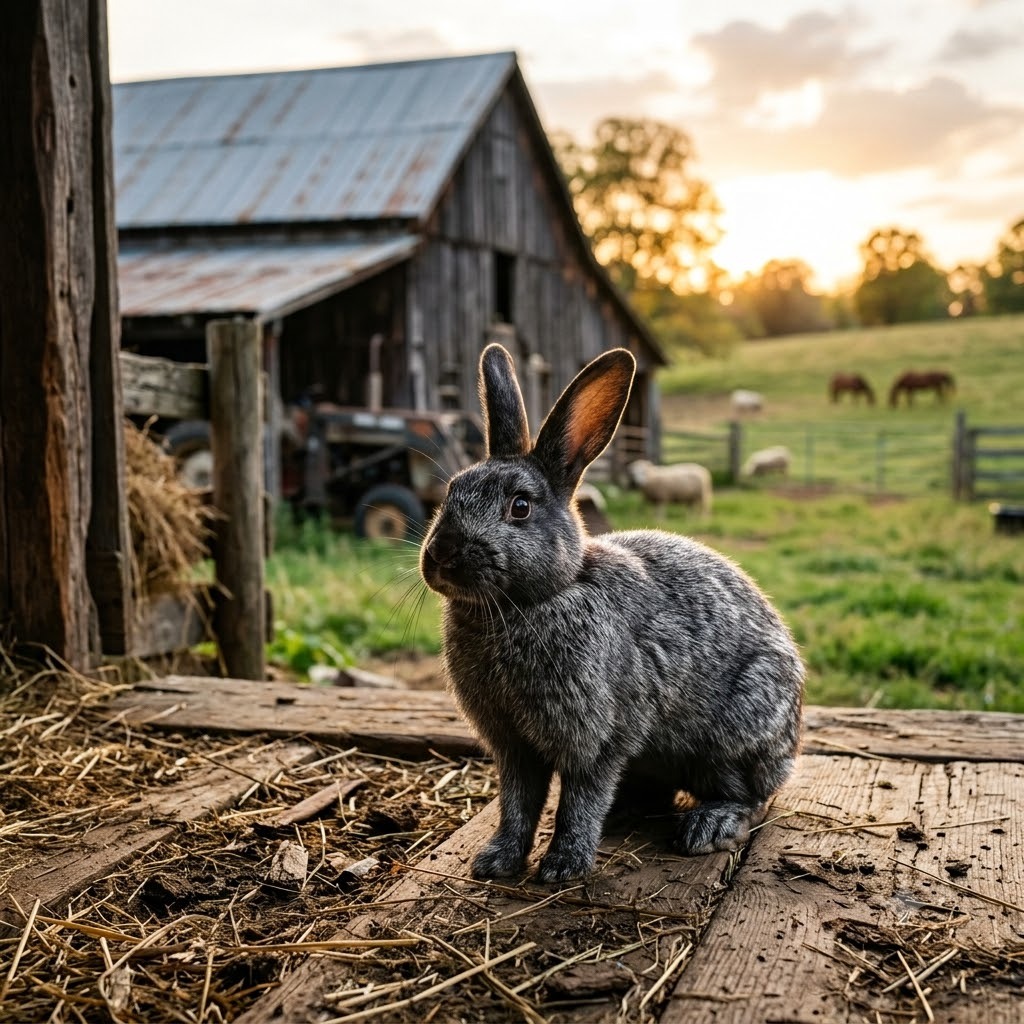
The Silver Fox is one of the oldest rabbit breeds developed in the United States, bred by Walter B. Garland in Ohio and recognized in the 1920s. It is prized for two things: a meaty carcass and a dense, standing coat that resembles silver fox fur. Homesteaders keep it as a calm, cold-hardy, dual-purpose rabbit that also happens to be a rare heritage line worth preserving.
Is it right for you?
Good for anyone wanting a gentle large-breed meat rabbit that tolerates cold well. It suits beginners with basic hutch space, and appeals to keepers who value conservation breeds. Hot, humid climates are harder on it than cold ones.
What you get
This is a meat and fur breed, not a milk or egg animal. Adults reach roughly 9 to 12 pounds. Does are excellent mothers with large litters of 6 to 10 kits, and youngsters hit a 5 pound processing weight around 8 to 10 weeks. The signature pelt stands upright when stroked backward and has long been valued for trim and craft use.
Space & Housing
A hutch or wire cage of about 30 by 36 inches per adult works, raised off the ground with a solid resting area to protect the feet. Provide shade, dry bedding, and good airflow. No pasture or fencing is required.
Feeding & Daily Care
Feed a quality pellet plus unlimited grass hay and clean water daily. A large adult eats roughly 6 to 8 ounces of pellets a day, so the feed bill is modest but real once you run several rabbits. Check water and clean regularly.
Temperament & Handling
Docile, quiet, and easy to handle. They rarely panic, tolerate being picked up, and does are steady with their litters, which makes them forgiving for newcomers.
Health & Hardiness
Very cold-tolerant thanks to the thick coat, but sensitive to heat above roughly 85 F. As a large breed, sore hocks and overgrowth issues can appear without proper flooring and diet. This is general guidance, not medical advice; for any health concern, work with reputable breeders and a livestock veterinarian.
Getting Started
Start with a trio: one buck and two does from a breeder who shows pedigrees. Learn to sex young stock and keep breeding records. Because the breed is rare, buying from a recognized breeder also helps the bloodline.
Common Mistakes
Housing them in heat without cooling. Skimping on cage size for such a large rabbit. Buying unregistered stock and losing the pedigree that keeps this heritage breed viable.
FAQ
Is the Silver Fox good for beginners?
Yes. Its calm nature, hardiness, and good mothering make it one of the more forgiving large breeds to start with.
Why is it called Silver Fox?
The coat mimics silver fox fur; the hair stands up when stroked from tail to head instead of laying flat like most rabbits.
🎯 Kit for rabbits and guinea pigs
Links go to Amazon or a partner store (such as OpticsPlanet) and may earn us a commission at no extra cost to you. As an Amazon Associate we earn from qualifying purchases. We link gear types, not sponsors' picks: you choose the exact product.