Raising Sebright Bantam Chickens
A true bantam masterpiece - every gold or silver feather edged in black lacing like chainmail - kept purely for beauty; tiny eggs, delicate chicks, endless admiration.
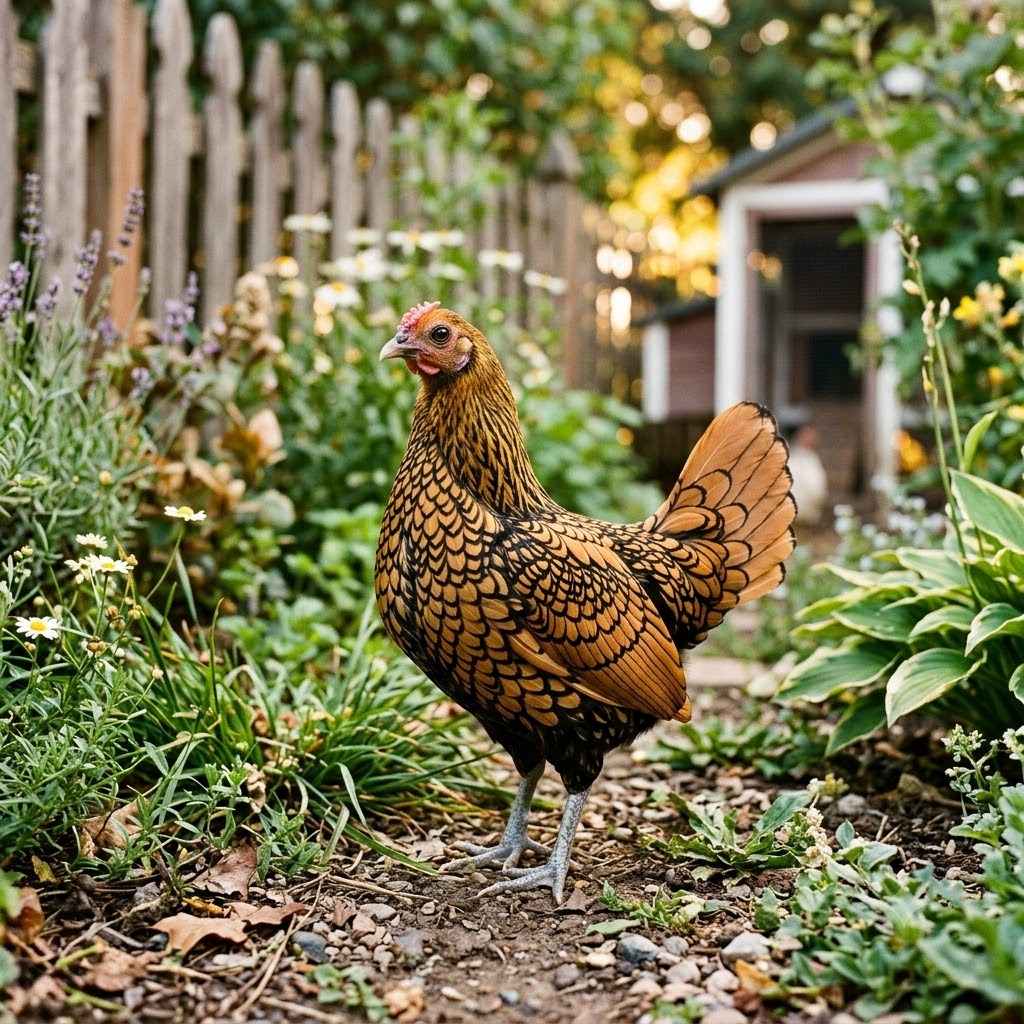
Sir John Sebright spent decades around 1800 perfecting one idea: a pocket-sized chicken where every single feather - gold or silver - is edged in precise black lacing, like a bird assembled from jeweler's scales. The Sebright remains the pinnacle of ornamental poultry: a true bantam (no large version exists) kept for pure aesthetics by keepers who accept fragile chicks, minimal eggs and maximum wonder.
Is it right for you?
For ornamental keepers, exhibitors and lovers of living art with brooder experience; not for egg baskets or harsh-weather free-ranging.
Space & Housing
Small, secure, draft-free quarters; they fly beautifully (covered runs) and chill easily (dry warmth matters).
Feeding & Daily Care
Fine-crumb quality feed; attentive early brooding is the breed's make-or-break period.
Getting Started
From breed specialists - hatchery Sebrights vary widely in lacing quality. Start with adults if brooder-nervous.
Health & Common Problems
Chick fragility (first 4-6 weeks are the gauntlet), cold sensitivity, and Marek's susceptibility noted by many breeders - vaccinated stock recommended.
What You Get
60-100 tiny white eggs/year at best - and the most exquisitely patterned bird in the yard, plus show-ring doors if desired.
Costs & Effort
Small bird, high care ceiling; the effort is expertise more than expense.
Common Mistakes
- Treating them like production stock
- Cold damp brooders (chick losses)
- Expecting rooster sickle feathers (hen-feathered males are correct, not defective)
FAQ
Why do the roosters look like hens?
Sebright males carry 'hen feathering' - no pointed sickles or hackles - a fixed breed trait that keeps the lacing perfect over the whole bird.
Are they worth the difficulty?
Ask anyone who's watched sunlight cross silver lacing: the breed has been mesmerizing keepers for two centuries. It's jewelry that forages.
🎯 Kit for keeping poultry
Links go to Amazon or a partner store (such as OpticsPlanet) and may earn us a commission at no extra cost to you. As an Amazon Associate we earn from qualifying purchases. We link gear types, not sponsors' picks: you choose the exact product.