Sebastopol Goose: Curly-Feathered Ornamental Bird
A calm, medium-sized ornamental goose prized for its long, curling feathers - kept for looks and companionship far more than for eggs or meat.
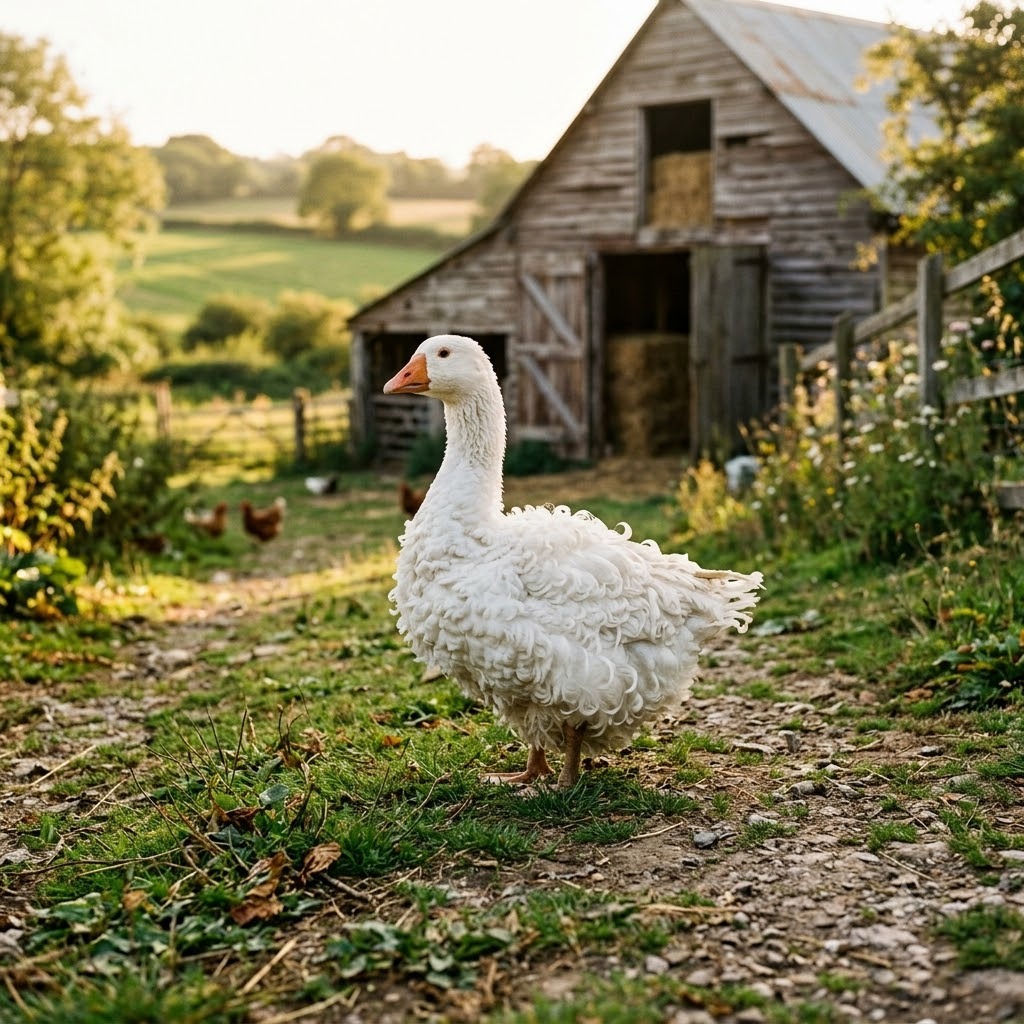
The Sebastopol is a medium-sized ornamental goose known for long, soft, curling feathers that trail over its back and wings. It comes from the Black Sea region of southeastern Europe - the name echoes the port of Sevastopol - and joined American standards in 1938. Homesteaders keep it for looks and companionship, not heavy production.
Is it right for you?
It suits a keeper who wants a gentle, decorative goose and can offer clean water and dry shelter. It is a poor fit for serious meat or egg goals, or for long, wet, windy winters. Beginners manage them well.
What you get
Expect only 25 to 35 white eggs a year, in a spring flush. Ganders run about 12 to 14 lbs and geese 10 to 12 lbs, so a table bird is possible but small and slow. The real yield is ornament and tame pets.
Space & Housing
They cannot fly, so a 3 to 4 foot fence holds them - but that also leaves them easy prey, so predator-proof night housing is essential. Give a dry, draft-free shed and a shallow pool to keep feathers clean.
Feeding & Daily Care
Feed waterfowl or poultry pellets plus grass grazing; they forage well in season. Cost is low - a few dollars a week per bird, more in winter when you supplement grain and greens.
Temperament & Handling
Sebastopols are among the calmest geese - friendly, curious, and fairly quiet. Ganders can get protective when breeding, but most tame readily with handling.
Health & Hardiness
The curled feathers shed water and hold heat poorly, so wet cold is the main risk; they need reliable dry shelter and cannot tough out storms. For any health concern or breeding plan, lean on reputable breeders and a livestock veterinarian.
Getting Started
Start with two or three - geese hate being alone. Buy from a reputable breeder who can show parent stock, since feather quality varies. Sexing is hard when they are young.
Common Mistakes
Common ones: leaving them in wet cold without shelter, letting swim water turn filthy so feathers mat, and assuming they can flee predators like normal geese.
FAQ
Can Sebastopol geese fly?
No. Their soft, curled wing feathers lack the stiffness for flight, so low fencing works - but predator-proof housing is a must.
Are they good egg or meat birds?
Not really. They lay only about 25 to 35 eggs a year and reach a modest 10 to 14 lbs, so most keepers choose them for ornament and temperament.
🎯 Kit for keeping poultry
Links go to Amazon or a partner store (such as OpticsPlanet) and may earn us a commission at no extra cost to you. As an Amazon Associate we earn from qualifying purchases. We link gear types, not sponsors' picks: you choose the exact product.