Royal Palm Turkey: Small Heritage Dual-Purpose Bird
A small, striking black-and-white heritage turkey kept for its looks, hard foraging, and modest small-family meat. Honest homestead facts on size, output, care, and tradeoffs.
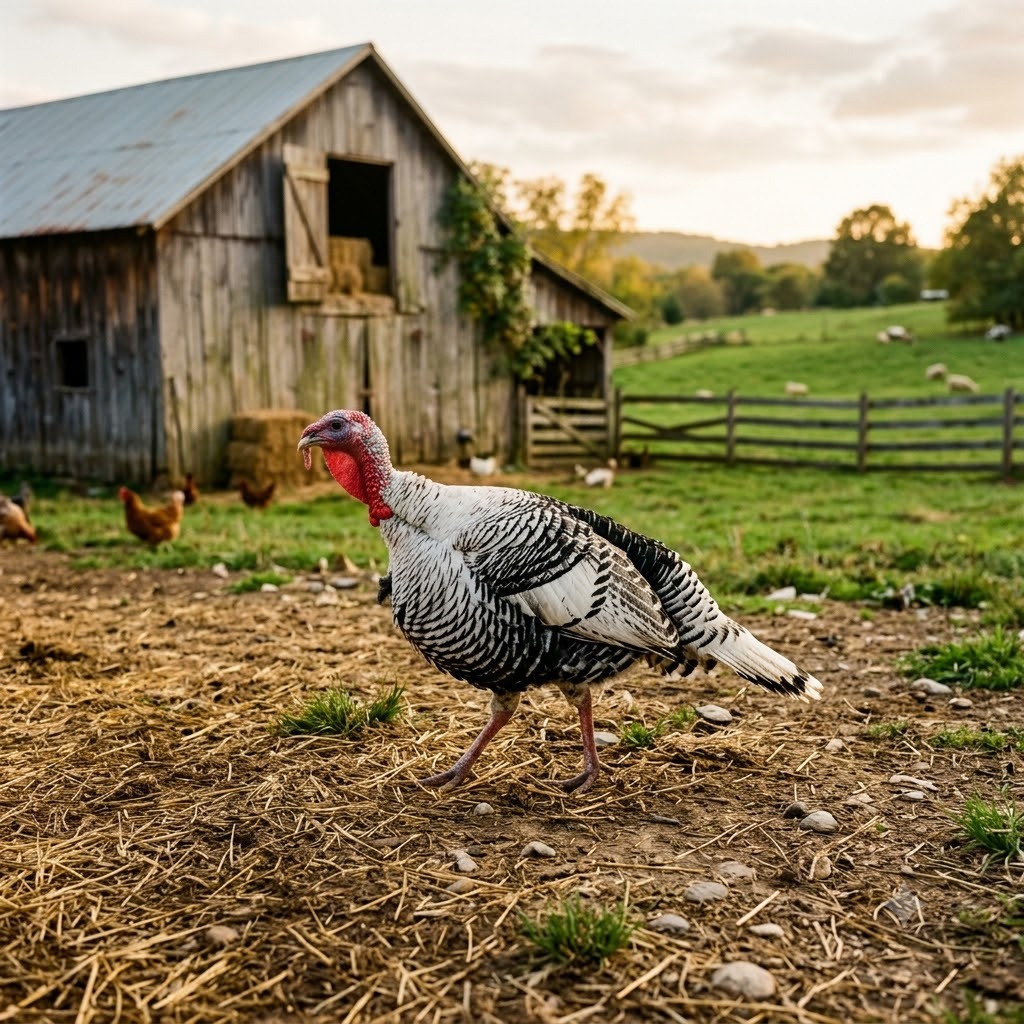
The Royal Palm is a small heritage turkey - white with sharp black lacing on back, wings, and tail. Developed in Florida in the 1920s, partly by accident, and recognized as a breed in 1971, it is kept mostly as an ornamental yard bird that also forages hard, controls pests, and feeds a small family.
Is it right for you?
Best for homesteaders who want an attractive, active flock bird rather than a freezer-filler. It suits mixed climates with room to roam. Beginners can manage it, but its flying ability and independence demand secure fencing.
What you get
Hens lay roughly 50 to 100 eggs a year, mostly in spring. Toms reach near 16 to 22 lbs live weight, hens around 10 to 12 lbs - small-family meat, not a holiday centerpiece. Its real strength is eating ticks, grasshoppers, and beetles all day.
Space & Housing
Give a dry, predator-proof shed with high roosts. These turkeys fly well, so fencing must be tall or covered, or clip one wing. They range widely and dislike tight confinement.
Feeding & Daily Care
Feed a turkey or game-bird ration, higher protein for poults. Heavy foraging trims the feed bill in warm months. Daily care is light: fresh water, a feed top-up, and a quick predator and health check.
Temperament & Handling
Active, alert, and a little flighty rather than lap-tame. Toms stay less aggressive than heavy breeds; hens go broody and mother well. Moderately noisy but calmer than many turkeys. Gentle handling keeps them approachable.
Health & Hardiness
A lean, hardy breed, cold-tolerant with dry shelter, that mates naturally without help. Watch wet bedding and mixing young birds with chickens. For any illness, vaccine, or parasite question, rely on a reputable heritage breeder and a livestock veterinarian, not home remedies.
Getting Started
Start with a trio or a few poults from a reputable heritage breeder or hatchery. Keep one tom to two or more hens for breeding. Sexing gets easier with age: toms grow larger, with bolder snoods and strut.
Common Mistakes
Common errors: expecting broad-breasted yields from a light ornamental bird, underbuilding fences for a turkey that flies, and brooding poults too cold or damp. Take care raising poults alongside chickens.
FAQ
Can Royal Palm turkeys fly?
Yes, they are light and strong fliers. Expect them to roost in trees or clear a low fence, so plan tall or covered enclosures.
Are they a good meat bird?
Modestly. They give a smaller, flavorful carcass suited to a small family, not the large yield of commercial broad-breasted turkeys.
🎯 Kit for keeping poultry
Links go to Amazon or a partner store (such as OpticsPlanet) and may earn us a commission at no extra cost to you. As an Amazon Associate we earn from qualifying purchases. We link gear types, not sponsors' picks: you choose the exact product.