Raising New Hampshire Red Chickens
The Rhode Island Red's quicker cousin - selected for fast feathering, early laying and meatier build; a practical, hardy farm classic in its own right.
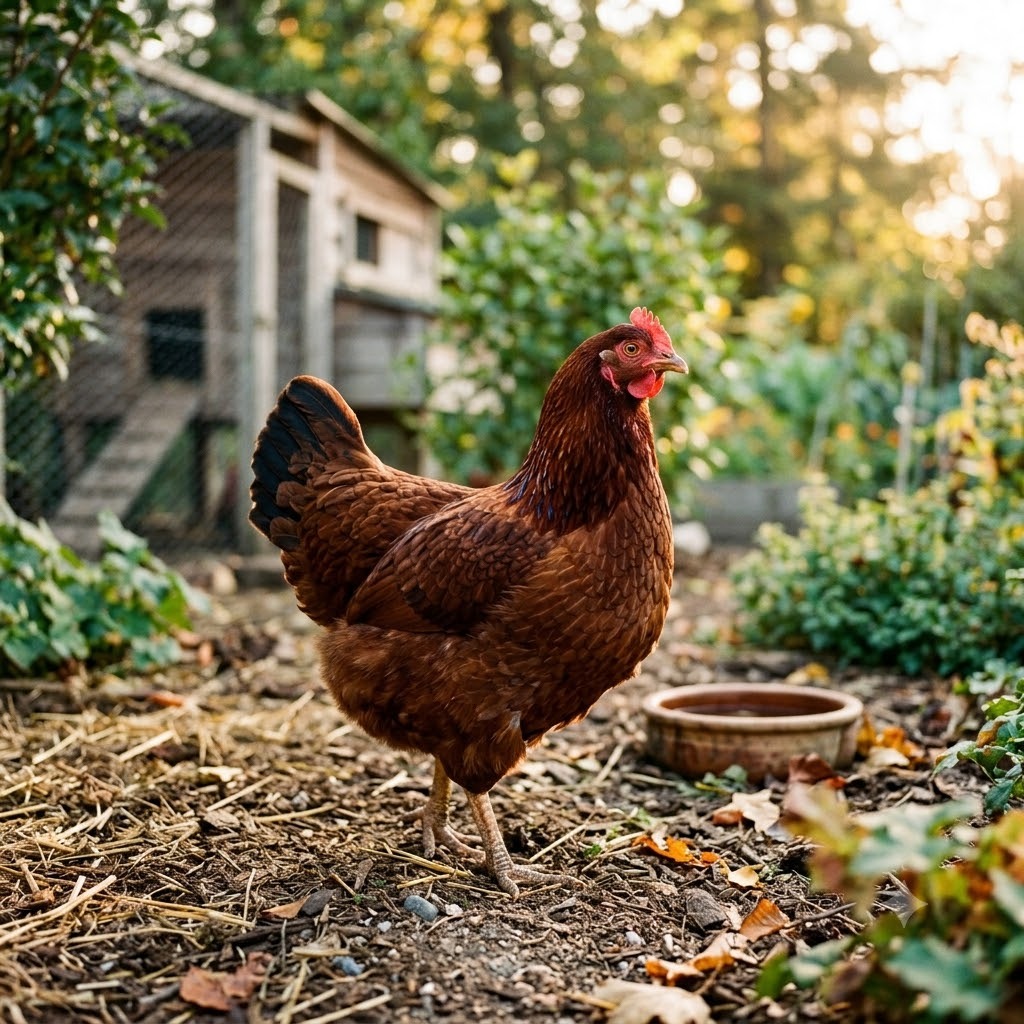
New Hampshire Reds began as Rhode Island Reds and were bred apart in 1910s-30s New Hampshire with ruthless practicality: feather faster, lay sooner, plump up better. The result is its own recognized breed - a lighter, brighter chestnut bird that reaches point-of-lay early, handles New England winters, and gives the small homestead eggs AND a respectable table bird without fuss.
Is it right for you?
Ideal for practical first flocks and homesteads wanting speed-to-production in a hardy bird; nothing exotic about it, deliberately.
Space & Housing
Completely standard requirements; confinement-tolerant and winter-solid.
Feeding & Daily Care
Standard layer program; efficient converters by heritage standards.
Getting Started
Widely available and inexpensive; chicks feather out notably fast - visible within weeks against slower breeds.
Health & Common Problems
Robust with no breed-specific issues; standard flock care.
What You Get
200-240 brown eggs/year starting early (as soon as 5 months), decent meat on culls, and dependable winter persistence.
Costs & Effort
Economical all around - this breed was engineered for exactly that.
Common Mistakes
- Buying 'red chickens' unlabeled and not knowing which breed you have
- Expecting RIR intensity of lay (NH trades a little volume for meat and speed)
- Overlooking them for flashier breeds despite the practicality
FAQ
New Hampshire or Rhode Island Red?
RIR for maximum eggs and famous hardiness; New Hampshire for faster maturity and a meatier frame. Both are beginner gold; many yards run both.
Are the roosters aggressive?
Generally milder than RIR males, though individual roosters are always individuals - handle young and cull mean ones.
🎯 Kit for keeping poultry
Links go to Amazon or a partner store (such as OpticsPlanet) and may earn us a commission at no extra cost to you. As an Amazon Associate we earn from qualifying purchases. We link gear types, not sponsors' picks: you choose the exact product.