Raising Leghorns: The Prolific White-Egg Machine
A guide to Leghorns - the classic high-output white egg layer behind most commercial eggs, an active, hardy, feed-efficient hen that lays a huge number of large white eggs on little feed.
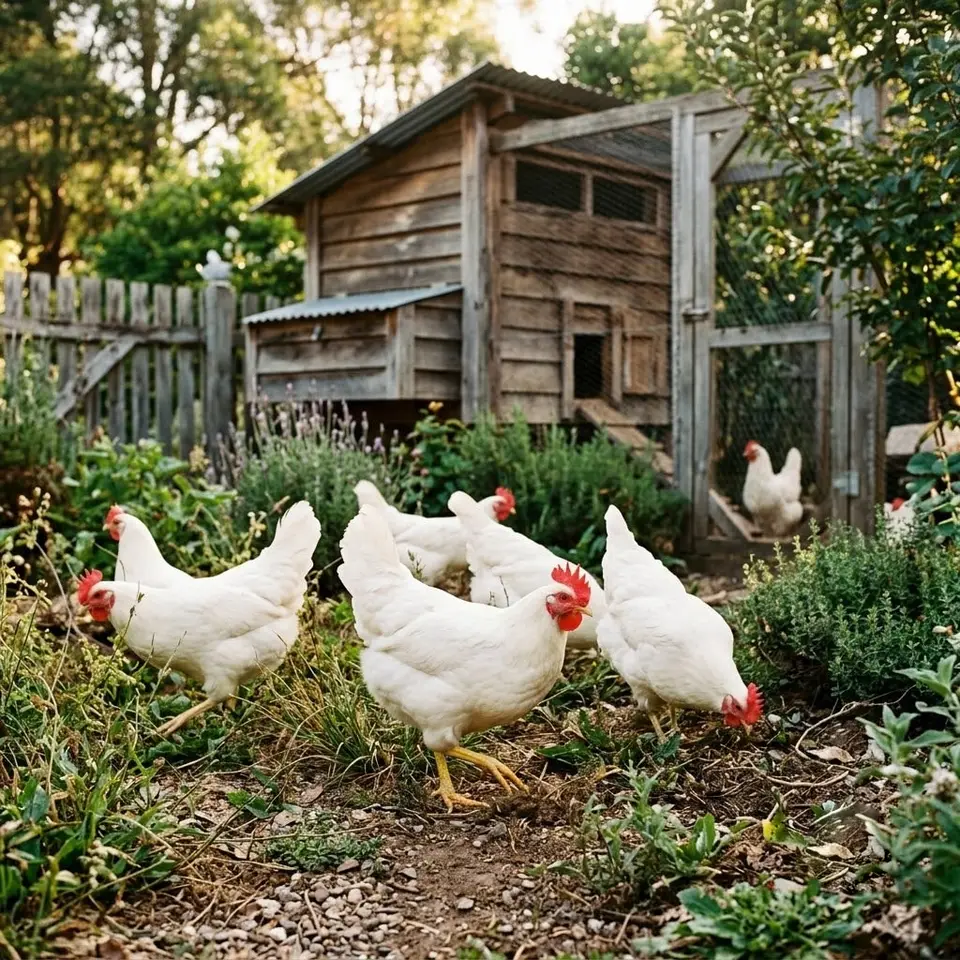
Leghorns are the reason white eggs fill supermarket shelves - the classic high-output layer, prized for converting remarkably little feed into a huge number of large white eggs. Active, hardy and feed-efficient, they are the choice when eggs-per-dollar is the goal. They are flighty and businesslike rather than affectionate, but few breeds match their sheer productivity.
At a glance
| Trait | Details |
|---|---|
| Use | Eggs |
| Eggs | White, large to extra-large; 150-320 a year |
| Weight | Roosters about 6 lb (2.7 kg), hens 4.5 lb (2 kg) |
| Temperament | Very active |
| Laying hens live | About 4-6 years |
Figures from The Livestock Conservancy.
Is it right for you?
Leghorns suit anyone who wants maximum white eggs for minimum feed and doesn't need a cuddly pet. They are the most efficient layers, though active and flighty rather than docile.
Space & Housing
A standard coop and run suits them, but being active flyers they benefit from a covered run or a clipped wing. They forage energetically and dislike tight confinement.
Feeding & Daily Care
Feed a quality layer ration plus forage; their efficiency means they turn modest feed into many eggs. Daily care is food, water and egg collection. Provide calcium for the heavy laying.
Getting Started
Start with a few pullets, provide a secure (ideally covered) coop, and expect a heavy flow of large white eggs by around five months - Leghorns mature and lay early.
Health & Common Problems
Hardy and disease-resistant; their large single combs can be frostbite-prone in hard winters, so ventilate without drafts. Watch the usual mites, worms and standard ailments.
What You Get
A prolific supply of large white eggs on remarkably little feed - the best feed-to-egg efficiency of the common breeds.
Costs & Effort
Very low relative to output - their feed efficiency makes them the most economical layer, with the trade-off of a flighty, non-pet temperament.
What Trips Up New Owners
Expecting a docile lap chicken, uncovered runs (they fly), and frostbitten combs in hard winters are the usual mistakes.
FAQ
How many eggs does a Leghorn lay, and how long does it live? Between 150 and 320 large to extra-large white eggs a year, and because they lay so heavily, the average life span of a laying hen is only 4 to 6 years. They are not broody (The Livestock Conservancy).
Best feed efficiency? Yes - Leghorns convert less feed into more eggs than almost any breed.
Friendly? Not especially: they are active and flighty, bred for eggs, not cuddles.
Kit for keeping poultry
Links go to Amazon or a partner store (such as OpticsPlanet) and may earn us a commission at no extra cost to you. As an Amazon Associate we earn from qualifying purchases. We link gear types, not sponsors' picks: you choose the exact product.