Large Black Pig: Hardy Pasture Pork on the Homestead
A hardy, all-black British pig prized on pasture for richly flavored pork and bacon, with a famously calm temperament and rare-breed status worth conserving.
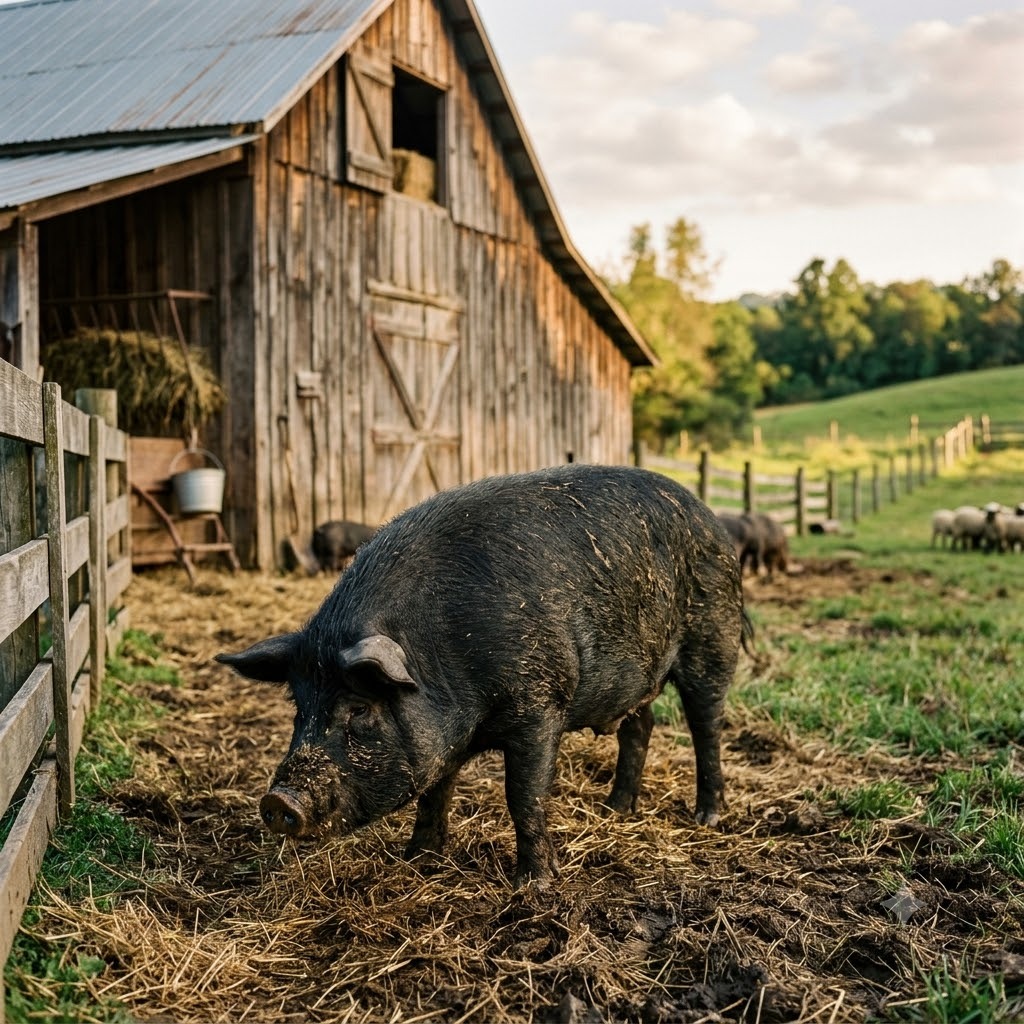
The Large Black is Britain's only all-black pig, developed in the 1800s from the black pigs of Devon, Cornwall, and East Anglia. Homesteaders keep this hardy, pasture-based breed to turn grass and forage into richly flavored pork and bacon, and, as a rare breed, to help conserve it.
Is it right for you?
It suits homesteaders with pasture to spare who value flavor over fast growth. Its calm nature and forward-flopping ears, which limit its sight, make it easy to contain and forgiving for beginners. If you want a quick-finishing pig or have little land, look elsewhere.
What you get
Mainly meat: well-marbled pork and excellent bacon. Pigs reach a slaughter weight near 90 to 100 kg (200 to 220 lb) at eight to ten months, slower than commercial breeds. Mature boars hit 320 to 360 kg, sows 270 to 320 kg. Sows are milky mothers raising litters of eight to ten.
Space & Housing
Give them pasture to root and graze - their real strength. A dry, draft-free ark or shed is enough shelter. Fence securely; their poor eyesight makes them respect a low electric wire.
Feeding & Daily Care
They forage on grass, roots, and windfalls, trimming the feed bill in warm months. Supplement with a balanced pig ration for winter and finishing, plus fresh water and a wallow for cooling. Watch portions - they fatten easily.
Temperament & Handling
Docile, quiet, and friendly, among the calmest pig breeds. They rarely test fences and one person can move them. Expect normal feeding-time noise, nothing extreme.
Health & Hardiness
The black coat resists sunburn, so they thrive outdoors and cope with cold given dry shelter. They are hardy and long-lived. For health questions, buy from reputable breeders and consult a livestock veterinarian.
Getting Started
Start with two or three weaners from a registered breeder so they have company. Decide early between a breeding trio or feeder pigs for meat. For breeding, learn to sex piglets and source unrelated stock.
Common Mistakes
Overfeeding into excess fat; expecting commercial-speed growth and finishing too early; and under-fencing because the pig seems calm.
FAQ
How much land does a Large Black need?
A few pigs do well on a rotated quarter-acre or more; extra pasture means lower feed costs and healthier ground.
Is it a good beginner pig?
Yes - its calm temperament and easy containment are forgiving, though its size still demands solid handling and respect.
🎯 Kit for pigs
Links go to Amazon or a partner store (such as OpticsPlanet) and may earn us a commission at no extra cost to you. As an Amazon Associate we earn from qualifying purchases. We link gear types, not sponsors' picks: you choose the exact product.