Raising Langshan Chickens
The tall Chinese classic - long-legged, glossy black with green sheen, laying notably dark plum-brown eggs; a graceful, underrated dual-purpose from the 1870s China trade.
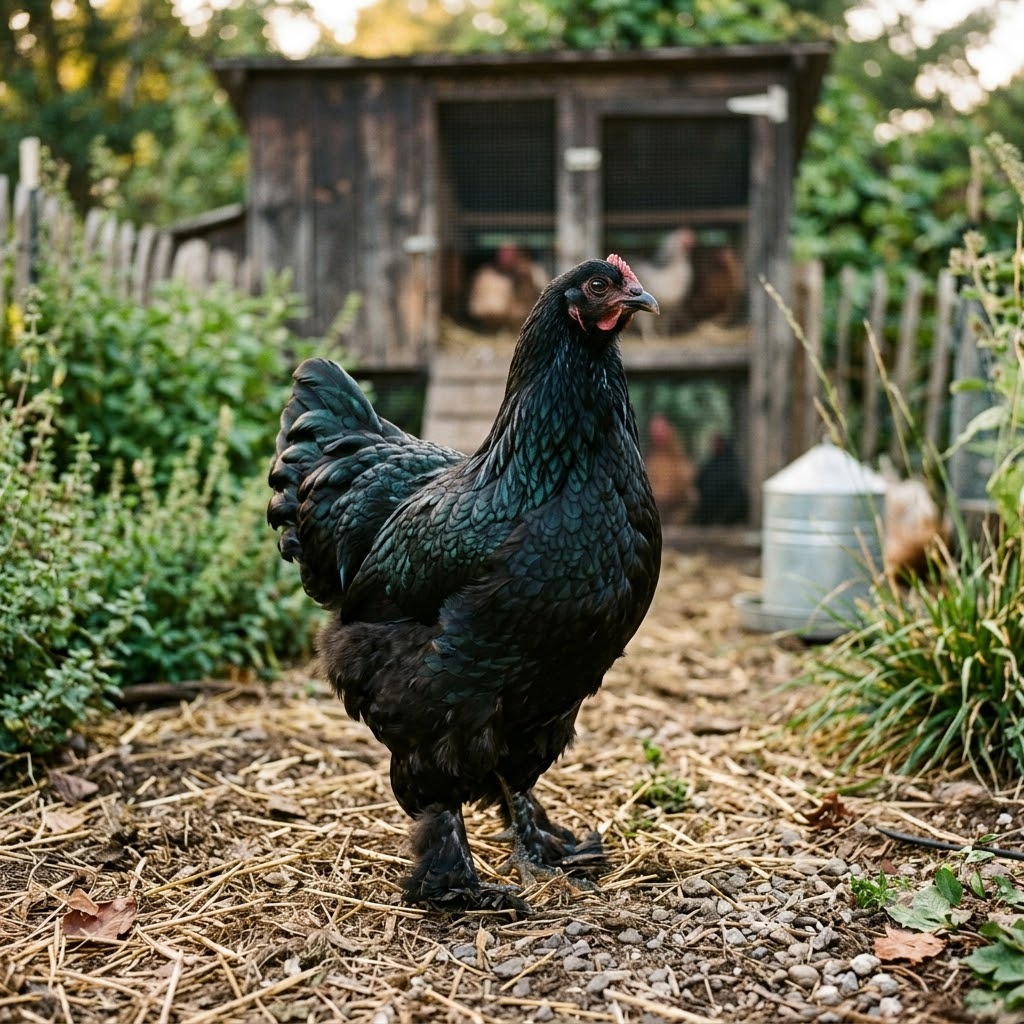
Croad Langshans stepped off a clipper from China in 1872 and changed poultry breeding - their genetics run inside Marans, Orpingtons and half the brown-egg world. The original remains its own reward: a tall, glossy green-black bird with an elegant high-tailed silhouette, laying dark plum-tinged brown eggs, hardy, calm and inexplicably rare in modern yards.
Is it right for you?
For keepers wanting graceful, unusual, historically important birds with good production; there's no real downside except sourcing.
Space & Housing
Standard housing; despite tall legs they're calm, fly little, and bear confinement well; light foot feathering wants reasonable mud management.
Feeding & Daily Care
Standard programs; sturdy constitutions from working-breed roots.
Getting Started
Breed clubs and heritage hatcheries; Croad (original) vs Modern (taller, ornamental) lines exist - Croad is the homestead pick.
Health & Common Problems
Robust; winter comb care for roosters, mud care for feathered shanks - the standard heavy-breed notes.
What You Get
150-200 dark plum-brown eggs/year, useful meat, striking green-sheened elegance, and living poultry history in the yard.
Costs & Effort
Standard; rarity is the only premium.
Common Mistakes
- Confusing with Australorps (Langshan = taller, feathered shanks, darker egg)
- Overlooking them entirely - the breed's chronic fate
- Wet runs on lightly feathered feet
FAQ
How dark are the eggs really?
A deep brown with a distinctive plum-purple bloom on many - short of Marans chocolate but standout in any basket.
Why so rare if so good?
History's shadow: its descendants (Marans, Orpingtons) became famous and the ancestor faded. Keeping Langshans is quiet conservation.
🎯 Kit for keeping poultry
Links go to Amazon or a partner store (such as OpticsPlanet) and may earn us a commission at no extra cost to you. As an Amazon Associate we earn from qualifying purchases. We link gear types, not sponsors' picks: you choose the exact product.