Raising Jersey Giant Chickens
America's largest chicken - a calm black tower of a bird bred to replace the turkey, laying decent extra-large eggs and dwarfing everything else at the feeder.
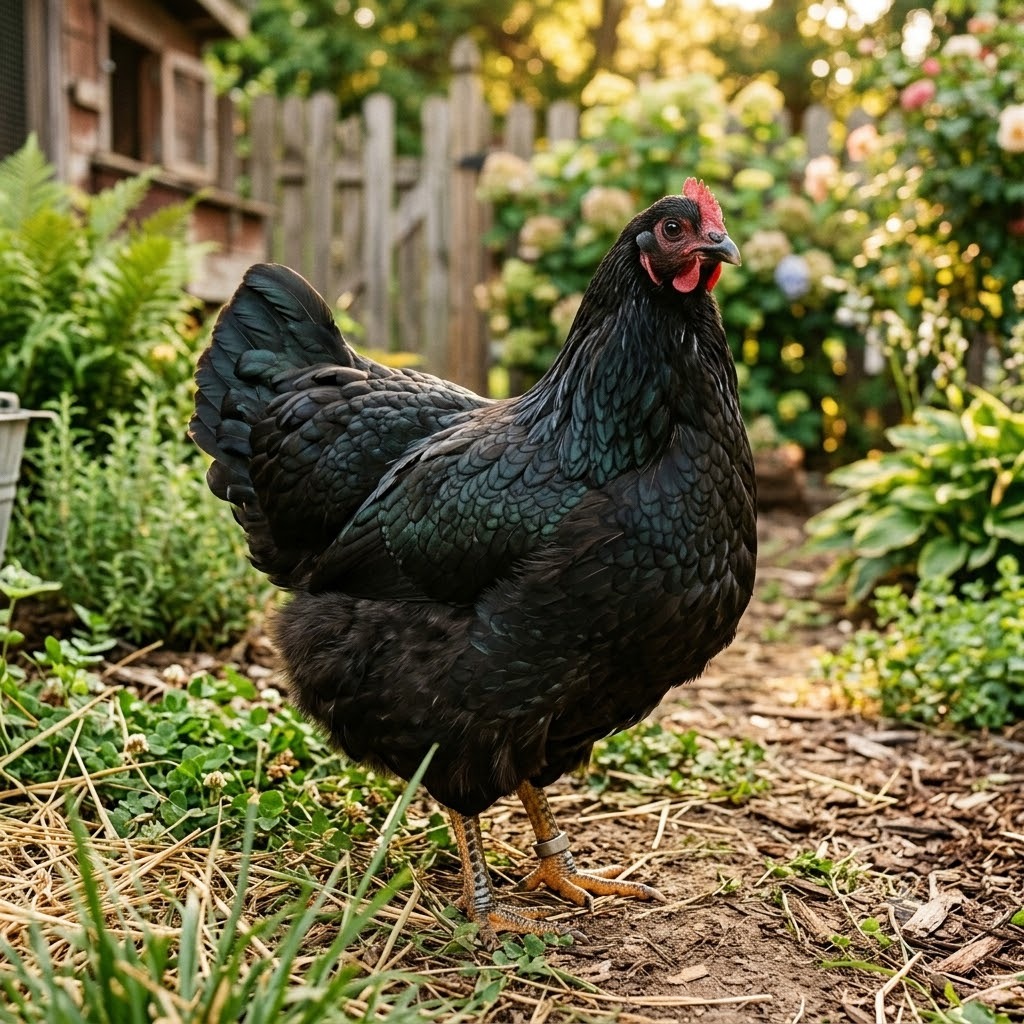
Jersey Giants were bred in 1880s New Jersey with an audacious goal: replace the Thanksgiving turkey. Roosters reach 6 kg, hens 4.5, and though the turkey kept its holiday, the Giant found its niche as the gentle skyscraper of the backyard - a calm, cold-hardy, extra-large-egg layer whose size alone deters hawks that trouble lesser flocks.
Is it right for you?
Yes if you want impressive, calm, dual-purpose birds and can feed them; no for tiny coops and tight feed budgets.
Space & Housing
MORE of everything: 0.5-0.6 m² coop space each, LOW wide roosts (heavy landings injure legs), big pop-doors and nest boxes sized up.
Feeding & Daily Care
They eat like what they are; feed conversion is the breed's economic weak spot. Standard routines otherwise.
Getting Started
Black is classic (white and blue exist); buy from stock bred to size - some hatchery lines have shrunk toward big-Australorp territory.
Health & Common Problems
Leg and joint stress if forced to jump from height; slow growth means late point-of-lay (7-8 months). Otherwise sturdy and long-lived.
What You Get
150-200 extra-large brown eggs/year, serious carcass weight if wanted, hawk-discouraging presence and gentle giant temperament.
Costs & Effort
The feed bill is the price of the spectacle; effort otherwise beginner-friendly.
Common Mistakes
- High roosts (bumblefoot and sprains)
- Expecting quick maturity
- Under-sizing doors, boxes and feeder space
FAQ
Are they aggressive at that size?
The opposite - Giants are famously placid, and their bulk usually ends flock disputes before they start.
Good meat birds?
Historically yes and still respectable, but slow growth makes them uneconomical against modern meat crosses - keepers raise them for the whole package, not the roast alone.
🎯 Kit for keeping poultry
Links go to Amazon or a partner store (such as OpticsPlanet) and may earn us a commission at no extra cost to you. As an Amazon Associate we earn from qualifying purchases. We link gear types, not sponsors' picks: you choose the exact product.