Raising Hamburg Chickens
The 'Dutch everylayer' - small, spangled, endlessly active birds that lay glossy white eggs with famous consistency and treat fences as career suggestions.
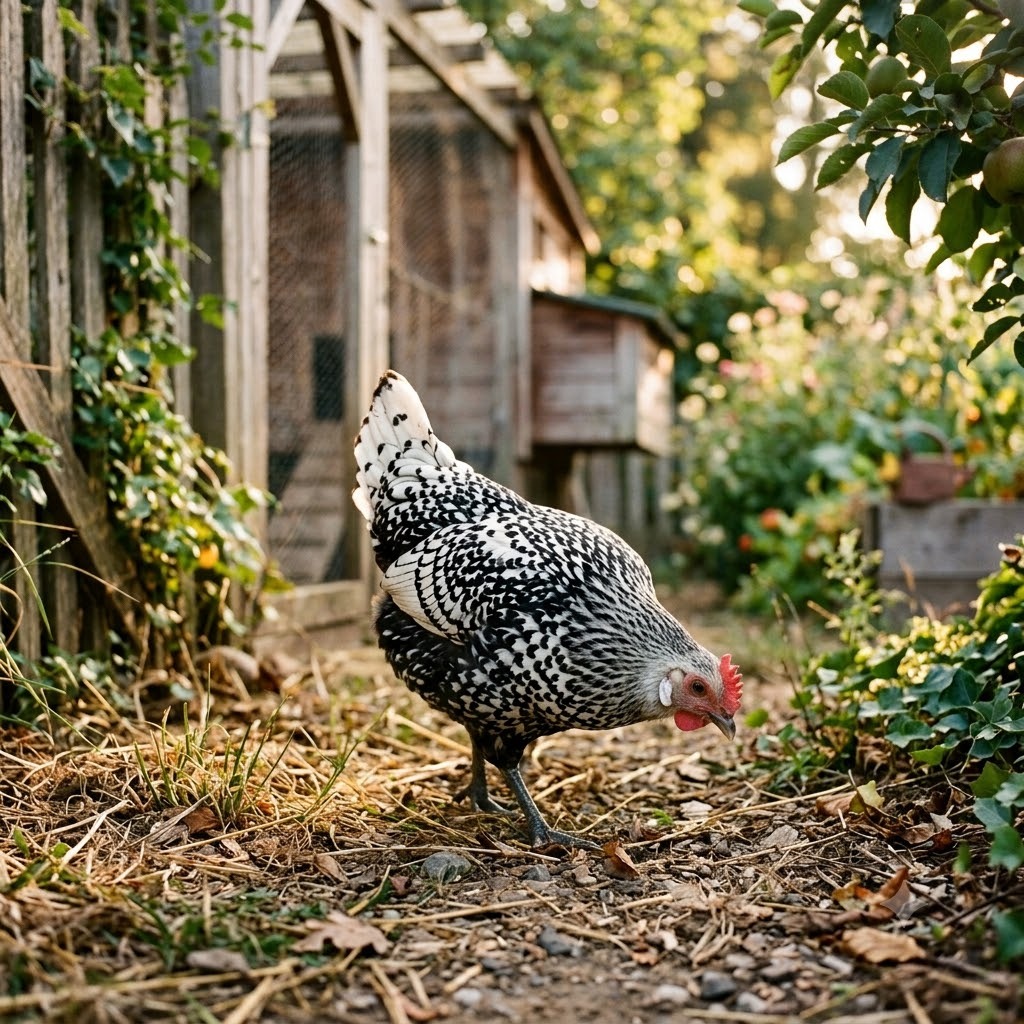
Hamburgs earned the old name 'Dutch Everyday Layers' honestly - trim, glossy little hens (the silver-spangled form looks polka-dotted) that deliver white eggs with metronome regularity while patrolling like songbirds. They are near-wild in their independence: brilliant foragers, strong flyers, hawk-wary roosters-in-trees types that reward space and exasperate confinement.
Is it right for you?
For free-range and covered-run keepers who enjoy active, ornamental production; wrong for open small runs (they leave) and cuddly-pet expectations.
Space & Housing
Covered runs or true range; high roosts they'll actually use; standard coop otherwise. Fences are decorative to a Hamburg.
Feeding & Daily Care
Efficient eaters - among the best egg-per-feed-gram heritage layers, especially ranging.
Getting Started
Silver-spangled is the classic; hatcheries carry them seasonally. Handle chicks a lot if you want any tameness later.
Health & Common Problems
Hardy and long-lived layers ('everlayer' includes longevity); small-bodied birds mind severe frost on their rose combs less than singles.
What You Get
200-220 glossy white eggs/year for many seasons, ornamental spangling, and self-sufficient foragers that dodge hawks other breeds feed.
Costs & Effort
Cheap to feed; the effort is infrastructure (covers) and accepting their independence.
Common Mistakes
- Open runs with 1.2 m fences (comedy ensues)
- Expecting lap-chicken temperament
- Overfeeding treats to efficient little athletes
FAQ
Can Hamburgs be tamed?
Socialized young they become tolerant, rarely cuddly - the breed's charm is watching it live its busy life, not holding it.
Why 'everlayer'?
They keep laying respectably for years beyond the point production breeds retire - a marathoner, not a sprinter.
🎯 Kit for keeping poultry
Links go to Amazon or a partner store (such as OpticsPlanet) and may earn us a commission at no extra cost to you. As an Amazon Associate we earn from qualifying purchases. We link gear types, not sponsors' picks: you choose the exact product.