Gloucestershire Old Spots Pig: Homestead Meat Breed Guide
The Gloucestershire Old Spots is a docile, hardy English pasture pig that gives homesteaders rich, well-marbled pork on a forage-heavy diet. A calm, low-fuss heritage breed suited to small farms with room to graze.
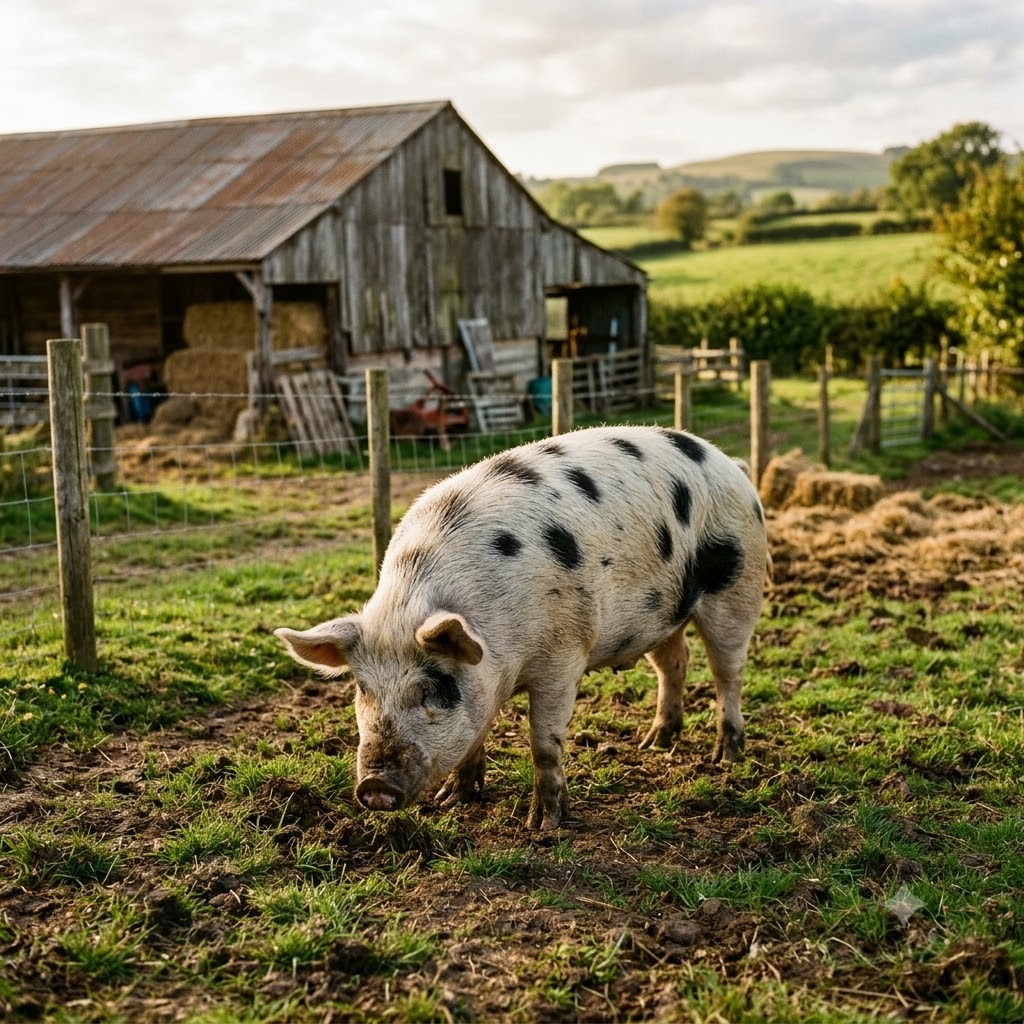
The Gloucestershire Old Spots is an old English pig breed from the Berkeley Vale of Gloucestershire, traditionally called the "Orchard Pig" because it foraged on windfall apples and dairy whey. White with a few distinct black spots, it is a large, calm, forage-loving pig kept mainly for rich, well-marbled meat. Homesteaders like it for its docile nature and its ability to thrive on pasture.
Is it right for you?
Best for homesteaders with real outdoor space and a meat goal, not a backyard. It suits temperate and cool-damp climates, tolerates beginners well thanks to its calm temperament, but you still need secure fencing and a slaughter plan.
What you get
A meat breed, not lean. Pigs reach roughly 220-250 lb (100-115 kg) market weight by 7-9 months. Mature boars run 550-600 lb and sows 500-550 lb. The pork is well-marbled and flavorful, prized for sausage, roasts, and charcuterie. Sows are good, milky mothers raising sizable litters.
Space & Housing
Give each pig a simple three-sided shelter or hut with dry bedding, plus a shaded wallow for hot days. They need rooting space: pasture or a rotated paddock works best. Strong perimeter fencing, ideally electric, is essential because pigs push and dig.
Feeding & Daily Care
They forage well on grass, roots, and windfall fruit, which trims the feed bill, but still need a balanced hog ration for steady growth. Feed twice daily, refill water constantly, and check fencing. Expect a real monthly feed cost that climbs as they grow.
Temperament & Handling
One of the calmest pig breeds - friendly, people-oriented, and easy to move with a board and bucket. They can be vocal at feeding time. Their size means even a gentle pig needs respect and confident handling.
Health & Hardiness
Hardy and thrifty, well-suited to outdoor life in cool, wet weather; provide shade and wallows in heat and dry shelter in cold. For breeding stock, parasite control, and any health concern, work with a reputable breeder and a livestock veterinarian.
Getting Started
Start with two or three weaned feeder pigs from a registered breeder to raise for meat. For breeding, buy healthy, unrelated stock and learn basic sexing and farrowing before committing.
Common Mistakes
Underestimating fencing - they root under weak lines. Overfeeding rich rations so pigs get overly fat. Buying a single pig; they are social and do better in pairs or groups.
FAQ
How long until slaughter weight?
Most reach market weight around 7-9 months, a bit slower than commercial breeds but with better flavor.
Are they good for beginners?
Yes. Their docile temperament makes them forgiving, provided you have space, solid fencing, and a plan for processing.
🎯 Kit for pigs
Links go to Amazon or a partner store (such as OpticsPlanet) and may earn us a commission at no extra cost to you. As an Amazon Associate we earn from qualifying purchases. We link gear types, not sponsors' picks: you choose the exact product.