Raising Faverolles Chickens
The bearded French charmer - salmon-colored, five-toed, muffed and feather-footed, absurdly sweet-natured, and one of the better winter layers among the fancy breeds.
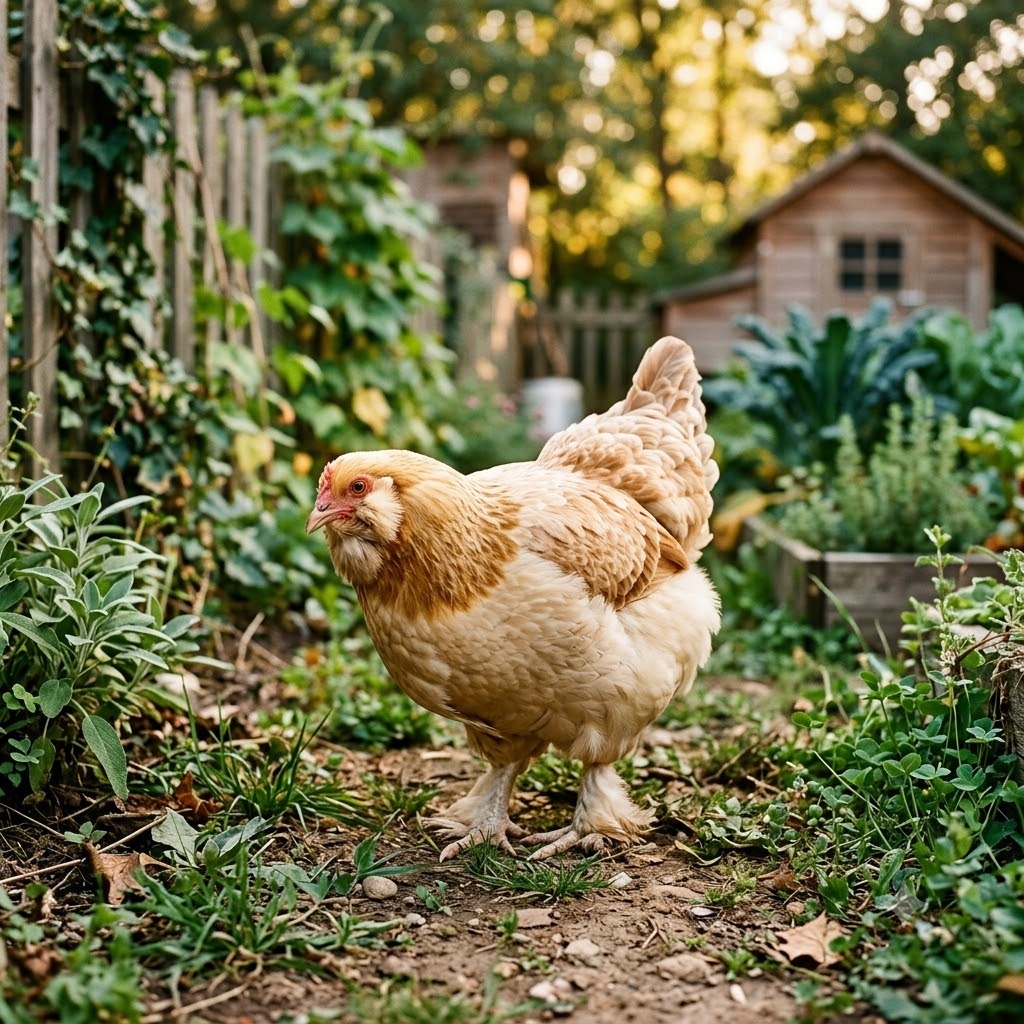
Faverolles look knitted rather than hatched - beards, muffs, feathered feet, a fifth toe and (in the classic Salmon variety) hens in soft cream-and-honey. Bred near Paris to supply winter eggs to city markets, they still deliver when others quit, and their temperament is the softest in chickendom: curious, chatty, absurdly tame, and hopeless at defending themselves from pushier birds.
Is it right for you?
Perfect for families, children and gentle mixed flocks; wrong for rough-and-tumble flocks with assertive breeds that will bully them.
Space & Housing
Standard coop with DRY runs - feathered feet and mud are misery together. Low roosts suit the heavy build.
Feeding & Daily Care
Standard feed; nipple drinkers keep beards dry; check foot feathers in wet weather and winter ice.
Getting Started
Hatcheries carry Salmon Faverolles widely; chicks feather fast and tame faster - handle early and they become garden companions.
Health & Common Problems
Sound breed; the care points are practical: mud balls on foot feathers, wet beards freezing, and bullying injuries in mixed flocks.
What You Get
150-180 tinted eggs/year with genuine winter persistence, the tamest hens you'll own, and a flock that looks like a storybook illustration.
Costs & Effort
Standard costs; slight extra effort keeping feet and beards clean in wet seasons.
Common Mistakes
- Mixing them with assertive breeds (they lose)
- Wet muddy runs ruining foot feathering
- Underestimating how much children will want to carry them (the birds don't mind)
FAQ
Why five toes?
An old breed marker (like Dorkings) fixed centuries back - harmless, distinctive, and one of the checkpoints of purebred stock.
Do they really lay in winter?
Better than most heritage breeds - they were bred for the Paris winter egg trade, and the habit persists.
🎯 Kit for keeping poultry
Links go to Amazon or a partner store (such as OpticsPlanet) and may earn us a commission at no extra cost to you. As an Amazon Associate we earn from qualifying purchases. We link gear types, not sponsors' picks: you choose the exact product.