Raising Dominique Chickens
The pioneer chicken - America's oldest breed, barred like a Rock but rose-combed and lighter, a thrifty forager that raised itself on colonial homesteads for centuries.
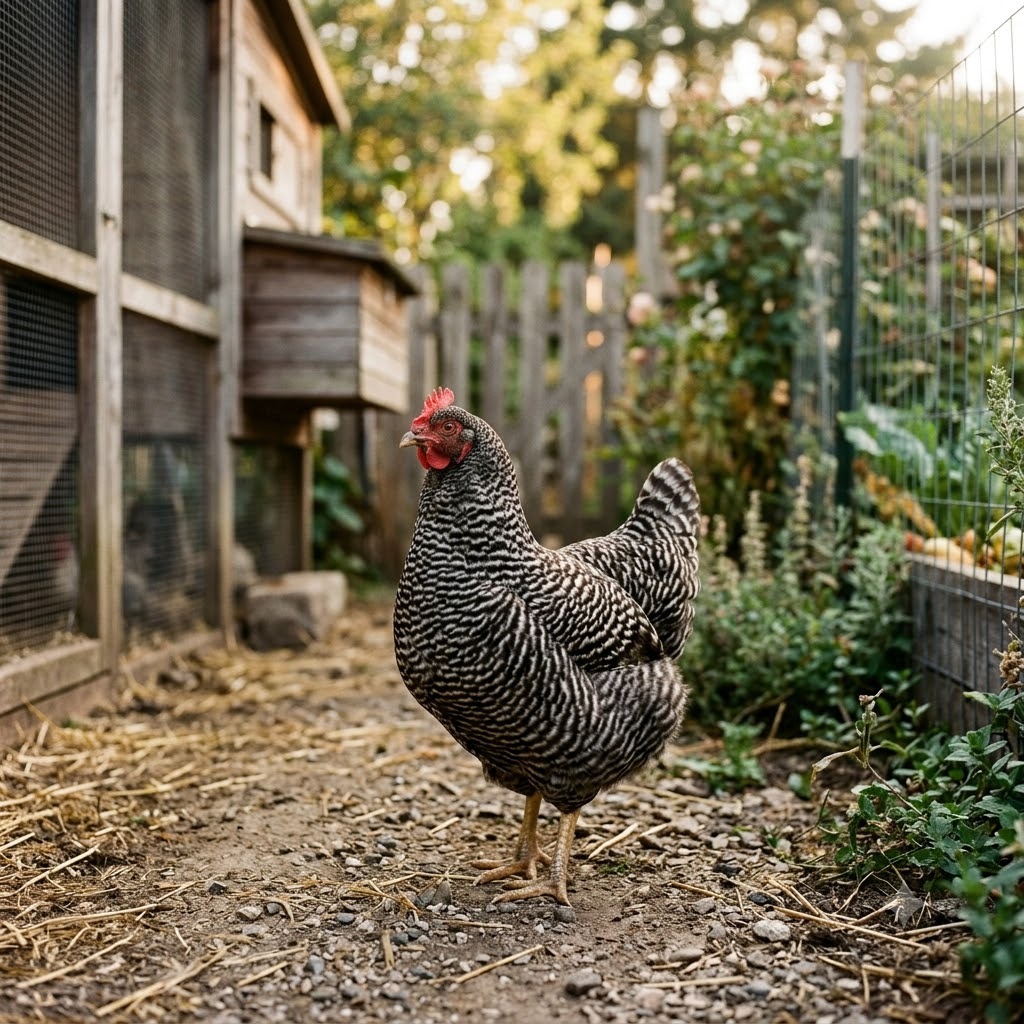
Dominiques crossed the Atlantic with colonists and built America's backyards - the oldest American breed, self-sufficient enough to raise itself around pioneer cabins on scraps and forage. The cuckoo-barred plumage reads like static; the rose comb defies frostbite; and the thrifty, semi-wild competence that kept them alive for three centuries makes them one of the lowest-input heritage birds you can keep.
Is it right for you?
Perfect for free-range, low-input, heritage-minded keeping; wasted in a bare confinement run.
Space & Housing
Standard coop, but their glory is range: superb foragers, predator-savvy, brood-competent - the closest thing to a self-managing chicken.
Feeding & Daily Care
Lightest feed bill in the heritage class when ranging; standard layer support in confinement.
Getting Started
Heritage hatcheries carry them; another conservation success story worth buying well.
Health & Common Problems
Three centuries of natural selection: hardy, frost-resistant (rose comb), few complaints.
What You Get
150-200 medium brown eggs/year, thrifty self-reliance, good broodies, and living Americana.
Costs & Effort
Minimal for the class - the breed's whole historical job description.
Common Mistakes
- Confusing them with Barred Rocks at purchase
- Denying rangers their range
- Expecting jumbo eggs (medium is the breed's size)
FAQ
Why did pioneers favor them?
They survived on nearly nothing - foraging, evading hawks, hatching their own replacements - the perfect zero-infrastructure homestead bird, then and now.
Rose comb matters why?
Low, flat and frost-immune - one of the details that let Dominiques winter in colonial barns without a heat lamp in sight.
🎯 Kit for keeping poultry
Links go to Amazon or a partner store (such as OpticsPlanet) and may earn us a commission at no extra cost to you. As an Amazon Associate we earn from qualifying purchases. We link gear types, not sponsors' picks: you choose the exact product.