Raising Delaware Chickens
A near-lost American treasure - white with black-barred neck and tail, once THE broiler of the East Coast, now a homestead favorite laying well and dressing out cleanly.
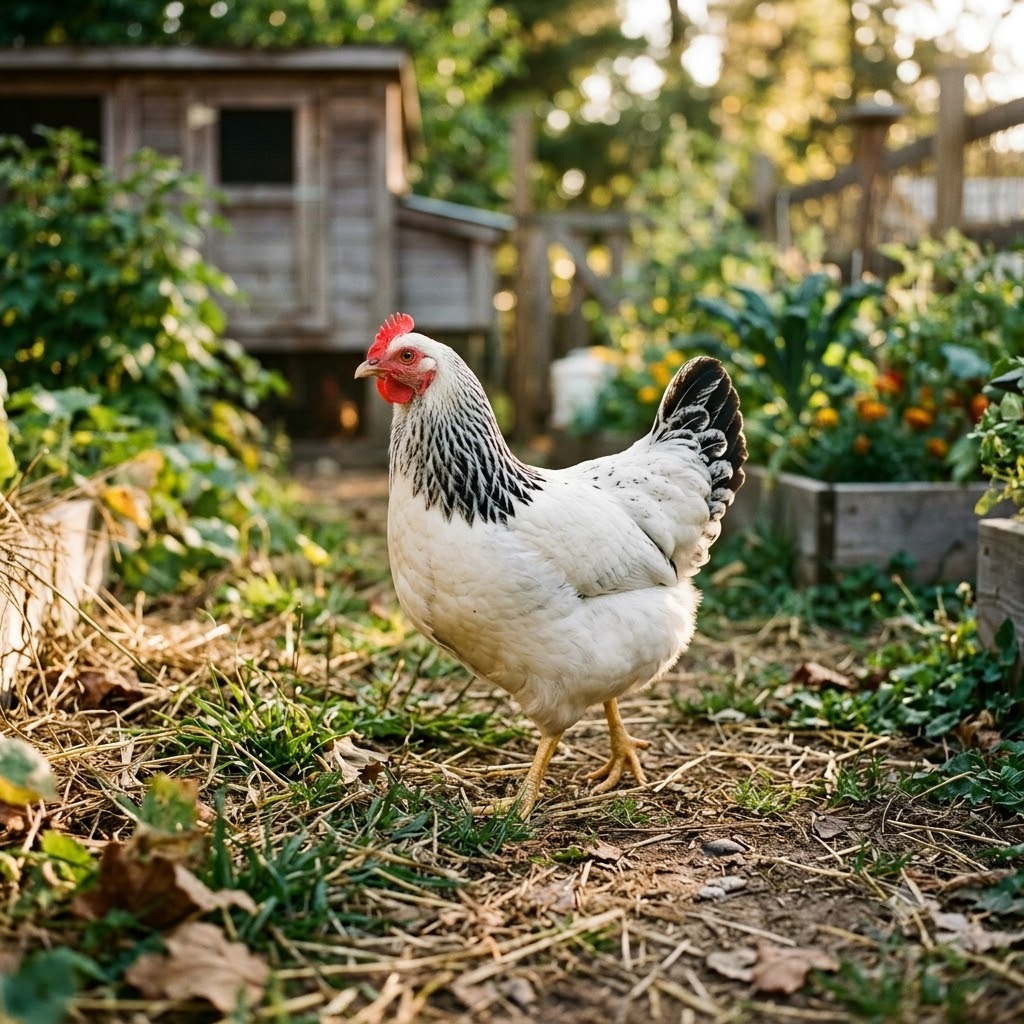
For a decade after 1940 the Delaware WAS American chicken dinner - the dominant broiler of the East Coast until the Cornish Cross swept all before it. The breed nearly vanished; homesteaders brought it back for good reason: white feathering dresses clean, growth is brisk by heritage standards, the hens lay 200+ large brown eggs, and the temperament is calm, curious backyard-friendly.
Is it right for you?
Excellent for dual-purpose homesteads and anyone drawn to conserving American heritage breeds; a genuine all-rounder.
Space & Housing
Standard housing; good foragers given range, content confined.
Feeding & Daily Care
Standard programs; brisk heritage growth without the health baggage of industrial crosses.
Getting Started
Available from heritage-focused hatcheries and breeders; support lines bred to the true standard.
Health & Common Problems
Hardy and sound - the breed's problems were economic (obsolescence), never health.
What You Get
200-280 large brown eggs/year, clean-dressing meat from surplus males in 12-16 weeks (heritage pace), and a piece of living agricultural history.
Costs & Effort
Standard; better feed-to-output balance than most heritage dual-purposes.
Common Mistakes
- Comparing its growth to Cornish Cross (different universe, on purpose)
- Letting the barred-neck pattern be confused with Barred Rock crosses at sales
- Overlooking the breed entirely - most people have never met one
FAQ
Why did such a good breed nearly vanish?
The Cornish Cross's industrial efficiency erased every competitor in a decade - quality had nothing to do with it. Homestead demand is what saved the Delaware.
Is it a good family bird?
Yes - calm, human-oriented and steady; one of the friendlier dual-purpose choices.
🎯 Kit for keeping poultry
Links go to Amazon or a partner store (such as OpticsPlanet) and may earn us a commission at no extra cost to you. As an Amazon Associate we earn from qualifying purchases. We link gear types, not sponsors' picks: you choose the exact product.