Raising Cochin Chickens
The walking feather duster - an enormous, fully foot-feathered gentle giant kept for looks, broodiness and personality rather than production. The breed that started 'hen fever'.
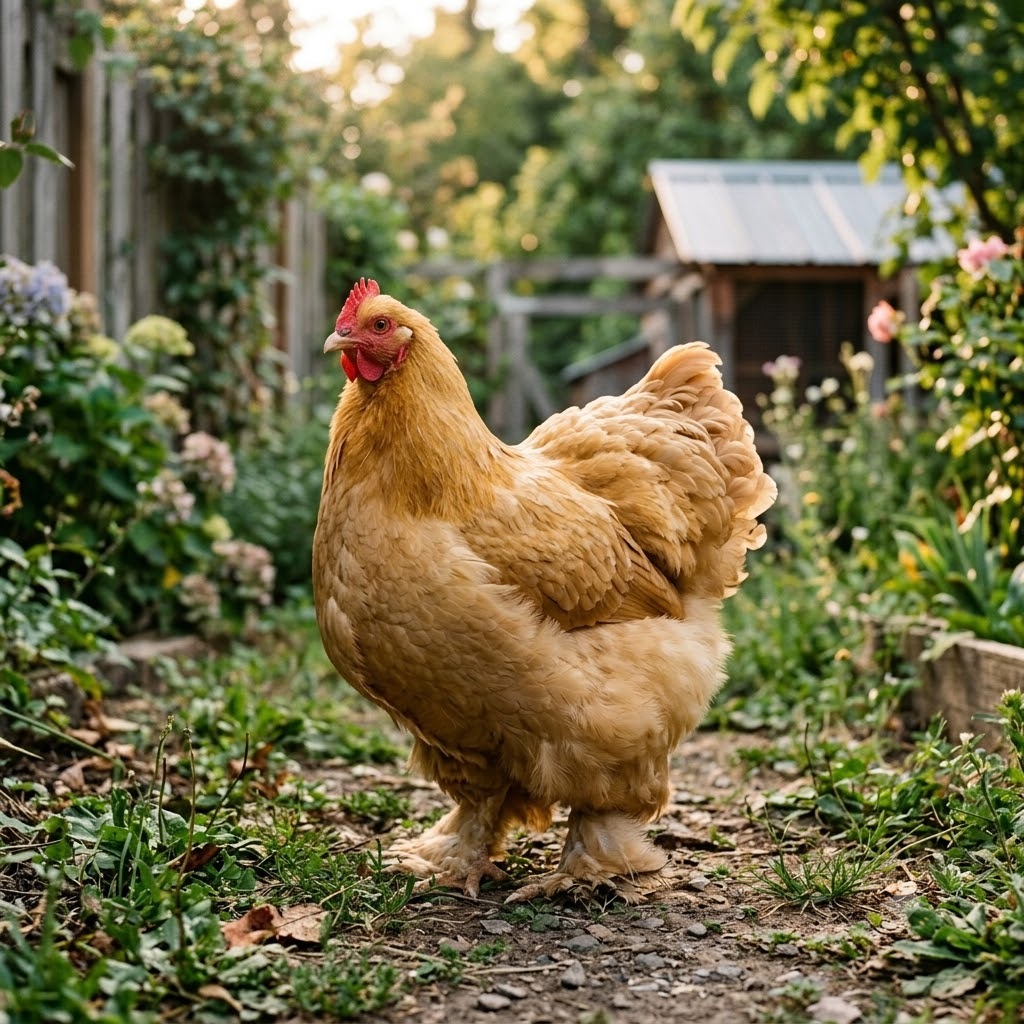
When Cochins arrived from China in the 1840s they triggered 'hen fever' - a genuine international mania - and it's still easy to see why: an adult Cochin is a walking cumulus cloud, feathered to the toenails, huge, placid and happy to be a lap chicken. They lay modestly, brood magnificently, and turn any backyard flock into a spectacle.
Is it right for you?
Yes for charm, children, broody service and garden ornament; no for egg-count spreadsheets - this is chicken-as-companion.
Space & Housing
Standard space despite the size (they're calm and confinement-tolerant); LOW roosts (heavy birds injure legs jumping), dry runs for the foot feathers.
Feeding & Daily Care
Watch portions - Cochins are gifted gainers and obesity shortens lives; feather-foot checks in mud and ice.
Getting Started
Hatcheries offer many colors (buff, black, blue, partridge, white, frizzled); bantam Cochins are their own beloved miniature world.
Health & Common Problems
Obesity is the main enemy; wet foot feathering second; otherwise robust and long-lived for a giant.
What You Get
120-160 tinted eggs/year, unbeatable broody-hen service, and the most decorative, docile presence in the yard.
Costs & Effort
Feed bills run higher (they're big); effort low; entertainment value maximal.
Common Mistakes
- Free-feeding treats to a breed built for gaining
- High roosts causing leg injuries
- Expecting production-line eggs from an ornamental legend
FAQ
Are Cochins good with kids?
Among the best - big, slow, tolerant and often genuinely affectionate. Many a child's first chicken love is a buff Cochin.
What's a frizzled Cochin?
A feather-mutation form whose plumage curls outward like a feather boa in a wind tunnel - same gentle bird, double the spectacle.
🎯 Kit for keeping poultry
Links go to Amazon or a partner store (such as OpticsPlanet) and may earn us a commission at no extra cost to you. As an Amazon Associate we earn from qualifying purchases. We link gear types, not sponsors' picks: you choose the exact product.