Chinese Goose: Best Laying Goose for a Homestead
A lightweight, upright goose descended from the wild swan goose, prized as the most productive layer of any goose breed and a loud, alert presence on the homestead. Dual-purpose but leaner than the heavy meat breeds.
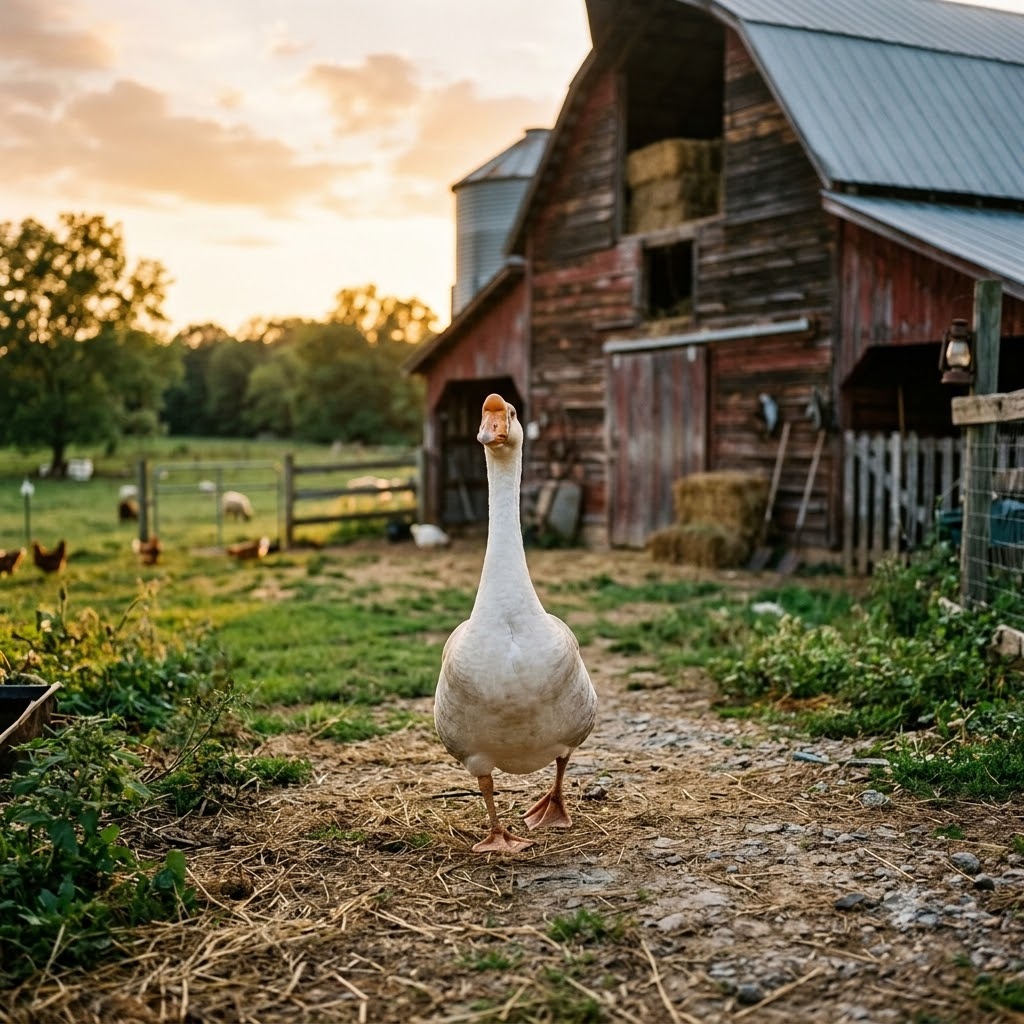
The Chinese goose is a light, swan-necked breed descended from the wild Asian swan goose, easy to spot by the knob at the base of its bill. Homesteaders keep it because no other goose lays like it, and because a small flock doubles as a living alarm system and lawn crew. It comes in two colours: brown (grey-brown) and white.
Is it right for you?
Good for smallholders who want eggs first, meat second, and don't mind noise. It suits open yards with grass to graze, tolerates most climates, and is beginner-friendly on care but not on temperament - ganders can be pushy. Skip it if you have close neighbours or small children who wander the yard.
What you get
This is the standout: 40 to 60 eggs per year, sometimes more, far above other geese. Each egg weighs roughly 120 to 140 grams, smaller than other goose eggs. Adults are small for a goose - ganders around 5 kg (11 lb), geese around 4 kg (9 lb) - so meat yield is modest and leaner than a Toulouse or Embden. Meat birds are usually grown out to 4 to 6 months.
Space & Housing
Provide a dry, draught-free shelter with clean bedding and a low pop-hole. They forage well, so give pasture where you can - a quarter-acre supports a small flock. A 60 to 90 cm fence contains them; water for dipping their heads keeps them healthy.
Feeding & Daily Care
Grass is the bulk of their summer diet, cut with waterfowl or poultry pellets, plus grit and constant clean water. Feed bills stay low in the grazing season and rise in winter when you supplement fully. Daily routine is quick: open up, top up water, check feed.
Temperament & Handling
Alert, vocal, and confident. They honk loudly at anything new, which makes them fine guardians but poor for quiet settings. Raised with handling they tame down; ganders in breeding season can be territorial and will chase.
Health & Hardiness
Hardy in cold and heat, though the knob can suffer frostbite in hard winters, so a windproof shelter matters. They are generally robust and long-lived. For any health concern or breeding stock, work with reputable breeders and a livestock veterinarian rather than home remedies.
Getting Started
Start with three or four goslings from a known breeder or hatchery; keep more geese than ganders. Sexing is tricky young - vent-sexing or waiting for size and voice differences helps. They can breed naturally once mature.
Common Mistakes
Underestimating the noise and buying too many ganders, which triggers fighting. Expecting heavy meat birds - they are lean. And skimping on water access, which they need for eyes, bill, and knob.
FAQ
Do Chinese geese really lay more than other geese?
Yes. At 40 to 60 eggs a year they are the most productive goose breed, roughly double what heavy breeds manage.
Are they good guard animals?
Very. They are loud and alert and will announce every visitor - useful on a homestead, less so with near neighbours.
🎯 Kit for keeping poultry
Links go to Amazon or a partner store (such as OpticsPlanet) and may earn us a commission at no extra cost to you. As an Amazon Associate we earn from qualifying purchases. We link gear types, not sponsors' picks: you choose the exact product.