Cayuga Duck: Hardy Dual-Purpose Homestead Breed
The Cayuga is a calm, cold-hardy American duck kept for both meat and its striking dark eggs. A good fit for small homesteads that want a quiet, self-reliant forager.
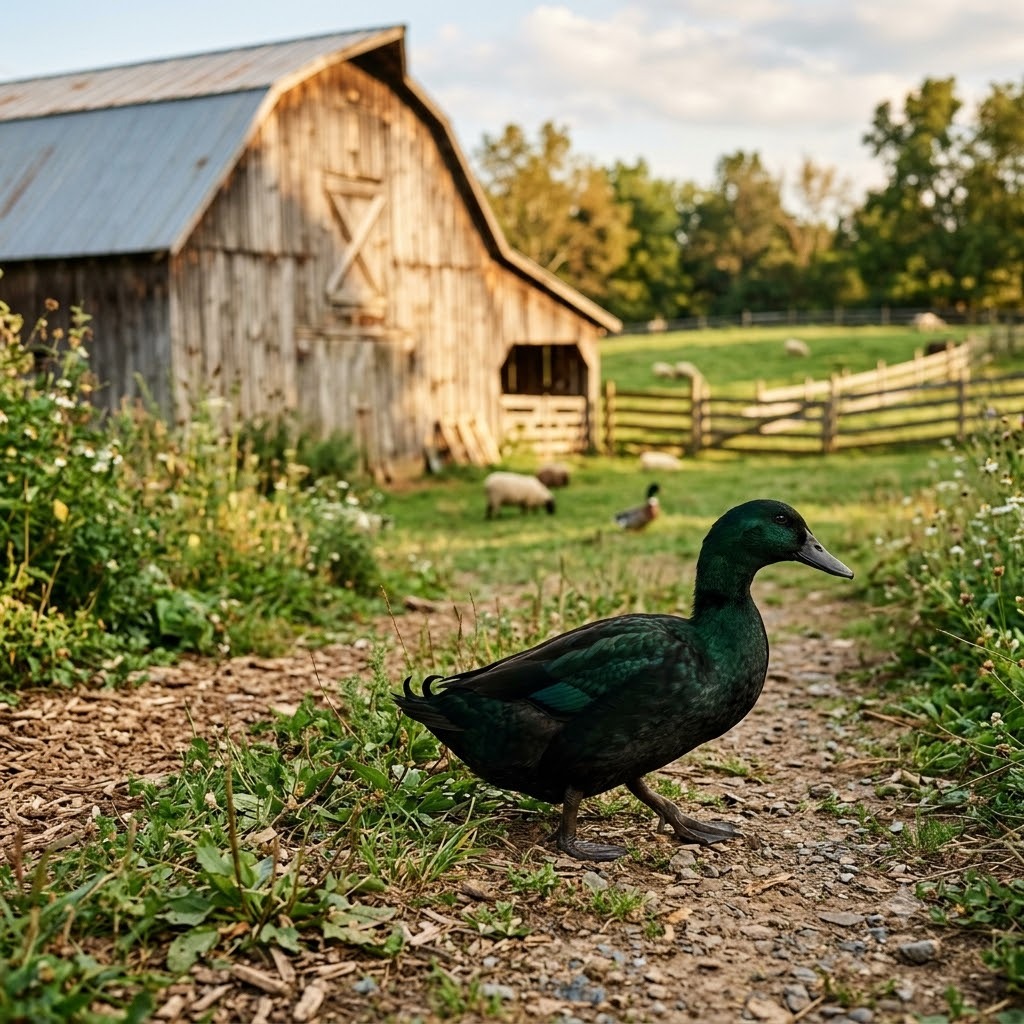
The Cayuga is a black, beetle-green duck developed around the 1840s near Lake Cayuga in New York - one of the few duck breeds that originated in the United States. Homesteaders keep it as a hardy dual-purpose bird: modest meat, a fair run of eggs, and a calm temperament that makes it easy to live with.
Is it right for you?
Good for small to mid-size homesteads in cold or wet climates who want a quiet, self-reliant duck over a heavy egg machine. Fine for beginners. Skip it if you need high egg numbers or a clean-plucking table bird.
What you get
Expect roughly 100 to 150 eggs per year. Early-season eggs often come out charcoal grey to near-black, fading to lighter grey and white as the season runs. Drakes reach about 8 pounds and hens about 7, dressed as a small to medium roaster by 4 to 6 months.
Space & Housing
A dry, predator-proof house with 4 square feet per bird, plus a fenced run. They forage well on pasture and love water to dabble in, though a tub or small pond is enough. A 2 to 3 foot fence contains them - they rarely fly far.
Feeding & Daily Care
Feed a waterfowl or poultry ration with grit, plus greens and foraged bugs. Always give clean drinking water deep enough to clear their nostrils. Good foragers trim the feed bill in summer; budget more in winter.
Temperament & Handling
Docile, calm, and notably quiet - hens are less noisy than many breeds. Friendly enough to tame with handling, though not lap ducks.
Health & Hardiness
Very cold-hardy and robust. They need shade and water in heat. For health questions, lean on reputable breeders and a livestock veterinarian.
Getting Started
Start with 3 to 5 ducklings from a reputable breeder or hatchery; keep one drake per 4 to 6 hens for fertile eggs. Sexing is easier by voice at maturity - hens quack loudly, drakes rasp.
Common Mistakes
- Expecting a clean carcass; dark pinfeathers leave stubble when plucked.
- Overcrowding wet runs, which turns muddy and foul fast.
- Assuming high egg output - they are moderate layers, not production birds.
FAQ
Why are the eggs black?
Pigment coats the shell during laying, darkest early in the season and fading toward grey and white later.
Are they loud?
Among the quieter duck breeds, though hens still quack. Drakes are much softer.
🎯 Kit for keeping poultry
Links go to Amazon or a partner store (such as OpticsPlanet) and may earn us a commission at no extra cost to you. As an Amazon Associate we earn from qualifying purchases. We link gear types, not sponsors' picks: you choose the exact product.