Blue Slate Turkey: Heritage Meat Bird Guide
A slate-blue heritage turkey kept mainly for flavorful meat and natural breeding. Calm and hardy, but slow-growing with unpredictable feather color.
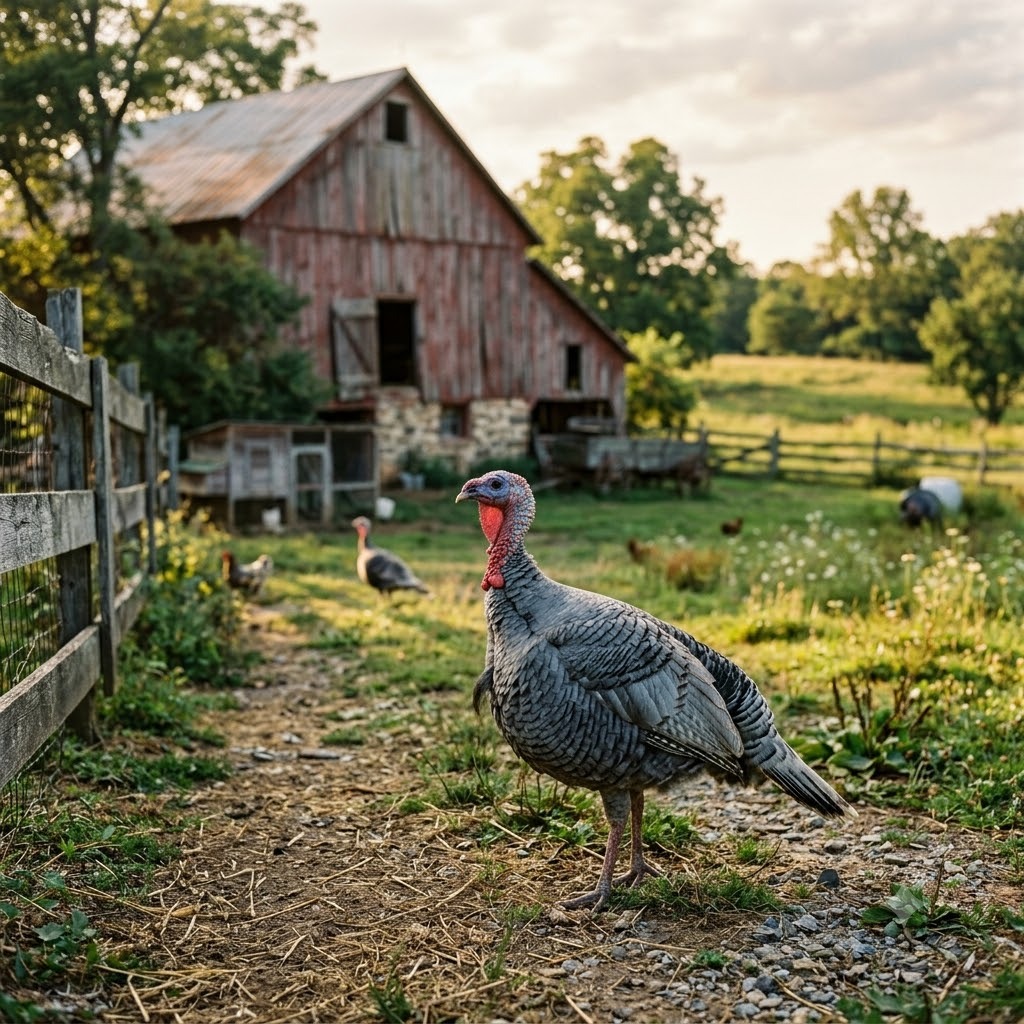
The Blue Slate is an American heritage turkey named for its ash- or slate-blue plumage, caused by a dilution gene acting on black. It is a standard-sized, slow-maturing bird kept mostly for rich, well-flavored meat and for its ability to breed and forage naturally. Homesteaders like it for its looks, its self-sufficiency, and its place on the conservation list of rare breeds.
Is it right for you?
Good for homesteaders wanting a striking heritage bird that mates naturally and forages well, not the fastest freezer filler. You need pasture, patience, and some predator awareness. Beginners can manage them, though poults are fragile early on.
What you get
Meat is the main return: toms reach roughly 23 lb and hens about 14 lb at maturity, usually processed between 20 and 28 weeks. Hens lay around 50 eggs a year, seasonally, and often go broody, so they can hatch replacements themselves.
Space & Housing
Provide a dry, draft-free coop or shed with roosting bars, plus room to range. Allow generous pasture; these are active foragers. Fencing helps, but they can fly, so account for that and for night predators.
Feeding & Daily Care
Start poults on a high-protein game-bird or turkey starter, then move to grower and maintenance feed, supplemented by pasture, bugs, and greens. Foraging trims the feed bill, but expect a meaningful grain cost over the long grow-out. Daily care is basic: fresh water, feed, and a headcount.
Temperament & Handling
Generally calm and curious, often friendly toward keepers. Toms can strut and get pushy in breeding season. They are moderately noisy, and hens can fly well, so handling is easy but containment takes thought.
Health & Hardiness
Slates are hardy and cold-tolerant once feathered, though poults need warmth and dry bedding early. For any health concern, work with reputable heritage breeders and a livestock veterinarian.
Getting Started
Start with a tom and two or three hens, or a small poult batch, from a reputable heritage breeder. Expect color variation, since the slate gene is inconsistent; not every poult comes out blue.
Common Mistakes
Chilling poults too early, expecting broad-breasted growth rates, and underestimating flight and predator risk.
FAQ
Do Blue Slates breed naturally?
Yes. Unlike commercial broad-breasted turkeys, they mate and reproduce on their own, and hens often go broody.
Why are my poults not all blue?
The slate color gene is variable, so a hatch can include blue, black, and mottled birds even from blue parents.
🎯 Kit for keeping poultry
Links go to Amazon or a partner store (such as OpticsPlanet) and may earn us a commission at no extra cost to you. As an Amazon Associate we earn from qualifying purchases. We link gear types, not sponsors' picks: you choose the exact product.