Belted Galloway Cattle: A Homesteader's Guide
A hardy, docile Scottish beef breed known for its white belt and shaggy coat, prized on homesteads for turning rough grass into lean, well-marbled beef.
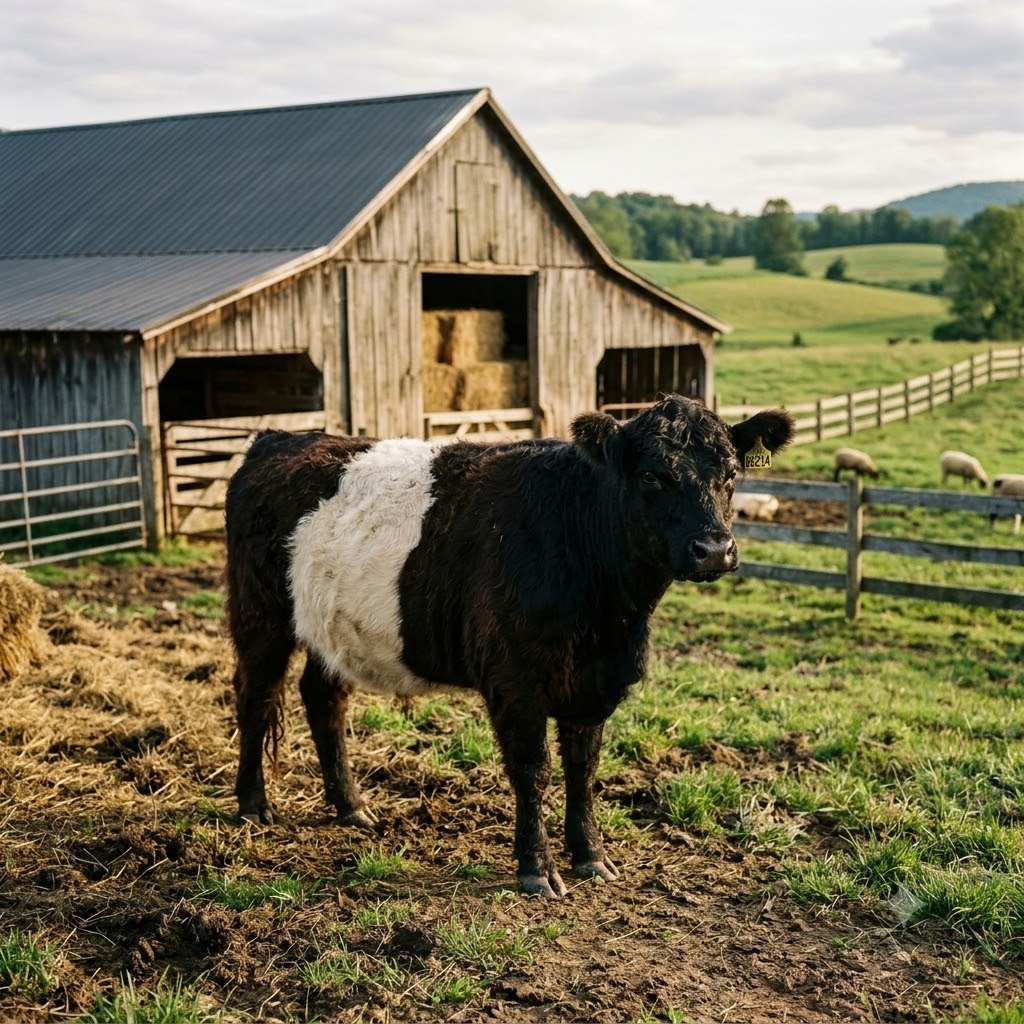
The Belted Galloway - "Beltie" for short - is a beef breed from the Galloway region of southwest Scotland, instantly recognisable by the wide white band around a black, dun, or red body. Homesteaders keep them because they are thrifty grazers that finish on grass, need little fuss, and shrug off cold, wet weather that would stress other cattle.
Is it right for you?
Good for anyone with pasture and a beef goal who wants a low-input, cold-hardy animal. They suit temperate and cold climates far better than hot, humid ones. Beginners manage them well thanks to their calm nature, but you still need secure fencing, acreage, and a plan for handling large animals.
What you get
Beef, primarily. Belties are slow-maturing and usually finish at 24 to 30 months, yielding lean, well-marbled meat. Mature cows run roughly 1,000 to 1,500 lb; bulls about 1,700 to 2,300 lb. They are naturally polled, so no dehorning.
Space & Housing
Budget one to two acres of decent pasture per cow-calf pair. Their double coat means they need shelter from wind and wet more than cold - a treed windbreak or open shed suffices. Strong perimeter fencing is essential.
Feeding & Daily Care
Grass and hay do most of the work; they convert rough forage efficiently, so the feed bill is modest. Provide winter hay, clean water, and mineral. Daily care is light - check water, fencing, and body condition.
Temperament & Handling
Docile, quiet, and easy to move once used to you. Cows can be protective around new calves, so give them space then.
Health & Hardiness
Hardy, long-lived, and known for easy calving. For health questions, work with reputable breeders and a livestock veterinarian.
Getting Started
Start with two or three from a registered breeder; buy a bred cow or heifers before taking on a bull.
Common Mistakes
Underestimating fencing, expecting fast finishing, and overfeeding grain to lean grass-cattle.
FAQ
Are they good for milk?
No - they are a beef breed with low yields, though a cow raises a calf easily.
Do they need a barn?
No, just windbreak and shelter; their coat handles the cold.
🎯 Kit for small livestock
Links go to Amazon or a partner store (such as OpticsPlanet) and may earn us a commission at no extra cost to you. As an Amazon Associate we earn from qualifying purchases. We link gear types, not sponsors' picks: you choose the exact product.