Vizsla
The Vizsla is a versatile Hungarian pointer that hunts close, points upland birds and retrieves to hand. Biddable and driven, but demanding on exercise and hard on thin-coated cold-weather days.
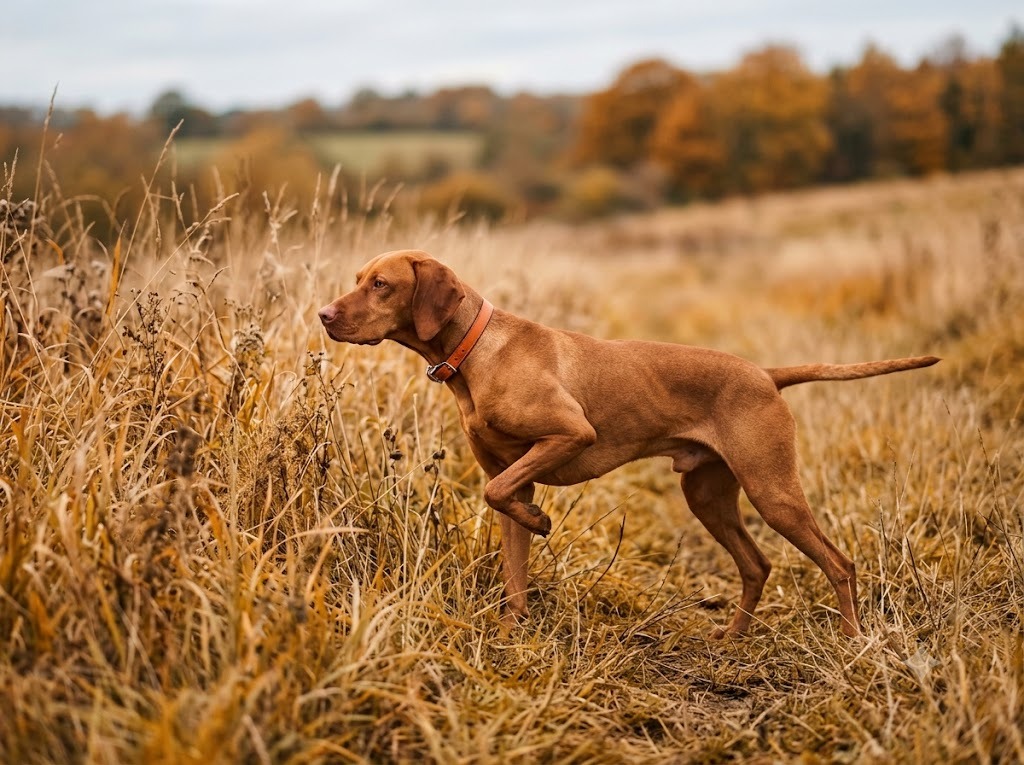
The Vizsla is Hungary's russet-gold pointing dog: a close-working, do-everything upland partner with a keen nose, obvious style on point, and a willingness to retrieve on land and out of water. It is medium-sized, athletic, and wired for cooperative hunting rather than big-country independence. For the right hunter it is one of the most enjoyable pointers to run.
What it was bred to do
Developed by Hungarian sportsmen and Magyar nobility over centuries, the Vizsla was bred as an all-purpose gun dog for the open fields and river country of the Carpathian Basin. It was expected to find, point, and retrieve upland birds and hare, working within gun range for hunters often on foot. That versatile pointer-retriever role still defines the breed.
In the field
The Vizsla typically hunts at moderate, walkable range rather than the horizon-busting cast of a big pointer. It quarters methodically, uses the wind, and freezes on a staunch point until the flush. Most take naturally to retrieving downed birds and will work light cover and water, though the thin coat limits truly cold water. A day behind one is close, birdy, and cooperative.
Temperament and trainability
Very biddable and eager to please, the Vizsla reads a handler easily and responds to light, consistent handling. It is also sensitive, so heavy-handed pressure backfires. Energy is high and the "off-switch" at home is poor without real daily work. The nickname "velcro dog" is earned: it wants to be with its person constantly.
Best game and conditions
It shines on wild and released upland birds - pheasant, quail, grouse, woodcock, and partridge - in mild to moderate weather. It suits the walking hunter who wants close cooperation. It is not ideal for hard cold-water waterfowl work or wide-ranging horseback trial country, and its short single coat struggles in real cold.
Health and honest notes
Like any breed, the Vizsla has known considerations worth researching before you buy. Its short, single coat offers little insulation, so cold and wet days are genuinely hard on it, while heat and sun demand sense too. This is a high level note only - for choosing a pup, conditioning, or any health question, defer to reputable breeders, professional gun-dog trainers, and your veterinarian.
What you get
For a fit, active hunter who wants a close-working, affectionate, all-day upland partner that points with style and retrieves willingly, the Vizsla delivers drive, nose, and cooperation in a handsome, easy-to-carry package.
Common mistakes
People underestimate the exercise need and end up with a frantic, destructive dog. Others handle too harshly and shut down a sensitive worker. Many also over-face the thin coat in cold, wet conditions the breed was not built for.
FAQ
Is a Vizsla a good first bird dog? For an active handler willing to put in daily work, yes - it is forgiving to train but not to under-exercise.
Does it retrieve waterfowl? It will retrieve from water, but the thin coat makes hard cold-water duck work a poor fit.
Will it settle in the house? Only after real exercise; an under-worked Vizsla rarely relaxes.
🐕 A field-focused look at this breed as a working partner - not a training manual and not a guide to raising or caring for a dog. Drive, biddability and health vary hugely within any breed. Talk to reputable breeders, professional gun-dog trainers and your own veterinarian before you choose, train or hunt a dog, and keep a working dog's safety and welfare first in heat, cold and water.