Nova Scotia Duck Tolling Retriever
The only gun dog bred to lure ducks within range and then retrieve them, the toller is a compact, tireless cold-water partner for the dedicated waterfowler.
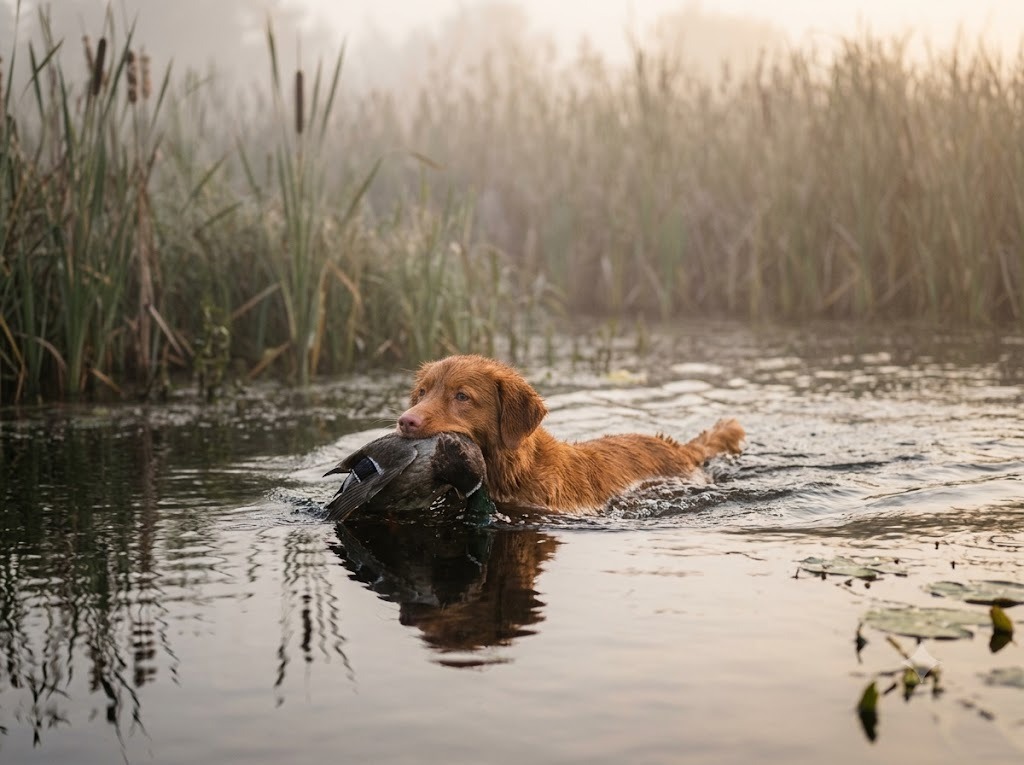
The Nova Scotia Duck Tolling Retriever is the smallest of the retrievers and the only gun dog bred to lure ducks as well as fetch them. Compact, fox-red and relentlessly driven, it is a specialist waterfowl dog with a soft mouth and a big engine in a small frame.
What it was bred to do
The toller was developed in the Little River district of Yarmouth County, Nova Scotia, in the early 1800s. It was bred to "toll" - to play and dart along the shoreline so its waving tail and red coat spark the curiosity of rafted ducks and draw them into gun range. Once birds were shot, the same dog swam out to retrieve them from cold Atlantic water.
In the field
A toller works close, not wide. It stays near the blind or bank, marks the fall, and delivers to hand. Expect a busy, tireless dog that handles cold water and heavy cover with a soft mouth. A day with one runs high-energy from first light, punctuated by the famous high-pitched "toller scream" when birds are near.
Temperament and trainability
Bright and eager, tollers are highly trainable but sensitive - they read your tone and shut down under a heavy hand. Energy is very high, and the off-switch at home does not come free; a bored toller invents its own jobs. They can be reserved with strangers and vocal. Biddable, but not a beginner's easy button.
Best game and conditions
Built for ducks and geese over marsh and cold northern water that their double coat handles well. Their close range also suits small waters and jump-shooting. They are not upland big-runners, not a warm-climate heat dog, and not the pick for someone wanting a calm kennel dog.
Health and honest notes
Coming from a small gene pool, the breed has a handful of known considerations that responsible breeders screen for. The dense double coat manages cold well but struggles in heat and holds burrs. For anything about choosing, training or health, consult reputable breeders, professional gun-dog trainers and your veterinarian.
What you get
For the right hunter - active, patient, waterfowl-focused - you get a compact, fired-up retriever with a great nose, a soft mouth, and a one-of-a-kind knack for bringing the ducks to you before it brings them back.
Common mistakes
Underestimating the exercise need and ending up with a destructive dog. Training with force and crushing a sensitive dog's drive. Expecting a big-water Lab and being caught off guard by the smaller frame and closer range.
FAQ
Is a toller big enough for geese and rough water? It is the smallest retriever but a capable cold-water worker; plenty of hunters run them on geese, though very big open water is more a Lab or Chessie's turf.
Will it suit a casual, once-a-season hunter? Rarely. This is a high-drive dog that needs work and exercise year-round, not a weekend-only gun dog.
🐕 A field-focused look at this breed as a working partner - not a training manual and not a guide to raising or caring for a dog. Drive, biddability and health vary hugely within any breed. Talk to reputable breeders, professional gun-dog trainers and your own veterinarian before you choose, train or hunt a dog, and keep a working dog's safety and welfare first in heat, cold and water.