German Wirehaired Pointer
A rugged, weatherproof versatile HPR bred in Germany to point, retrieve, and track fur and feather on land and in cold water - a serious one-dog kennel for the all-around hunter.
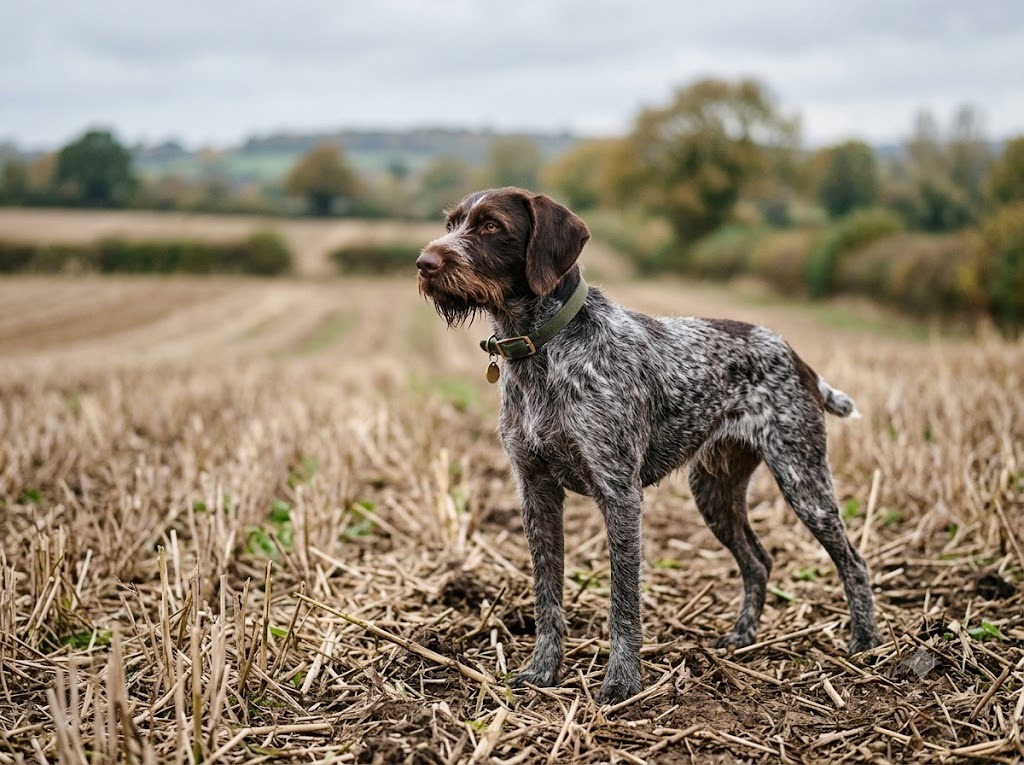
The German Wirehaired Pointer is a rugged, all-terrain versatile gun dog built to do the whole job - find, point, and retrieve fur and feather, on land and in water. Its harsh wire coat is the signature: weatherproof armor for thorns, cold water, and hard cover that stops lighter-coated pointers. This is a serious hunting partner for someone who spends real days afield, not a casual weekend dog.
What it was bred to do
Developed in Germany in the late 1800s and early 1900s, the breed (Deutsch Drahthaar in its homeland) was bred by hunters who wanted one dog that could do everything the German gun-hunting tradition demanded. Breeders blended pointer, griffon, and other versatile stock, then culled hard through performance testing for nose, cooperation, water work, and tracking wounded game. The result is a true HPR: pointing bird dog, fur tracker, and retriever in one.
In the field
Expect a close-to-moderate working range - typically nearer than a big-running pointer, hunting for the gun rather than the horizon. It quarters methodically, points staunchly, and pushes into brush, cattail, and cold marsh that many dogs refuse. A day with one means steady all-day drive: flushing and retrieving upland birds, breaking ice for a downed duck, and trailing a wounded runner into cover.
Temperament and trainability
Highly intelligent and eager to work with its person, but strong-willed, sometimes dominant, and prone to boredom. It bonds hard to one family and is often aloof or standoffish with strangers. Energy needs are real - without a job and daily hard exercise, it gets frustrated and destructive. The off-switch exists but must be earned through work.
Best game and conditions
Best for the do-everything hunter: upland birds, waterfowl, rabbit, and blood-tracking across mixed cover, cold water, and rough terrain. That wire coat and undercoat handle cold and wet well but can overheat in hot southern conditions. It is not ideal for the apartment hunter, the once-a-season shooter, or anyone wanting a soft, easy-going dog.
Health and honest notes
Like many medium-large sporting breeds, it has known breed considerations worth researching before you commit. The wiry coat needs occasional hand-stripping and sheds less than smooth coats, but it holds burrs and can run warm in heat. For health screening, coat care, and conditioning, talk to reputable breeders, professional gun-dog trainers, and your veterinarian.
What you get
For the right hunter, a one-dog gun kennel: a tireless, courageous, weatherproof partner that points birds, retrieves from icy water, and tracks wounded game with equal seriousness. Give it work and it gives back everything.
Common mistakes
Underestimating the energy and buying one for looks - a bored GWP is a wrecking crew. Being too soft or inconsistent with a willful dog. And expecting a wide-ranging trial pointer when this is a close-working, all-around meat dog.
FAQ
Is it good for a first-time hunter? It can be, but the drive and stubbornness demand commitment; work with reputable breeders and a professional trainer.
Does it handle waterfowl? Yes - the coat and toughness make it a genuine cold-water retriever, not just an upland dog.
Will it settle at home? Only if worked hard and given a job; it is not a low-energy house dog.
🐕 A field-focused look at this breed as a working partner - not a training manual and not a guide to raising or caring for a dog. Drive, biddability and health vary hugely within any breed. Talk to reputable breeders, professional gun-dog trainers and your own veterinarian before you choose, train or hunt a dog, and keep a working dog's safety and welfare first in heat, cold and water.