German Shorthaired Pointer
The German Shorthaired Pointer is the classic do-it-all versatile gun dog: a tireless, biddable HPR that finds and points birds, trails fur, and retrieves from land and water. Big drive and a big engine make it a superb partner for the active hunter, and a hard fit for anyone else.
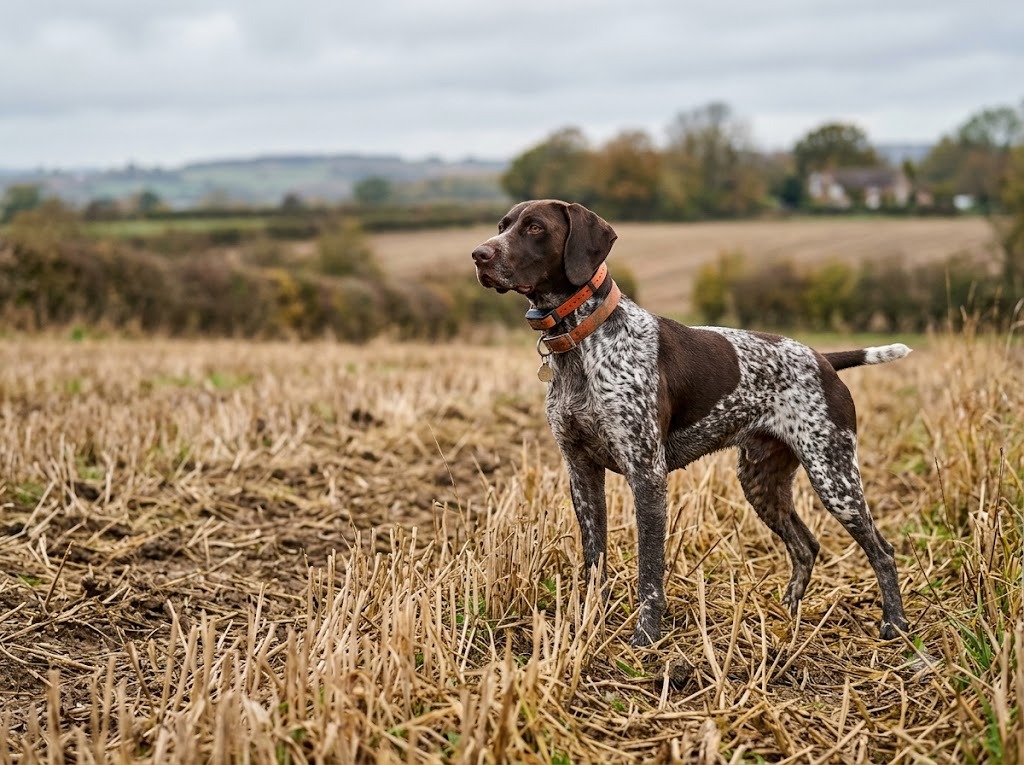
The German Shorthaired Pointer, or GSP, is the benchmark versatile gun dog. It points upland birds, tracks wounded fur, and retrieves on land and from water, all in one athletic, short-coated package. For the hunter who wants a single dog that does nearly everything, few breeds cover more ground.
What it was bred to do
The GSP was developed in Germany in the mid-to-late 1800s to be a true all-rounder for the walking hunter. Breeders blended old pointing stock with scent-trailing and later refining crosses to produce a dog that hunts, points and retrieves - fur and feather alike. The goal was one tractable dog to work fields, forest and water.
In the field
It typically runs a moderate, workable range - wider than a spaniel, closer than a big-running pointer - quartering to the gun and locking on a staunch point. Expect a fast, driving pace, a superb nose, and willingness to push through cover, mud and cold water to make the retrieve. A full day rarely tires it out.
Temperament and trainability
Highly biddable and eager to please, the GSP learns fast and wants a job. That same drive means a poor off-switch: understimulated, it gets restless and destructive at home. Many are sensitive to harsh handling and thrive on a fair, consistent partnership.
Best game and conditions
Best on upland birds - pheasant, quail, grouse, chukar - with real ability on waterfowl and tracking wounded game. The short coat handles heat and brush well but offers less protection in prolonged icy water or bitter cold than a heavy-coated retriever. It is not ideal for a sedentary home or a hunter who goes out only a few days a year.
Health and honest notes
Like many large, deep-chested athletes, the breed has known considerations worth understanding before you commit. The short coat sheds and gives limited insulation in extreme cold. For anything on choosing, conditioning or health, consult reputable breeders, professional gun-dog trainers and your veterinarian.
What you get
For the right hunter, a versatile, all-day partner that points, tracks and retrieves across seasons - one dog for many hunts, and a devoted one at that.
Common mistakes
Underestimating the exercise need and ending up with a wound-up house dog. Expecting a finished dog without real time invested. Treating a sensitive worker with heavy-handed correction.
FAQ
Is a GSP good for a first-time bird hunter? Yes, if you can meet its exercise and engagement needs; it is forgiving and eager, but not a low-effort dog.
Can it handle waterfowl? It retrieves water well in moderate conditions, but a short coat limits long sits in ice-cold water compared with dedicated retrievers.
How much exercise does it really need? Serious daily work - this is a hard-running athlete, not a weekend-only companion.
🐕 A field-focused look at this breed as a working partner - not a training manual and not a guide to raising or caring for a dog. Drive, biddability and health vary hugely within any breed. Talk to reputable breeders, professional gun-dog trainers and your own veterinarian before you choose, train or hunt a dog, and keep a working dog's safety and welfare first in heat, cold and water.