English Springer Spaniel
The English Springer Spaniel is a close-working flushing spaniel bred to push upland birds into gun range and retrieve them to hand. Biddable and tireless, it suits the walking hunter who can meet its high energy.
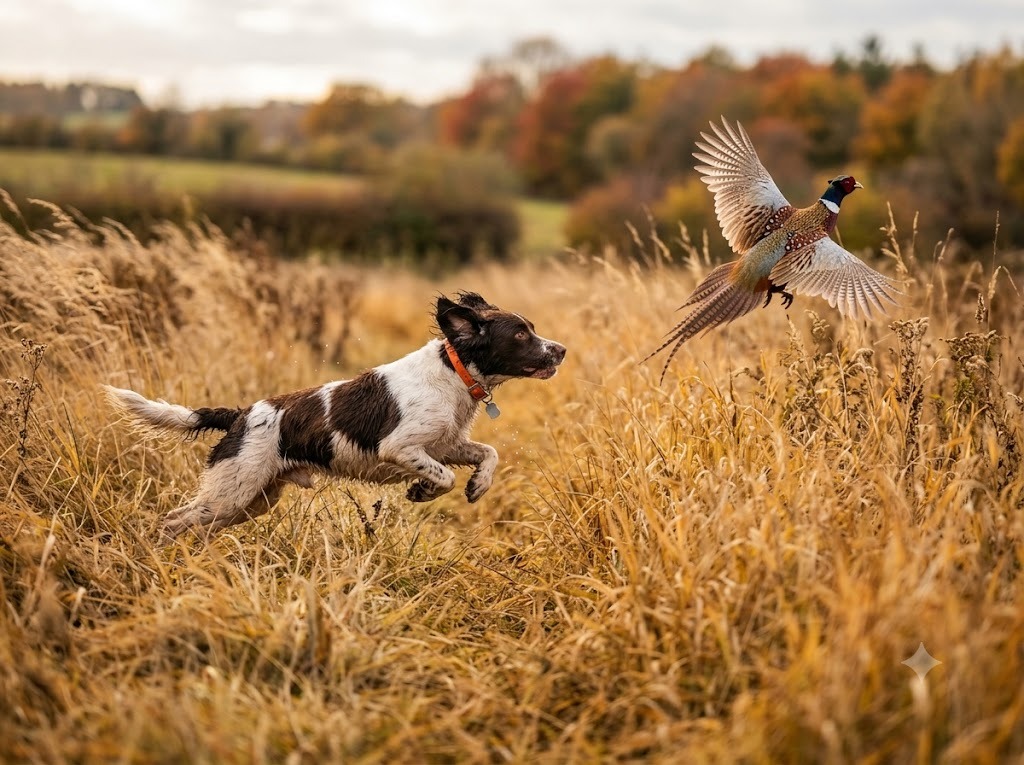
The English Springer Spaniel is a compact, hard-driving flushing dog built to push upland birds into gun range. It hunts close and busy, quarters tirelessly, and retrieves willingly on land and in water.
What it was bred to do
Developed in England over centuries, the springer takes its name from its job: springing, or flushing, birds for hunters who first netted them and later shot over the flush. It is one of the oldest sporting spaniels, a versatile land-and-water gundog shaped by function.
In the field
A springer quarters methodically in front of the gun, staying within roughly 15 to 25 yards so the flush is always a shot. It works cover hard, uses a strong nose to root birds from grass and brush, and flushes rather than points. Most retrieve to hand and take to water. A day behind one is fast and physical.
Temperament and trainability
Bright and eager to please, the springer is highly biddable. Energy is the headline: field-bred dogs need serious daily exercise and a real job, or they turn restless and noisy. They are sensitive to harsh handling. Well-exercised, most settle indoors - but this is not a low-effort breed.
Best game and conditions
Springers shine on upland birds - pheasant above all, plus grouse, woodcock and quail - in mixed cover and moderate terrain. They handle light waterfowl retrieves in cool conditions but are not dedicated cold-water duck dogs, and they do not point. Sedentary homes are a poor match.
Health and honest notes
Springers carry known breed considerations, and the field-versus-show split matters - field lines run leaner and higher-drive. The feathered coat collects burrs and mud and handles real heat poorly, and ears need checking after wet days. For health, temperament and line questions, lean on reputable breeders, professional gun-dog trainers and your veterinarian.
What you get
For the right hunter, a springer delivers a fine nose, honest close range, a soft-mouthed retrieve and a real desire to please - an all-day upland partner on foot.
Common mistakes
The biggest is underestimating the work a field-bred springer demands; boredom breeds problems. Another is buying show lines expecting field drive, or the reverse. A third is heavy-handed correction on a sensitive dog.
FAQ
Field-bred or show-bred? For serious hunting, field lines offer more drive and stamina; ask reputable breeders.
Can it hunt waterfowl? It handles light water work but is not a dedicated cold-water retriever.
Good for a first gun dog? Yes, if you can meet its energy and work needs.
🐕 A field-focused look at this breed as a working partner - not a training manual and not a guide to raising or caring for a dog. Drive, biddability and health vary hugely within any breed. Talk to reputable breeders, professional gun-dog trainers and your own veterinarian before you choose, train or hunt a dog, and keep a working dog's safety and welfare first in heat, cold and water.