English Setter
The English Setter is a classic upland pointing breed - a stylish, wide-ranging bird finder that freezes on point, with more affection and off-switch than most of its pointing cousins.
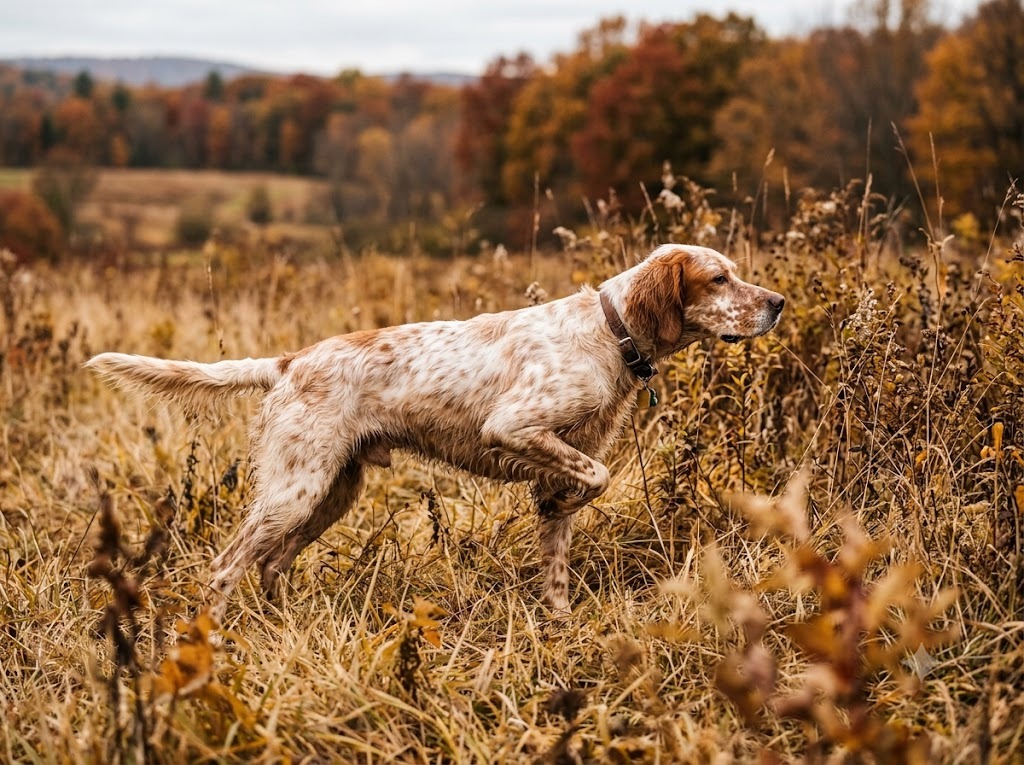
The English Setter is one of the oldest and most graceful pointing breeds - a bird dog that covers ground on a high nose and locks up hard on scent. Field-bred lines bring real drive and range, wrapped in a gentler temperament than most of their pointing cousins.
What it was bred to do
Refined in 1800s England by Edward Laverack and later R.L. Purcell Llewellin from older setting spaniels, its job was to find upland birds by scent and crouch, or "set", so they could be netted - a style that shifted naturally to pointing once wingshooting took over.
In the field
A setter quarters ahead into the wind with an eager, ground-eating stride and a high head. Field lines run wide and fast; foot-hunting strains work tighter and closer. On scent it freezes into a staunch, classic point and holds until the flush. It handles heavy cover and cold well.
Temperament and trainability
Setters are biddable and eager to please, and most keep a genuine off-switch at home - calmer and more affectionate than many pointing breeds. But they are sensitive, and harsh handling shuts them down. Energy needs are high; a bored, under-run setter finds trouble. Some carry an independent streak.
Best game and conditions
This is an upland specialist - ruffed grouse, woodcock, pheasant, quail, chukar and Hungarian partridge - across foot-hunting cover and prairie, best in cool weather. It is not a waterfowl retriever or a close-working flusher, and its heavy coat makes hot-climate hunting a real limitation.
Health and honest notes
Like many breeds, setters carry recognized considerations owners should understand at a high level, and white-marked lines can have hearing concerns. The feathered coat mats and collects burrs, and the ears need attention after wet days. They take cold far better than heat. For choosing, conditioning or health, lean on reputable breeders, professional gun-dog trainers and your veterinarian.
What you get
For the right upland hunter, a setter delivers style, stamina and a bird-finding nose - plus a mellow, genuinely likable partner in camp and at home.
Common mistakes
The biggest is underestimating how much a field-bred setter must run; the next is pressuring a soft, sensitive dog too hard. Many buyers also confuse show and field lines, which are very different dogs for real hunting.
FAQ
Field or bench bred for hunting? Field lines are lighter, racier and more driven; bench dogs are heavier-coated and calmer, generally less suited to serious upland work.
Can it hunt in hot weather? Poorly - its coat and build favor cool, cold and wet conditions.
Good for a first bird dog? Yes, if you can meet the exercise - forgiving and biddable, but never a low-energy dog.
🐕 A field-focused look at this breed as a working partner - not a training manual and not a guide to raising or caring for a dog. Drive, biddability and health vary hugely within any breed. Talk to reputable breeders, professional gun-dog trainers and your own veterinarian before you choose, train or hunt a dog, and keep a working dog's safety and welfare first in heat, cold and water.