Dachshund
A compact German scenthound bred for badger and den work, the Dachshund brings a big nose, grit and a loud tracking voice into cover that stops larger dogs. It is a specialist tracker rather than an all-round biddable gun dog.
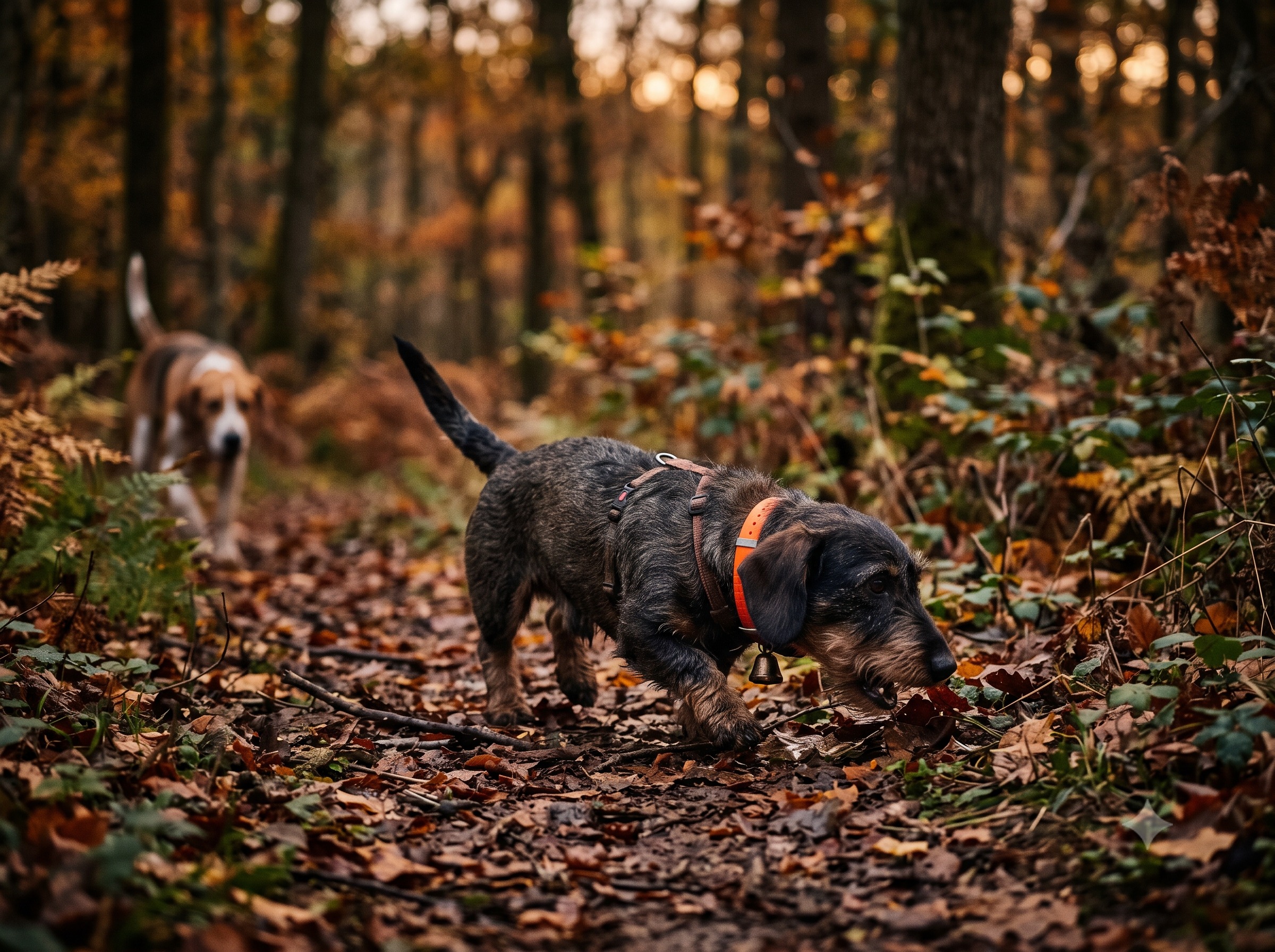
The Dachshund is a small, long-bodied scenthound built to follow game by nose and voice into places bigger dogs cannot reach. Do not let the size fool you - it is a determined, thick-skinned tracker with a booming bark and an independent mind.
What it was bred to do
Developed in Germany, its name literally means badger dog. It was built to trail fox, badger and rabbit above ground, then follow them into their dens to bay or bolt them. Larger standards were also worked to blood-trail wounded deer and boar.
In the field
Expect a close-working, deliberate hunter, not a wide-ranger. The Dachshund puts its nose down and grinds out a line, pushing into brush, brambles and burrows that stop bigger dogs. Its loud, persistent voice tells you where it is when it goes to ground or into heavy cover.
Temperament and trainability
Bred to work alone underground, it is smart but genuinely independent and will not give you a retriever's crisp obedience. Prey drive and digging instinct run high. Most have a reasonable off-switch at home, but they are stubborn and respond poorly to heavy-handed correction.
Best game and conditions
It shines on rabbit and den game, and standards still trail wounded big game. Dense cover, hedgerows and burrows suit it; long open-country running and cold marsh work do not. It is not a flushing upland dog or a water retriever, and short legs set a slow pace.
Health and honest notes
The long back and short legs are a defining structural feature and a known breed consideration. The coat comes in smooth, wirehaired and longhaired - the wire is the most weatherproof, smooths the least. For soundness, temperament and health questions, work with reputable breeders, professional gun-dog trainers and your veterinarian.
What you get
For the right hunter, a big-dog nose, grit and voice in a compact, den-capable tracker that goes where others cannot.
Common mistakes
The biggest is expecting retriever-style obedience and reading normal independence as defiance. People also underestimate the prey drive and digging, and assume the small size means it needs little exercise or outlet.
FAQ
Can it really hunt big game? Standards are traditionally used to blood-trail wounded deer and boar, though they trail rather than take down.
Good for a first gun-dog owner? Its independence makes it harder than a biddable retriever, so set expectations accordingly.
Which coat for a hunter? The wirehaired is generally the most weatherproof for brushy, cold work.
🐕 A field-focused look at this breed as a working partner - not a training manual and not a guide to raising or caring for a dog. Drive, biddability and health vary hugely within any breed. Talk to reputable breeders, professional gun-dog trainers and your own veterinarian before you choose, train or hunt a dog, and keep a working dog's safety and welfare first in heat, cold and water.