Chesapeake Bay Retriever
The Chesapeake Bay Retriever is America's rugged, cold-water duck dog - a powerful, independent waterfowl retriever bred to work rough, icy marshes all day long.
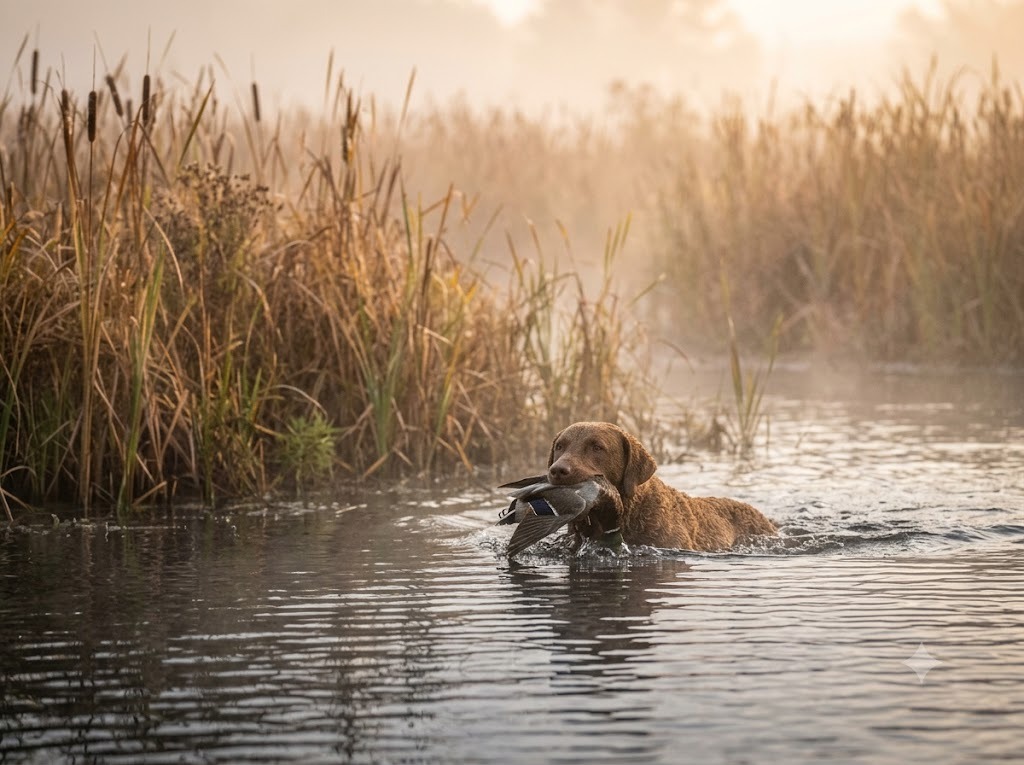
The Chesapeake Bay Retriever is America's own duck dog - a powerful, weatherproof retriever built to hammer through breaking ice and rough water that would stop softer breeds. Bred for hard days on cold marshes, the "Chessie" is tougher, more serious, and more independent than the other retrievers, with an oily, water-shedding coat and an engine that does not quit.
What it was bred to do
The breed traces to the Chesapeake Bay region of Maryland in the early 1800s, reputedly from two Newfoundland-type dogs and later local water dogs. Market and sport gunners needed a retriever that could work all day in frigid, wind-driven bay water and bring back hundreds of ducks. Everything about the Chessie - coat, size, drive - was selected for that punishing job.
In the field
This is a marking, water-first retriever. It sits steady, watches the fall, and drives out through cold water, chop, and heavy cover with real determination. Range is close-to-moderate and controlled; the pace is workmanlike rather than flashy. A day with a Chessie means repeated cold-water retrieves it will happily keep making long after other dogs quit.
Temperament and trainability
Smart, bold, and intensely loyal to its person, but more strong-willed and sensitive than a Labrador. It bonds hard, can be aloof or protective with strangers, and needs a confident, consistent handler. Energy is high and the off-switch is earned, not given - a bored Chessie invents its own jobs. Not a beginner's dog.
Best game and conditions
Waterfowl in cold, rough conditions is its wheelhouse - sea ducks, divers, and late-season marsh hunts. It handles upland work too but truly shines in miserable water. It is not ideal for hot-climate hunters, apartment life, or anyone wanting an easygoing, everybody's-buddy gun dog.
Health and honest notes
Like many large retrievers, the breed has recognized considerations owners should understand; the dense oily coat sheds water superbly but can struggle in real heat. For temperament, structure, and health questions, work with reputable breeders, professional gun-dog trainers, and your veterinarian.
What you get
For the right hunter, a durable, courageous, do-anything water retriever that lives to work and guards home and gear as a bonus.
Common mistakes
Treating it like a Lab and being too soft or too harsh; under-exercising it; and skipping early, consistent structure with a firm but fair hand.
FAQ
Is a Chessie good for a first-time gun-dog owner? Usually not - its independence and strength suit experienced handlers.
Can it handle cold water others refuse? Yes; frigid, rough water is exactly what it was built for.
Does it need a lot of exercise? Yes - it is a high-drive working dog, not a casual companion.
🐕 A field-focused look at this breed as a working partner - not a training manual and not a guide to raising or caring for a dog. Drive, biddability and health vary hugely within any breed. Talk to reputable breeders, professional gun-dog trainers and your own veterinarian before you choose, train or hunt a dog, and keep a working dog's safety and welfare first in heat, cold and water.