Black and Tan Coonhound
A big, deep-voiced American trailing hound bred to work coon and larger game by nose alone, tree it, and hold it with voice. Independent, tireless, and honest about the track.
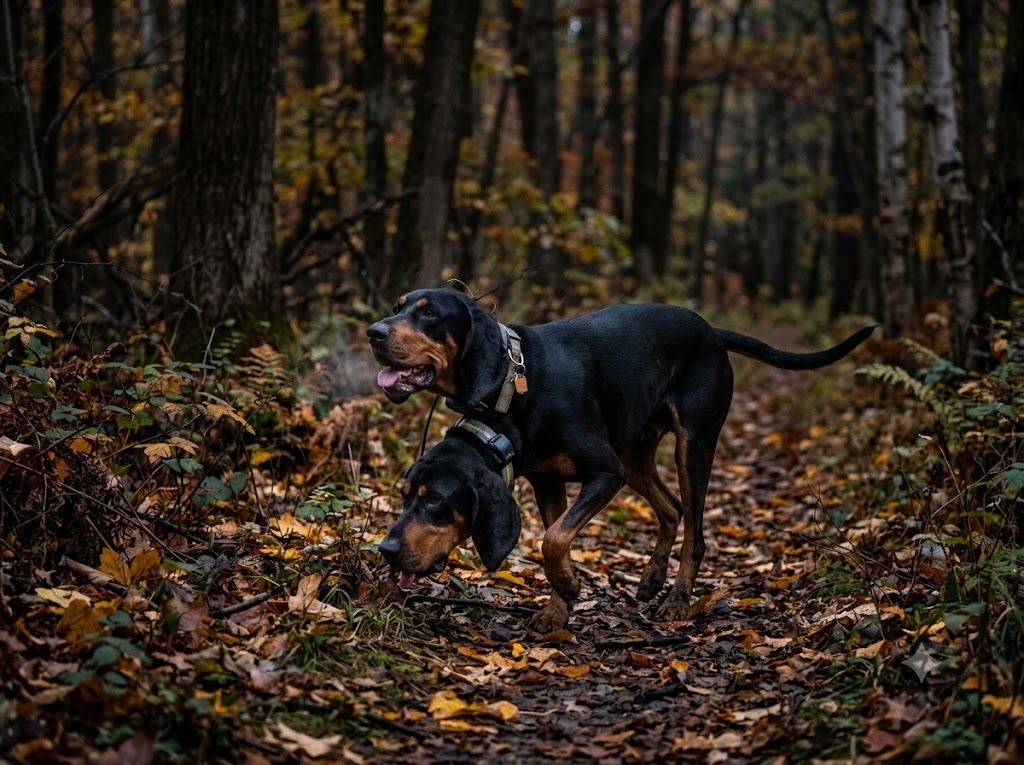
The Black and Tan Coonhound is a big, deep-voiced American trailing hound built to work game by nose alone, often in the dark. It is a cold-nose specialist - it can pick up and follow an old, faint track - and it narrates the whole hunt out loud.
What it was bred to do
Developed in the United States, largely in the southern mountains, from Talbot Hound, Bloodhound, and Foxhound stock. It was bred to trail raccoon and opossum by scent, drive them up a tree, and bay at the base until the hunter arrives. It also served on larger game - bear, boar, deer, and cougar - where stamina and a serious nose matter.
In the field
It works nose-down, ranging out and quartering ground on its own initiative rather than checking back constantly. The pace is steady and methodical, not frantic. It bawls and chops on a hot line so you can track it by ear, handles rough cover, water, and night work, and the payoff is a treed animal held in place by voice.
Temperament and trainability
Easygoing and affectionate at home, with a real off-switch once exercised - but single-minded and stubborn on a scent. It is sensitive to harsh handling yet independent by design; it was bred to make decisions without you. A bored, under-worked coonhound bawls, roams, and digs.
Best game and conditions
Best on raccoon and other trail-and-tree quarry in wooded, broken terrain, and it thrives in cool weather and night hunts. The dark, short coat gives limited insulation, so hard cold and blazing heat both cut its working window. It is not ideal for close-working upland flush-and-retrieve work, or for anyone wanting a quiet, tightly obedient dog.
Health and honest notes
As a large, drop-eared breed there are general size- and ear-related considerations to be aware of, and the short coat handles brush well but offers only modest weather protection. This is not medical guidance - for choosing a pup, conditioning, or any health question, work with reputable breeders, professional gun-dog trainers and your veterinarian.
What you get
For the right hunter: a tireless nose, a trail you can follow by voice across a dark hillside, and a calm, gentle companion between hunts.
Common mistakes
- Expecting fast obedience - this is an independent tracker, not a biddable retriever.
- Under-exercising it in a small yard, then being surprised by the howling and roaming.
- Ignoring the voice - it is bred to be loud, which does not suit close neighbors.
FAQ
Will it run off on a scent? It can. The drive to follow a line is deep, so secure containment and honest recall work matter.
Is it loud? Yes - the voice is a feature, not a flaw, but it is not for close quarters.
Good family dog too? Generally yes; most are gentle and social at home once their exercise needs are met.
🐕 A field-focused look at this breed as a working partner - not a training manual and not a guide to raising or caring for a dog. Drive, biddability and health vary hugely within any breed. Talk to reputable breeders, professional gun-dog trainers and your own veterinarian before you choose, train or hunt a dog, and keep a working dog's safety and welfare first in heat, cold and water.