American Foxhound
The American Foxhound is a fast, cold-nosed pack hound bred to run fox across open country and cry the line for miles. Big drive, big range, and a voice built to be heard - not a dog for small yards or close control.
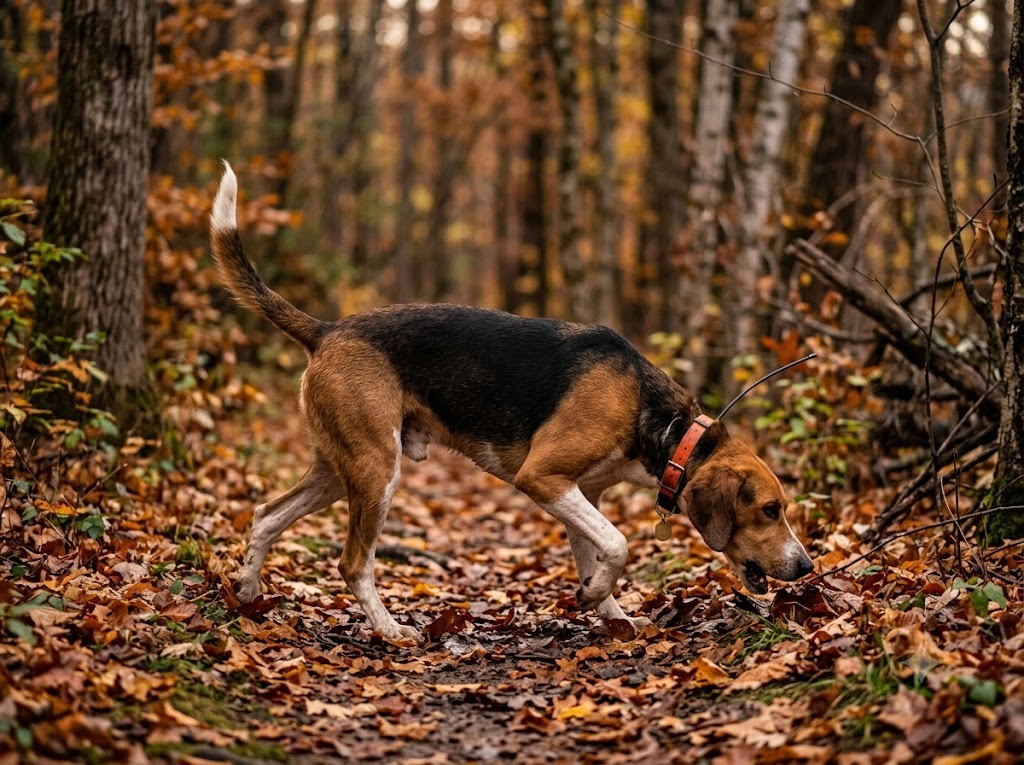
The American Foxhound is a lean, long-legged scent hound built for one thing: running a line at speed and singing about it. It is a true pack dog with an enormous nose, a big range, and a musical bawl-and-chop voice that carries across ridges. Rewarding for the right hunter, but a lot of dog for anyone else.
What it was bred to do
Developed in colonial Virginia and Maryland from English foxhounds crossed with French and Irish hounds, the breed was refined by fox hunters - George Washington kept and bred them - who wanted more speed and stamina over big American country. The job was to trail red and gray fox in a pack, pushing the line hard while the hunters followed the cry on horseback.
In the field
This is a wide-ranging, fast hound that reaches out and hunts independently, often well beyond gun range. It works a cold or hot line with a persistent nose, opens freely on scent, and covers rough ground and water without quitting. A day with one is about voice and endurance - you read the chase by ear more than by sight.
Temperament and trainability
Friendly and easygoing at rest, but bred to make decisions on the line, so recall and close control are genuinely hard. Energy is very high and there is little off-switch without real daily exercise. Sensitive to boredom, prone to roaming, and vocal - the same voice you prize afield carries into the neighborhood.
Best game and conditions
Best suited to fox and to open, big-country trailing where range is an asset, and it also crosses well to coyote and some big-game tracking in a pack. It is not ideal for tight cover, close-working flush or retrieve work, or hunters who need a heel-side dog on a small property.
Health and honest notes
Generally a hardy, athletic breed, though the tall build and hard running mean joints and pads take a beating over a season. The short coat gives little protection in cold water or hard cold, and heavy work in heat needs sensible management. For choosing a pup, conditioning, or any health question, work with reputable breeders, professional gun-dog trainers and your veterinarian.
What you get
For the hunter who wants a classic running pack hound, you get relentless drive, a superb cold nose, real stamina, and a voice you will remember long after the chase.
Common mistakes
Expecting close obedience and a tight range - this hound hunts out. Underestimating the exercise it needs, which turns into roaming and noise. And keeping just one in isolation when it is happiest and steadiest working as part of a pack.
FAQ
Is it a good first gun dog? Usually not - the range, drive, and independence suit experienced houndsmen more than beginners.
Will it stay in the yard? Not reliably. It follows its nose, so secure containment and real daily work are non-negotiable.
Can it be a close-working dog? No. It is bred to reach out and trail, not to work at heel or gun range.
🐕 A field-focused look at this breed as a working partner - not a training manual and not a guide to raising or caring for a dog. Drive, biddability and health vary hugely within any breed. Talk to reputable breeders, professional gun-dog trainers and your own veterinarian before you choose, train or hunt a dog, and keep a working dog's safety and welfare first in heat, cold and water.