Corn Plots
Standing corn is both pantry and bedroom - carbohydrate ears deer crave in cold plus head-high cover they'll bed in. The most equipment-and-fertilizer-hungry plot there is.
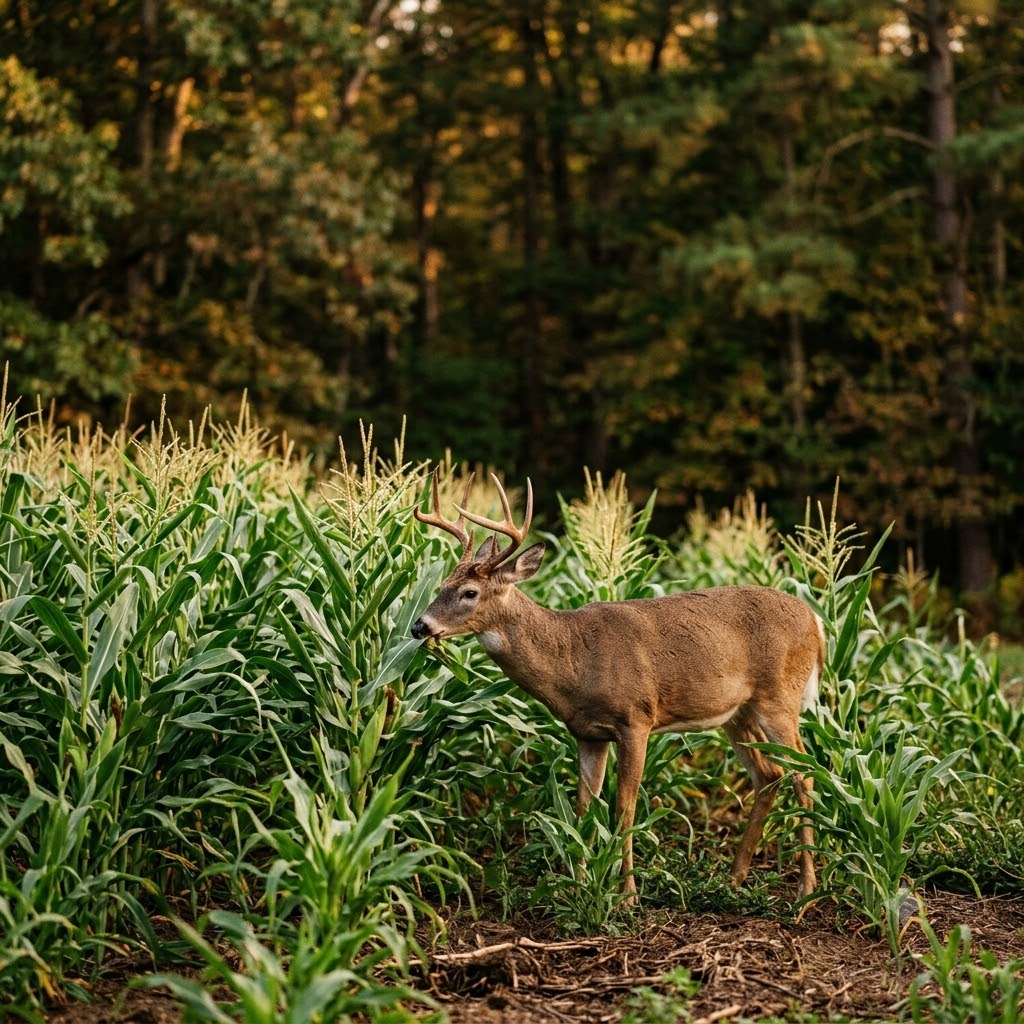
A standing cornfield in December is deer real estate at its priciest: energy-dense ears exactly matching cold-weather caloric need, inside head-high stalk cover so secure deer BED in the food. The tradeoffs are honest - corn wants real acreage, real nitrogen, real weed control and ideally real equipment - the big-property flagship rather than the weekend starter.
Why deer love it
Carbs for heat (ears are winter fuel), plus vertical security cover - food and safety in one footprint is behaviorally irresistible.
When & how to plant
Spring planting, row-cropped properly (planter/drill), heavy nitrogen program, herbicide plan; this is farming, borrowed for hunting.
Soil & pH
Good ground, pH 6.0-6.8, and the biggest fertilizer bill in plotting - corn is the crop that eats inputs.
Maintenance
In-season weed control, then leave it STANDING - unharvested rows are the entire late-season strategy.
When it draws best
Late November through winter's end; a standing-corn property in snow country simply holds the neighborhood's deer.
Common mistakes
- Tiny corn patches (raccoons and early browsing erase them)
- Under-fertilizing the hungriest crop
- Harvest/bushhogging what should stand
- Choosing corn when beans or brassicas fit the acreage and budget better
🌦️ Planting dates and varieties shift with your zone and rainfall - your county extension office gives free localized advice and cheap soil tests. Also note: rules on hunting over planted plots vs 'baiting' differ by state - plots are legal most places, bait often isn't; confirm your regulations. We don't give legal advice.