Windsock Decoys
A printed head on a stake with a fabric body that inflates and dances in wind - windsocks are how snow-goose spreads reach a thousand moving birds without a semi truck.
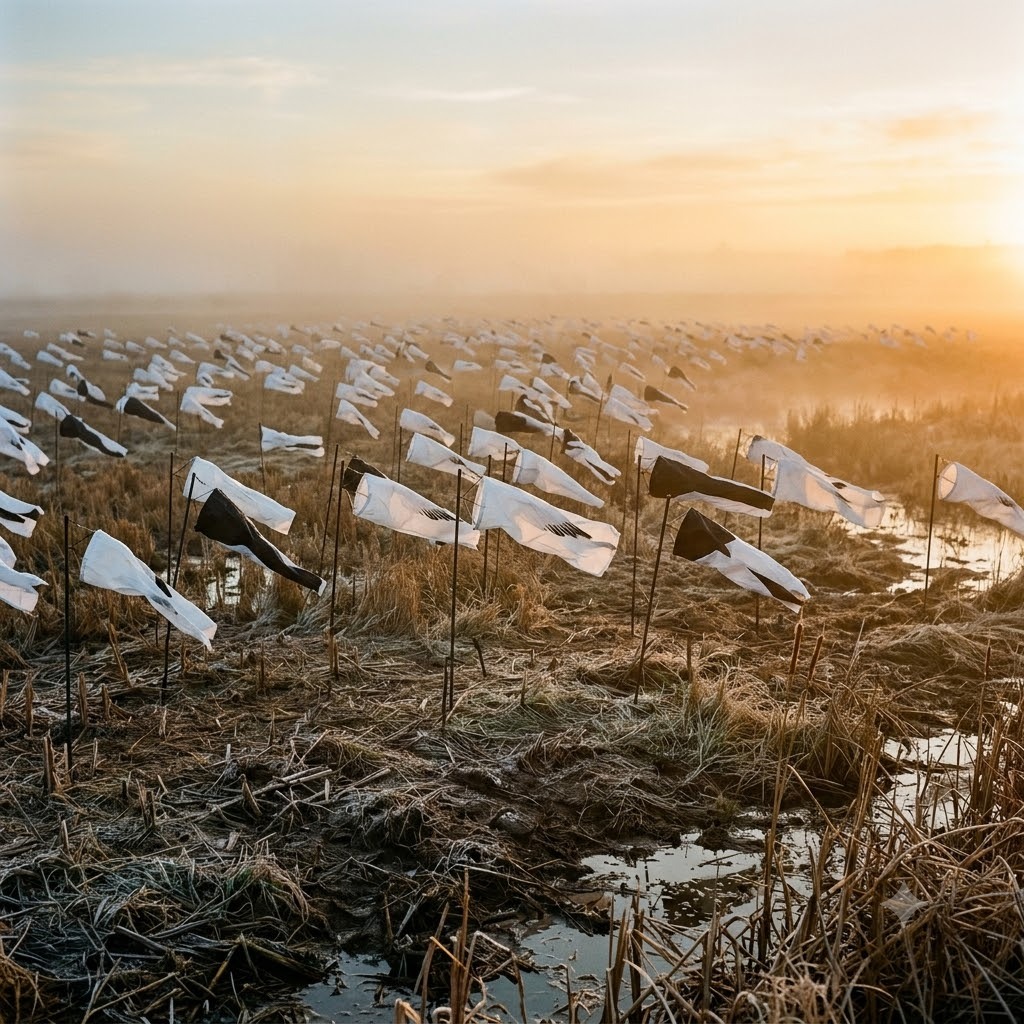
Snow goose hunting is an arms race against flocks of ten thousand eyes that have seen everything - and the windsock is its infantry: a stake, a printed head, and a fabric tube body that fills with breeze and sways, feeds, and shivers like a live bird. Socks weigh nothing, pack by the hundred, and bring the one thing no static decoy owns: perpetual motion. Every serious light-goose spread is socks by the hundreds around whatever full-bodies the trailer holds.
What it is
A fabric-bodied decoy that wind inflates into a three-dimensional, constantly-moving goose - headed versions for realism, headless 'sock-only' fillers for deep mass, in snow/blue/juvenile mixes and Canada patterns too.
When it wins
Light-goose spreads above all (spring conservation seasons live on socks), adding cheap motion-mass to any Canada spread, and windy days when socks literally out-live every other decoy on the field.
Rigging & setup
Stake into wind so bodies fill (socks deflate facing wrong), vary heights for a feeding-flock contour, and space by role: tight chaos in the feeding masses, looser at edges. Setup runs fast - hundreds per hour with a crew - but plan the pre-dawn timeline anyway; snow spreads are measured in acres.
Running it on the hunt
Build the classic light-goose machine: a huge feeding mass, a smaller upwind satellite, the blinds buried inside the mass at the upwind edge of a modest landing pocket, e-caller speakers (where legal - spring conservation orders generally allow them; check your season's rules) spread through the decoys. Juveniles decoy first; let the vortex build.
Numbers & placement
Snow geese count: 40-100+ dozen is normal, socks making up 80%+ of it. Canadas: a few dozen socks add motion to any field spread. In both, socks go where motion matters and scrutiny is brief - the middle and upwind mass - with your most realistic decoys ringing the landing zone.
Common mistakes
Dead-calm days exposing limp fabric (have a still-air plan: spinners, flyers, flagging), staking downwind-faced and wondering why bodies won't fill, mixing sun-faded whites that read gray in a snow spread, and underestimating the pick-up hour - a thousand socks come down one stake at a time, in the dark, in the wind.
🧭 Brand-free guidance, not product recommendations. Decoy and motion-decoy rules vary by state and season (spinning-wing bans, e-caller rules, public-land specifics) - confirm current regulations with your official wildlife agency before you hunt. We don't give legal advice.