Turkey Decoys
A feeding hen calms, a breeding pair tempts, a jake or strutter challenges - turkey decoys are cast by dominance psychology, with real safety rules on public land.
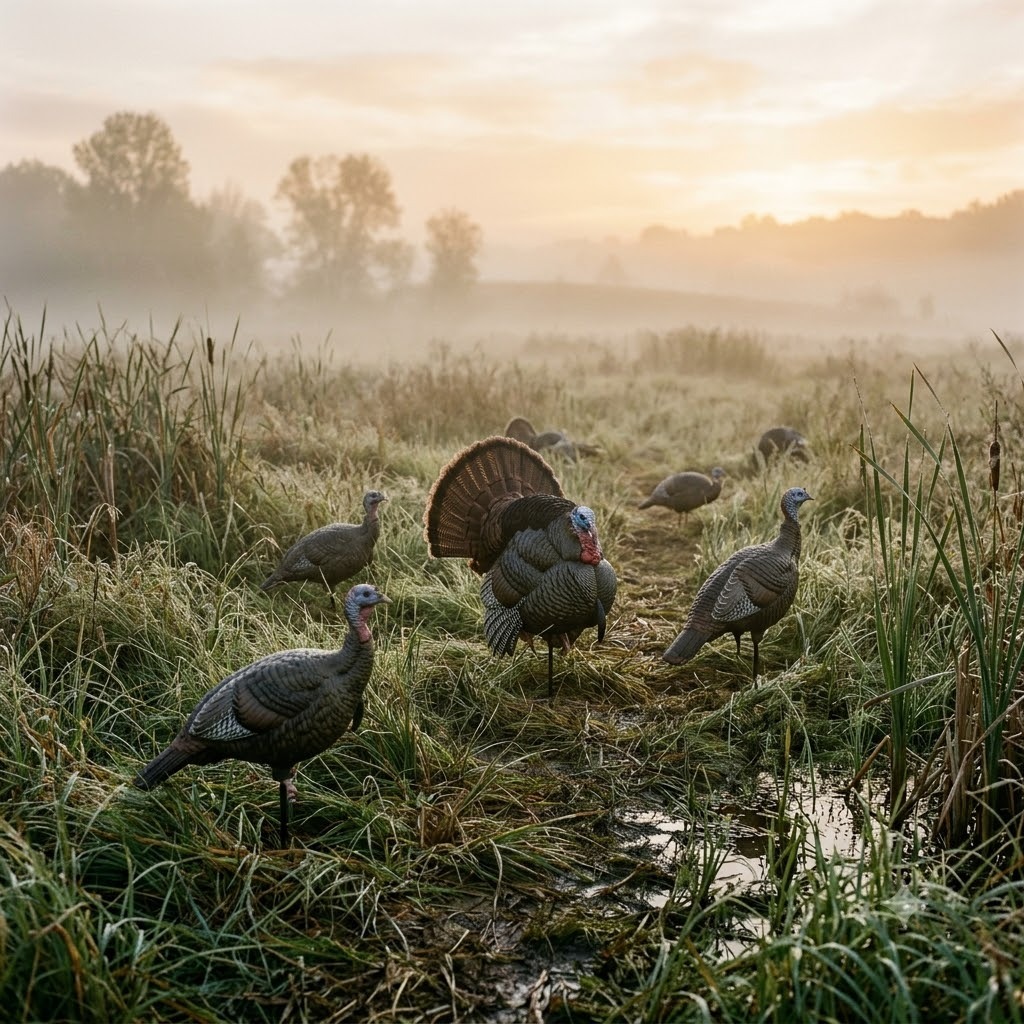
Turkey decoys aren't a flock simulation - they're a one-act play cast for a specific audience. A relaxed feeding hen says 'safe here'; a hen with a quarter-strut jake behind her says 'someone's about to steal your girl'; a full strutter says 'fight me' - and which play you stage depends on the local toms' dominance politics and pressure level. Get the casting right and spring birds sprint in; get it wrong and the same plastic sends subordinate longbeards walking. And one rule above all on public land: never carry an exposed strutter or move a decoy visibly - safety around gobbler-shaped objects is a hunter's responsibility.
What it is
The spring cast: feeding/upright hens (calm baseline), breeding-posture hens, quarter-strut jakes (the sweet-spot challenger - young enough that most toms will bully it), and full-fan strutters (maximum provocation, maximum risk of intimidating subordinate birds). Collapsible bodies and real-fan modifications fill the premium end.
When it wins
Open-country setups where toms can SEE the plot from distance: field edges, food plots, logging roads, gas lines. Early season pecking-order chaos favors jake-and-hen; henned-up mid-season toms often need the breeding pair's jealousy angle; pressured public birds frequently want a lone hen or no decoy at all.
Rigging & setup
Stake within honest gun/bow range - 15-20 m, NOT at your maximum - visible from the direction the tom will approach, angled so the challenger decoy FACES your position (toms circle to confront a rival head-on, presenting your shot). Hen low and feeding; jake close behind her (the story writes itself). Motion: a decoy that swivels slightly on its stake in breeze reads alive; dead-still on a windy day reads wrong.
Running it on the hunt
Call the bird's eyes to the scene, then let the plastic act: gobbler spots the jake-over-hen and his approach becomes a beeline or a strutting orbit to face the rival - be ready the moment he commits to the confrontation; the closing seconds are fast. If a tom hangs up staring, no decoy can fix a setup he can see too well - the next setup can.
Numbers & placement
One to three decoys is the whole art: lone hen (subtle, safe choice), hen + quarter-strut jake (the percentage play), breeding pair + jake, or strutter setups for bold flocks. More plastic is not more convincing in turkey hunting - it's more chances for one wrong posture to break the scene.
Common mistakes
Full strutter on pressured public land (subordinate toms flee it - and it's a safety hazard being carried), decoys at 35 m 'to be safe' (the bird hangs up at 55), challenger faced away so the tom circles behind YOU, forgetting the wind-spin failure (a decoy pirouetting like a weathervane), and moving or carrying exposed decoys where another hunter could mistake the scene - bag them in transit, always, everywhere.
🧭 Brand-free guidance, not product recommendations. Decoy and motion-decoy rules vary by state and season (spinning-wing bans, e-caller rules, public-land specifics) - confirm current regulations with your official wildlife agency before you hunt. We don't give legal advice.