Spinning-Wing Decoys
Rotating wings flash the strobe of a landing duck visible for kilometers - spinners are waterfowling's strongest attractor, banned or restricted in several states: check regs first.
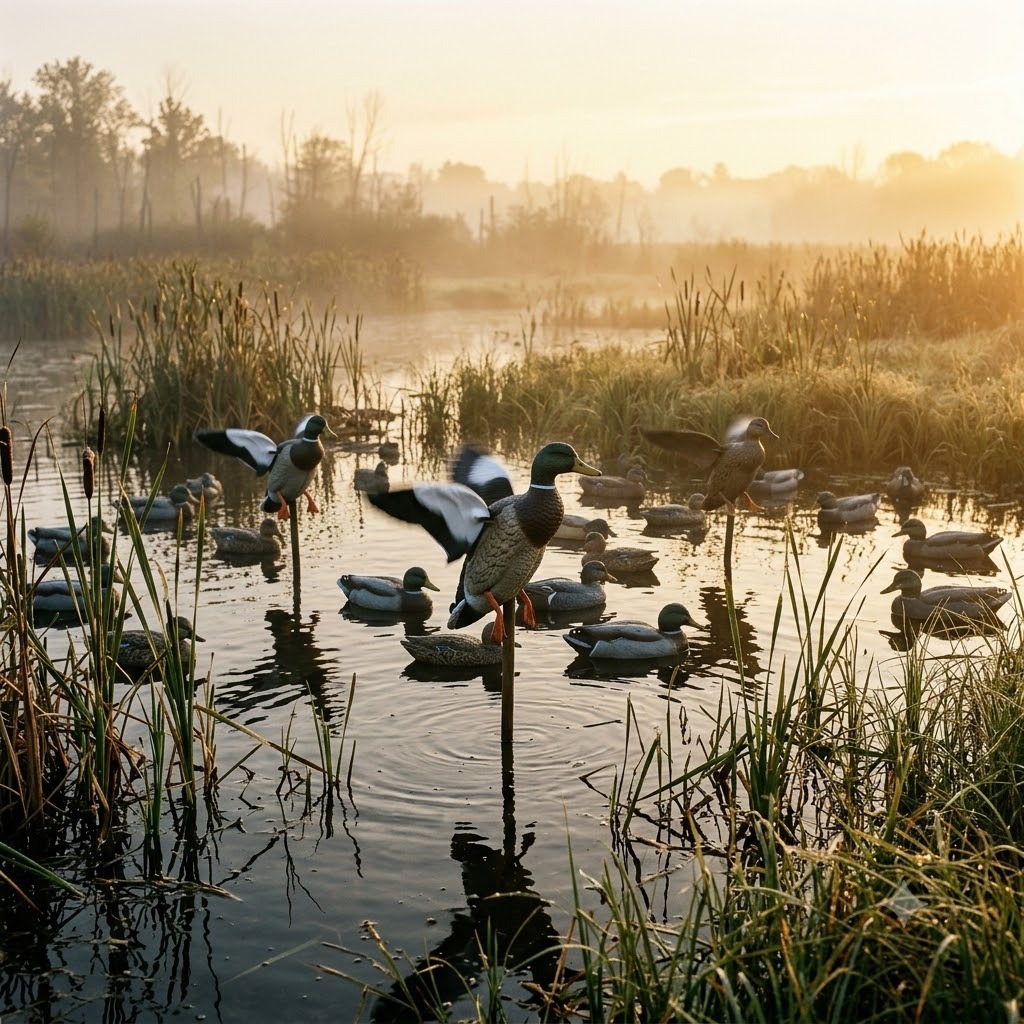
The spinning-wing decoy hacks duck vision directly: rotating wing paddles flash white-dark-white in exactly the strobe pattern of a duck backpedaling to land, visible to flocks kilometers out. When they work, they WORK - early-season and migrant ducks bee-line to them. Two honest caveats define the tool: educated late-season birds learn to flare off the same flash, and several states ban or restrict motorized decoys entirely (and others on specific waters or dates) - the regulations check is not optional. We don't give legal advice: read your state's current waterfowl rules before the spinner goes in the bag.
What it is
A duck-bodied decoy on a pole (or floating base) with battery-driven rotating wings - remote-controlled on good ones - whose flicker imitates the wing-flash of landing birds. Legality varies by state and sometimes by season/zone: verify yours every year.
When it wins
Early season and fresh migrants (the flash is candy), long-range visibility problems (timber holes, small spreads on big landscapes), teal seasons, and any day ducks work high and wide - the spinner turns looks into approaches.
Rigging & setup
Mount above the spread's landing pocket at 0.5-1.5 m (visible, not towering), angled slightly into wind like a landing bird, remote in your blind pocket. Charge batteries the night before, carry a spare, and check the wings spin true - a wobbling spinner looks exactly as wrong as it sounds.
Running it on the hunt
Run it on the remote, not on autopilot: ON to grab distant flocks' eyes, OFF as birds make their final swing (the flash that attracts at 800 m can flare at 80 - especially late season). Ducks committing? Kill it and let the floaters and ripple finish the job.
Numbers & placement
One spinner above the pocket is the core play; big open-water and field spreads run two or three at spacing. Position so approaching birds see flash BEHIND the landing hole - they'll finish through your gun range chasing it.
Common mistakes
Skipping the regs check (motorized-decoy law differs state to state and year to year - the fine is real), leaving it spinning through late-season finishes (the classic flare machine), dead batteries at shooting light, and using the spinner as a crutch for a lifeless spread - it's a flare gun for attention, not a substitute for ripple, posture and hide.
🧭 Brand-free guidance, not product recommendations. Decoy and motion-decoy rules vary by state and season (spinning-wing bans, e-caller rules, public-land specifics) - confirm current regulations with your official wildlife agency before you hunt. We don't give legal advice.