Sleeper Shell Goose Decoys
Resting and sleeping shell decoys sell calm to late-season geese that have seen every feeder spread - the birds that are relaxed enough to nap are the ones that pull.
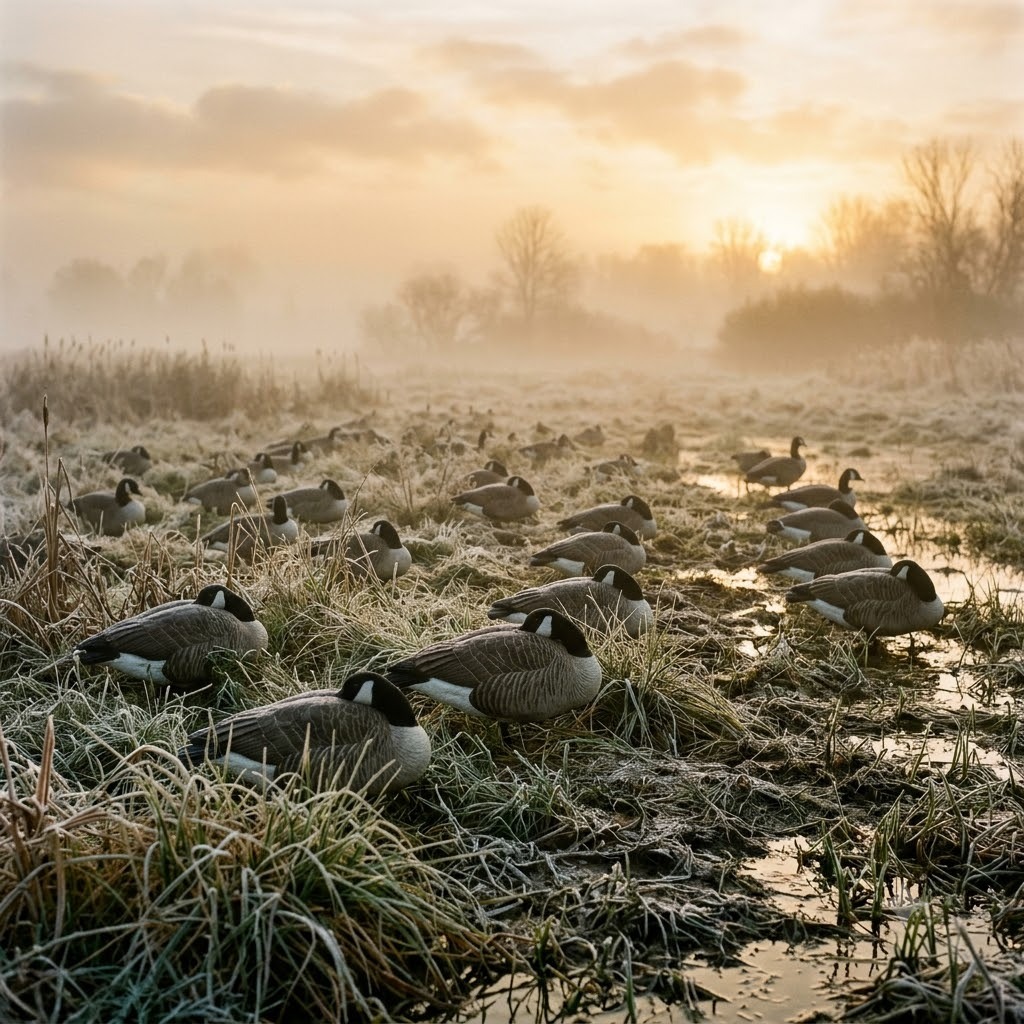
By late season geese have been shot at over a thousand feeding spreads, and a field full of upright, actively-feeding decoys can look like exactly the thing that burned them last week. Sleeper shells flip the story: geese with their heads tucked, resting and asleep, tell circling birds the flock has been here long enough to feel safe and settle down. On cold, high-pressure days, a content, sleepy spread often beats a busy one.
What it is
Low-profile shell decoys molded in resting and sleeping postures - heads tucked, bodies settled to the ground - as opposed to active feeder or sentry shells. They stack and haul in big numbers cheaply, and mixing sleeper heads into a spread instantly lowers its overall energy to read as a relaxed, established flock.
When it wins
Late-season fields with cold weather and pressured, call-shy geese, bluebird high-pressure days when birds want nothing to do with a lively spread, midday and afternoon hunts when real flocks loaf, and roost-adjacent fields where geese expect rest, not a feeding frenzy. Sleepers shine most when calm and confidence matter more than motion.
Rigging & setup
Ground the shells over stubble in loose family groups, heavier on sleepers and resters with only a few sentries watching. Leave a realistic landing pocket downwind of the blinds and avoid a rigid, evenly-spaced grid - real resting flocks bunch and sprawl. On frost or snow, keep bodies clean and settled so they read as content birds, not litter.
Running it on the hunt
Match your calling to the picture - quiet, contented clucks and murmurs, not aggressive hail calling - because a sleepy spread that is screaming at birds contradicts itself. Let the calm scene do the work as geese finish, and add just a touch of motion (a flag or a single flapper) only if the day is dead still and the spread looks pasted down.
Numbers & placement
Late-season spreads can run large, but the ratio matters more than the count: heavy on sleepers and resters, light on active feeders and sentries. Family-group spacing beats a uniform carpet. Keep the landing hole obvious and downwind, and let the outer edges thin out the way a real flock does.
Common mistakes
Mixing in too many upright feeders and losing the calm story, spacing decoys in a stiff grid, over-calling a spread built to look asleep, and leaving dirty or tipped shells that read as debris - a "sleeping" goose flopped on its side testifies to the wrong thing.
🧭 Brand-free guidance, not product recommendations. Decoy and motion-decoy rules vary by state and season (spinning-wing bans, e-caller rules, public-land specifics) - confirm current regulations with your official wildlife agency before you hunt. We don't give legal advice.