Predator Decoys
A twitching tuft of fur gives a coyote something to see when the call says something is dying - it pins their eyes off the caller and closes the last nervous yards.
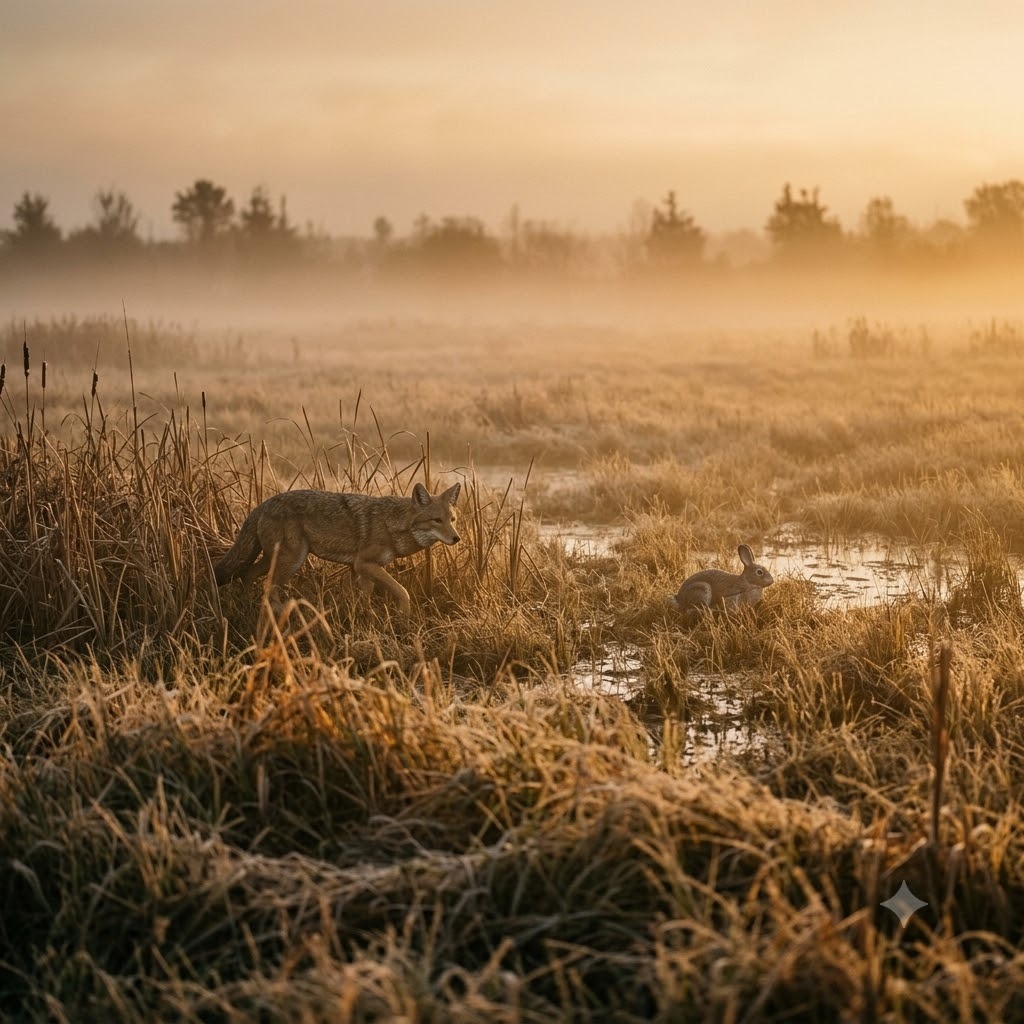
A calling stand asks a predator to commit to a sound with no body attached, and a wary coyote often hangs up just out of range, circling for a look. A decoy answers the question the call cannot: it gives the animal a moving target to focus on, draws its eyes and its downwind circle away from the hunter, and turns a hung-up coyote into a committed one. The motion is the whole point.
What it is
Small motion decoys built to imitate prey or a rival - spinning-fur or feather units that flutter on a stake, battery-powered wigglers, and simple wind-driven fur tufts. Prey styles (rabbit, bird) pair with distress calling; territorial styles (a fake coyote or a pup) pair with challenge and howl sequences.
When it wins
Open stands where a predator can see across distance, pressured animals that hang up to a bare call, daylight coyote and fox work, and bobcat setups where a cat will stare down slow motion for a long time. A decoy earns its keep most on the stands where animals commit slowly and want visual confirmation.
Rigging & setup
Place the decoy in the open, upwind or crosswind, where an approaching animal sees it before it winds you - the goal is to pull the downwind circle to a spot you can cover. Keep it 15 to 30 yards out and clear of brush. Set your sight lines and shooting lanes to the decoy, not the caller, since that is where eyes will lock.
Running it on the hunt
Start the decoy with the call and let the two work together: the sound brings them, the motion holds them. Watch the downwind edge - most predators try to circle to scent-check, and the decoy is your tool to shorten that circle into a shot. Keep still; a coyote fixed on a fluttering decoy will forgive a lot, but not a moving hunter.
Numbers & placement
One decoy is the standard - this is a solo prop, not a spread. Everything rides on placement: open, visible, upwind or crosswind, and inside comfortable range. A second static prey silhouette can add believability, but the moving unit does the work.
Common mistakes
Hiding the decoy in cover where animals cannot see it, placing it directly downwind so the circle still swings behind you, running prey motion with a territorial call (mismatched story), and moving the caller instead of letting the decoy hold attention - the instant a predator shifts its eyes to you, the stand is over.
🧭 Brand-free guidance, not product recommendations. Decoy and motion-decoy rules vary by state and season (spinning-wing bans, e-caller rules, public-land specifics) - confirm current regulations with your official wildlife agency before you hunt. We don't give legal advice.