Flagging & Motion Tools
A black flag waved from the blind imitates goose wing-flash and turns flocks from remarkable distance - flagging, kites, flyers and the art of motion at the right range.
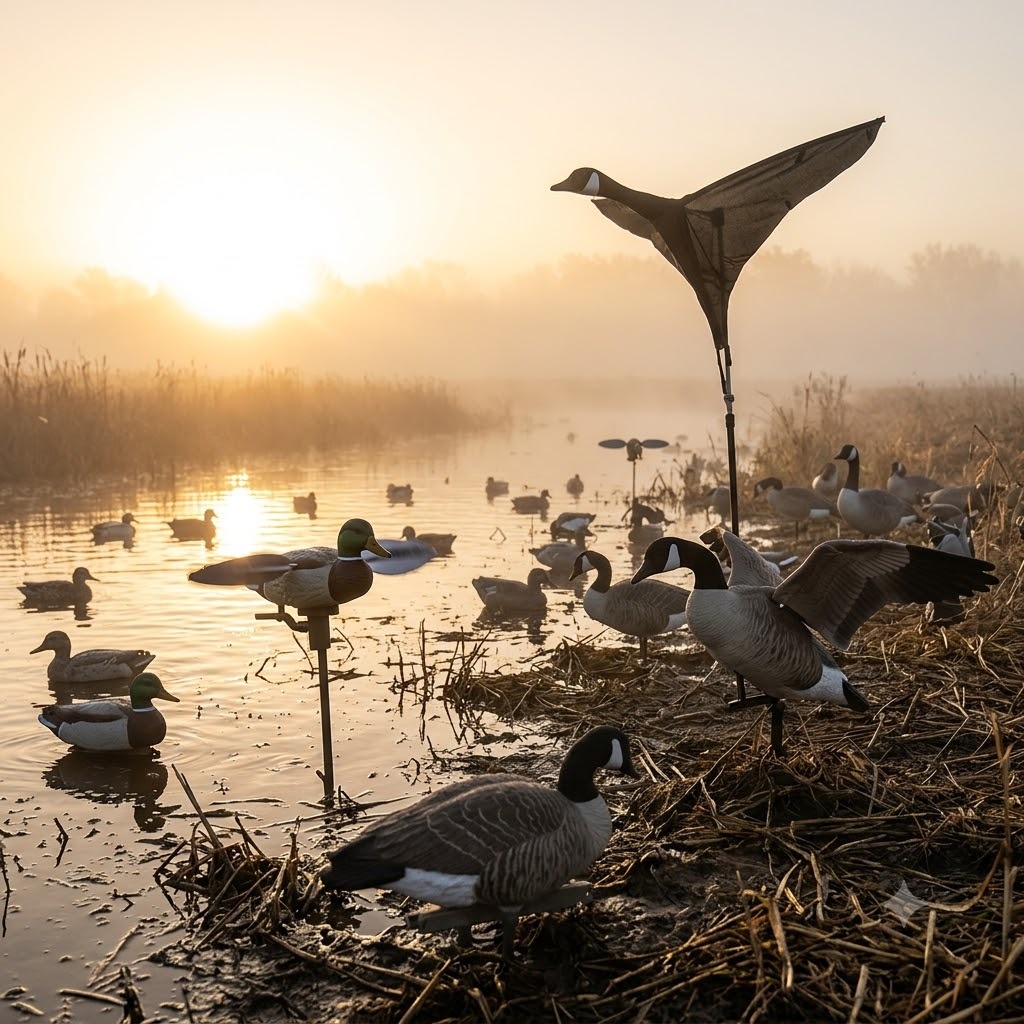
Before geese can hear your call, they can see motion - and the humble black flag on a stick, snapped in wing-beat rhythm from a layout blind, turns distant flocks with an authority that surprises everyone the first time they see it. Flagging and its cousins (goose kites, flyer decoys on poles, pull-string flappers) occupy the attraction niche BEFORE calling range: sell 'birds landing here' to specks in the sky, then hand the job to the spread and the call as they close. Cheap, legal everywhere ordinary decoys are, and criminally underused by new field hunters.
What it is
Motion signaling tools: hand flags (black or goose-patterned fabric on a short pole - the T-flag being standard), landing-pattern kites flown over the spread on breeze, pole-mounted flyer decoys with spread wings, and pull-cord flappers staked in the spread - all imitating the wing-flash of geese arriving and settling.
When it wins
Distance work: turning traffic flocks that are passing wide or high, breathing life into a static spread on gray flat-light days, snow-goose spreads (flags by the several), and windy days when kites and flyers hover convincingly for free. Any day birds look but slide - the flag is the first fix to try.
Rigging & setup
Flags live IN the blind with you - one per hunter in the crew multiplies the effect (a feeding flock's flashes are plural). Kites launch on 10-30 m of line over the spread's mass, upwind of the pocket; flyers pole in where landing birds would backpedal. Everything black-and-white and matte; the flash IS the signal, glare is not.
Running it on the hunt
Range discipline is the craft: BIG committed waves for flocks at extreme distance (imitating birds landing - the whole flag arcing like a backpedaling goose), shrinking to short low snaps as they close, flags DOWN and hidden by final approach - a flag waving at 100 m is a hunter waving at 100 m. Coordinate the crew: flag together at distance, one designated finisher for mid-range touches, all hands on guns for the finish.
Numbers & placement
One flag per hunter as baseline; snow spreads run flags AND kites AND flyers in concert - light geese expect swirling chaos. Over-motion barely exists at long range and absolutely exists up close: the closer the birds, the less anything should move except the wind-stirred spread itself.
Common mistakes
Flagging birds that are already committed (the #1 flare), lazy metronome waving instead of wing-rhythm snaps, glossy flag fabric flashing sun like a mirror, kites launched into dead calm (a diving kite is a falcon as far as geese care), and the crew's flags all down because 'the caller's working them' - at 800 m the flag IS the caller.
🧭 Brand-free guidance, not product recommendations. Decoy and motion-decoy rules vary by state and season (spinning-wing bans, e-caller rules, public-land specifics) - confirm current regulations with your official wildlife agency before you hunt. We don't give legal advice.